



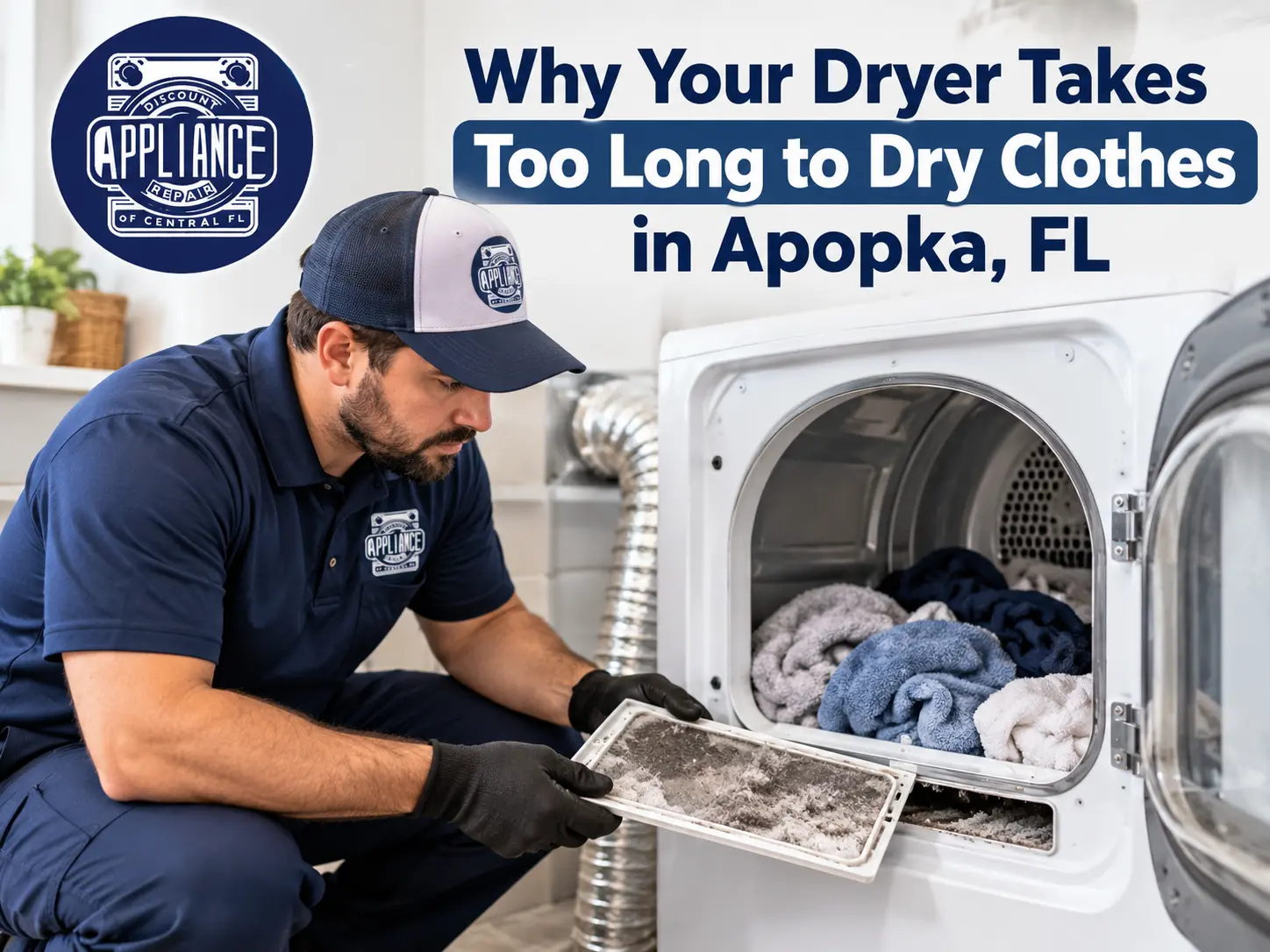

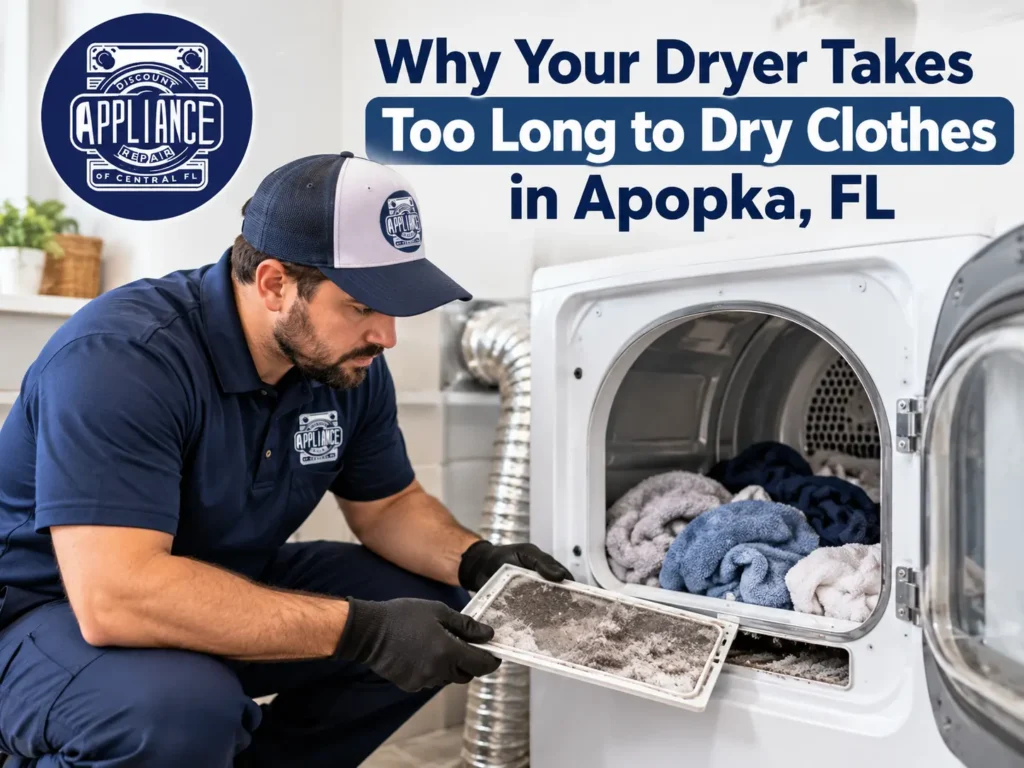
If your clothes are still damp after a full cycle, it’s a sign that something is wrong with the dryer. A dryer that takes too long to dry in Apopka, FL, may be due to a number of reasons, such as insufficient airflow, a full dryer, a heating issue, or a faulty sensor.
Running another cycle may seem like an easy solution, but it wastes time and energy without fixing the underlying issue. Here is how Apopka homeowners can recognize common dryer problems, identify safe checks, and decide when professional repair or dryer vent cleaning is needed.
Signs Your Dryer Is Not Working Efficiently
When a dryer needs repair, it typically exhibits at least one of the following symptoms. Keep an eye out for these changes:
- Clothes remain damp after a normal drying cycle.
- The dryer takes two cycles to dry an ordinary load.
- The laundry room feels unusually hot or humid.
- The machine runs longer than normal or stops too early.
- The outside exhaust vent releases little air.
- The dryer produces a burning smell or becomes unusually hot.
These symptoms can point to different problems. For example, warm clothes that remain damp may indicate restricted airflow, while clothes that stay cold throughout a heated cycle may suggest a heating fault.
Check the Dryer Vent and Airflow First
A clogged dryer vent is one of the first things to investigate when drying times increase. A clothes dryer needs to move moist air through its exhaust vent and outside the home. When lint or debris blocks that path, moisture escapes more slowly, leaving clothes damp.
Start with these basic checks:
- Clean the lint screen: Clear the lint before each load. Fabric softener residue can also restrict airflow, so clean the screen according to the manufacturer’s instructions.
- Inspect the vent hose: With the dryer switched off and unplugged, look for a crushed, kinked, or damaged hose behind the machine.
- Check the outdoor vent hood: Look for visible lint, leaves, debris, or a flap that cannot open properly.
- Watch for airflow warnings: If your dryer displays a vent or restricted-airflow warning, consult the manual before continuing to use it.
Do not dismantle wall ductwork or reach into inaccessible vents yourself. A professional dryer vent cleaner can inspect the entire exhaust system and remove lint from hard-to-reach areas.
Could Florida’s Climate Be Affecting Drying Time?
The warm, humid climate of Apopka can make laundry feel damp, particularly when there is a rainy season or laundry areas are not well ventilated. But just the humidity factor shouldn’t be the only explanation for a sudden performance change in dryers.
If the machine has recently started taking much longer, check for airflow restrictions, incorrect cycle settings, and changes in the size of your loads. A blocked exhaust vent can prevent moisture from leaving the home efficiently, regardless of outdoor conditions.
Also, make sure the dryer vents outdoors as designed. An improperly installed or disconnected exhaust hose can release warm, moist air into the laundry area instead of carrying it outside.
When the Problem Is the Heating System
If airflow appears normal but clothes remain wet, the dryer may have a heating problem. The likely cause depends on whether the machine produces heat, heats inconsistently, or shuts off before the load is dry.
Common components that may require professional testing include:
- Heating element: A faulty element can prevent an electric dryer from producing enough heat. Some models may still produce partial heat if part of the heating system fails.
- Thermal fuse: This safety component may interrupt operation after overheating. A blown fuse often requires replacement, but the cause of the overheating must also be investigated.
- Thermostat: A faulty thermostat may interfere with temperature regulation.
- Moisture sensor: Residue or a defective sensor can cause some dryers to end a cycle before clothes are fully dry.
These parts require different repairs, so replacing components without testing them can waste money. If the dryer runs but does not heat, or repeatedly stops before clothes are dry, arrange an appliance inspection.
Rule Out Laundry and Cycle Problems
With all slow drying cycles, the dryer is not necessarily broken. Too much material means that items cannot tumble freely in the drum, and putting heavy towels with light shirts can cause some clothes to be damp after the others are dry.
Try these adjustments:
- Reduce the load so clothes can move freely.
- Separate heavy fabrics from lightweight garments.
- Select a suitable heated cycle for the fabric.
- Check the moisture sensor and clean it as directed in the owner’s manual.
- Confirm that the washing machine spins clothes properly before transferring them.
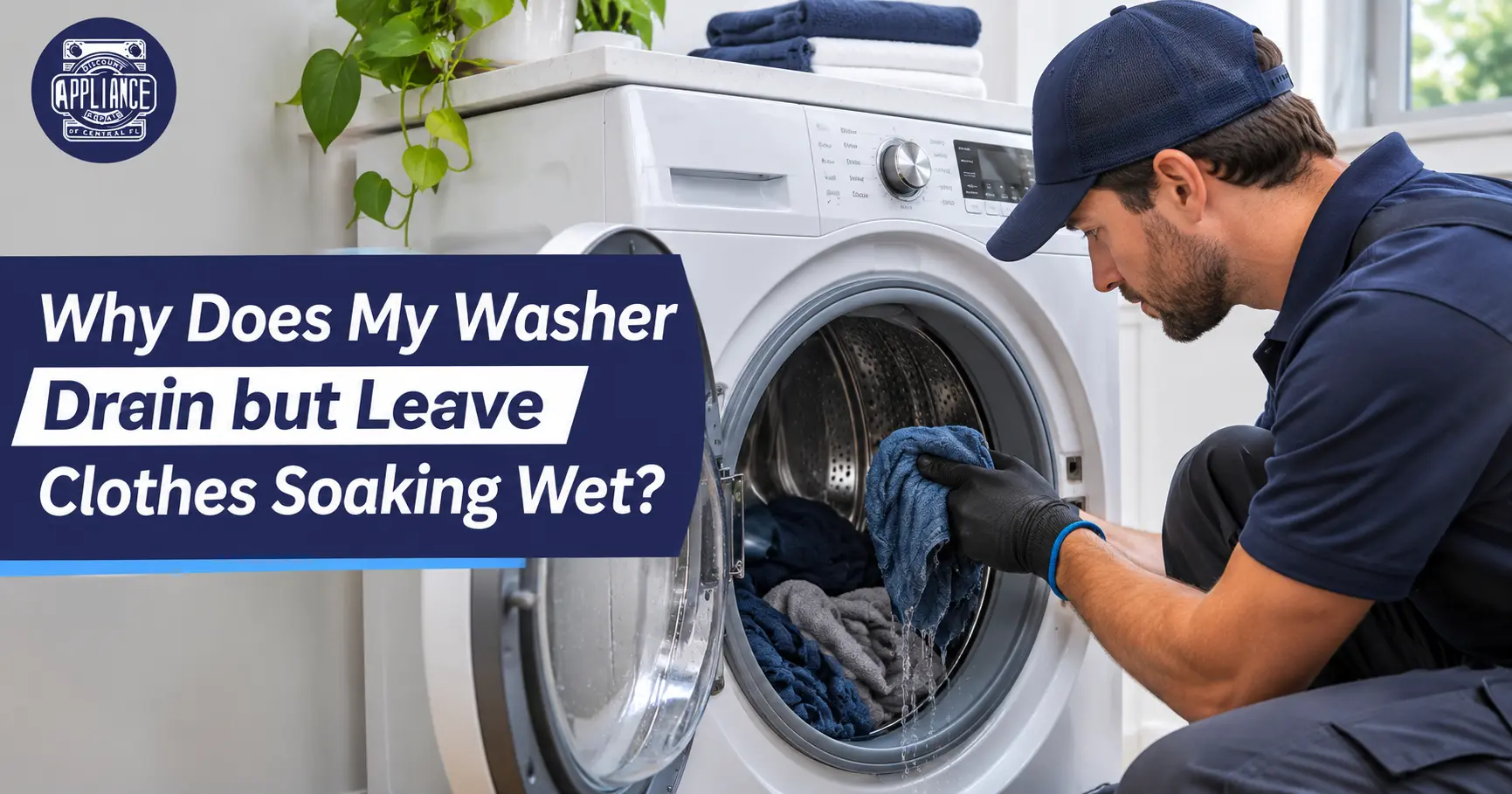
If your washer leaves laundry unusually wet, the dryer must remove more moisture than normal. A washer that will not drain or spin properly may need attention too. Our guide to washing machine drainage problems explains what to check when water remains in the washer.
When Should You Schedule Dryer Repair in Apopka?
Basic maintenance may solve a dirty lint screen or an overloaded load. However, persistent drying problems deserve professional attention, especially when the vent is clear and the machine still fails to heat properly.
Contact an appliance technician if you notice:
- Repeatedly damp clothes after normal cycles.
- No heat or inconsistent heating.
- Error codes that return after basic checks.
- A thermal fuse or other component that may have failed.
- Unusual noises, burning smells, or signs of overheating.
Stop using the dryer if you smell burning or suspect overheating. Turn it off, disconnect power if you can do so safely, and arrange an inspection. Do not keep running cycles to test a potentially unsafe machine.
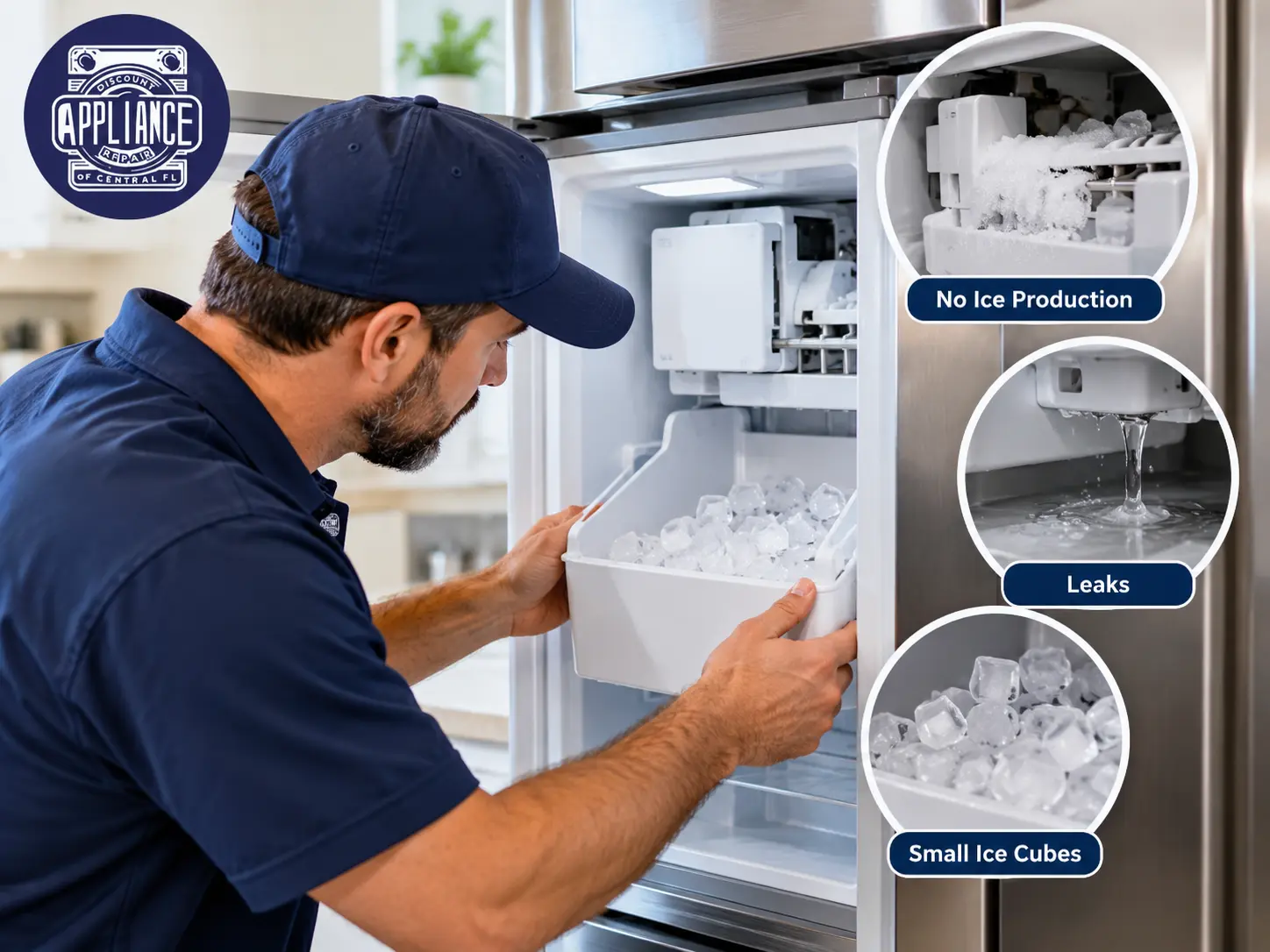
If you are experiencing other appliance issues at home, our guide to common ice maker problems can help you recognize when a refrigerator ice maker may need attention.
Dryer Vent Cleaning or Appliance Repair: Which Do You Need?
The best service is provided depending on the cause of a slow drying time.
| Symptom | Possible next step |
| Dryer heats, but clothes remain damp | Inspect and clean the exhaust vent |
| Weak airflow from the outside vent | Arrange a vent inspection |
| Dryer produces no heat | Schedule appliance diagnosis |
| Cycle ends while clothes are still wet | Check settings and moisture sensor; seek repair if persistent |
| Burning smell or overheating | Stop using the dryer and arrange professional inspection |
In some cases, a combination of both services may be required. The vent cleaning will improve ventilation, but cannot fix a broken heating element or a faulty thermostat. Similarly, if the dryer is clogged, the replacement of a dryer part will not clear this blockage. Discount Appliance Repair of Central Florida can help homeowners identify whether a persistent drying problem points to an appliance fault that needs professional diagnosis.
Frequently Asked Questions
Why are my clothes still damp after one dryer cycle?
Typical issues are a clogged vent, overloaded drum, bad airflow, or a heating issue. Check the lint screen and load size first. If the issue persists, ask a professional to inspect both the dryer and its vent.
When should I have my dryer vent cleaned in Apopka?
Useful starting point: have the exhaust system cleaned and inspected approximately once a year, or more often if the drying performance decreases. Other factors, including usage, duct length, pets, and lint buildup, may alter the frequency of needed services.
Can a clogged dryer vent increase energy use?
Yes. Limited airflow will cause drying times to be longer and may require the dryer to run longer to remove the moisture. If lint buildup is causing poor performance, then cleaning the vent can help.
Should I use my dryer if I notice a burning smell?
No. Stop the cycle and do not use the dryer again until the cause has been checked. Lint buildup, overheating, or an electrical or mechanical fault may create a fire hazard.
Should I repair or replace my slow-drying dryer?
This will depend on the age of the machine, its condition, the cost of repair, and the fault discovered. You can have a technician test the dryer and give you a practical idea of what you can do before you make your decision.
Final Thoughts: Restore Your Dryer’s Performance
A dryer taking too long to dry in Apopka may have a simple airflow restriction or a more serious heating-system fault. Start with safe maintenance checks, avoid repeatedly running a poorly performing machine, and seek professional help when the problem persists. Discount Appliance Repair of Central Florida can help you with the next step when your dryer needs a proper diagnosis and repair.