

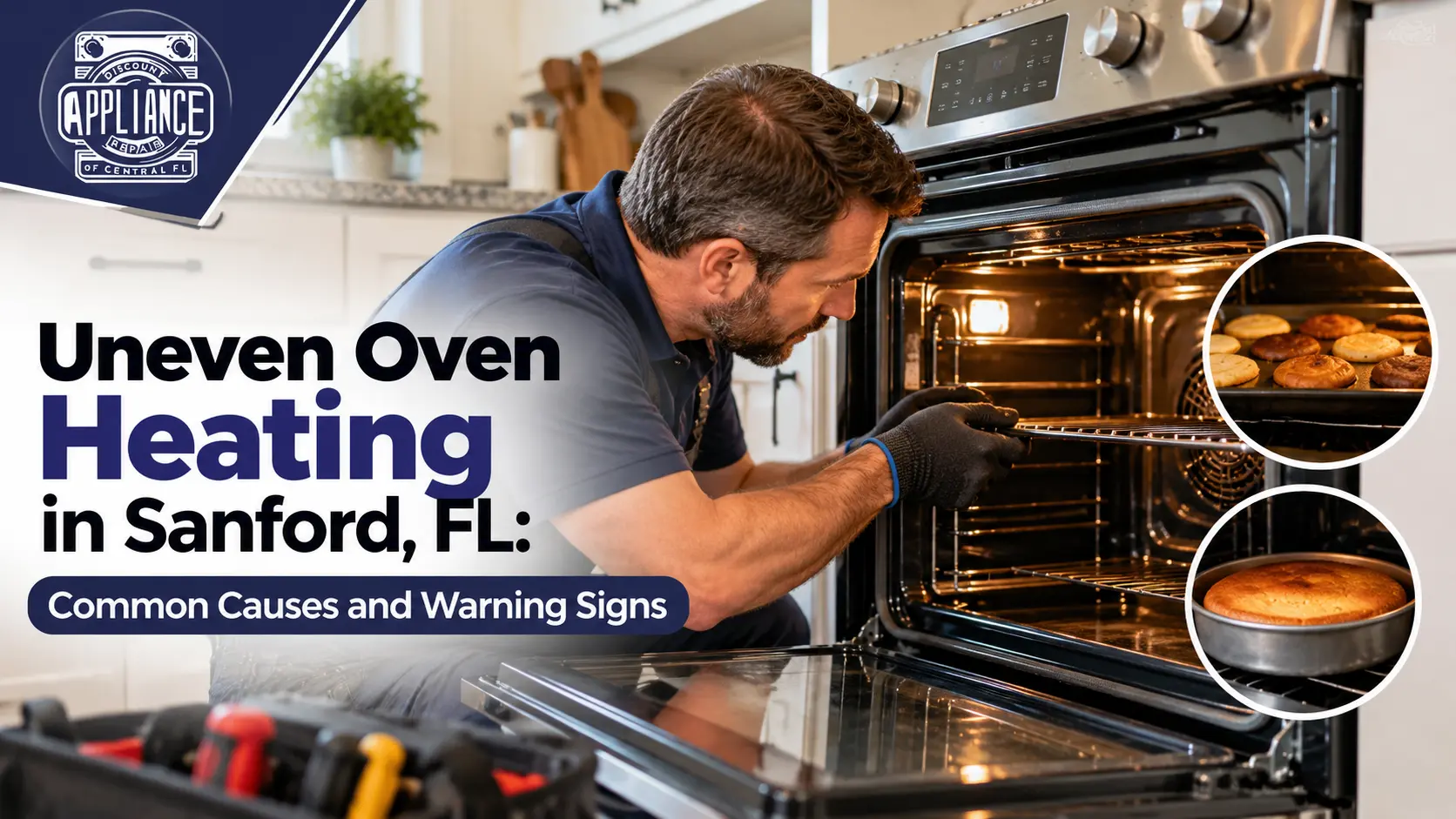

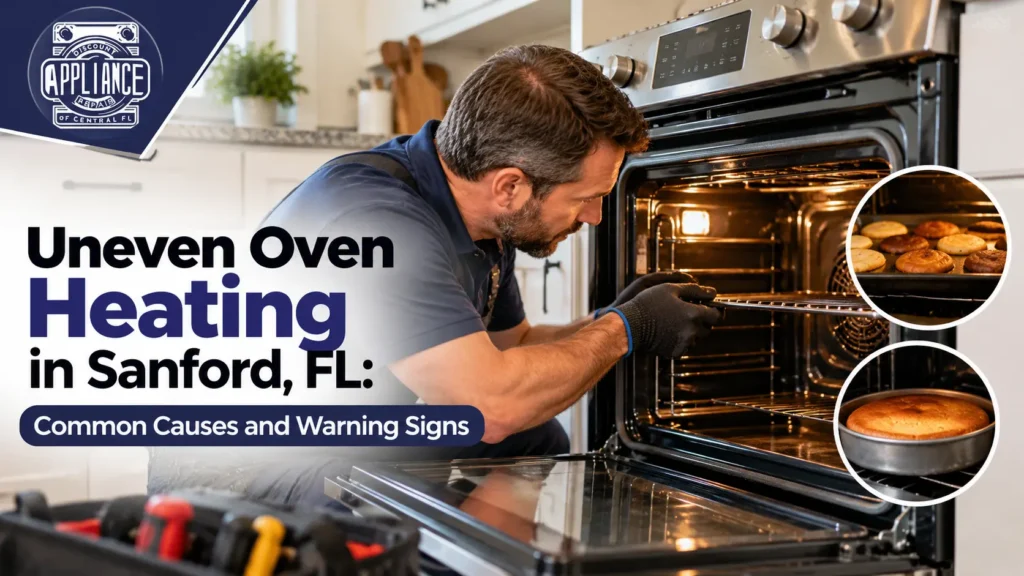
You put a tray of cookies in the oven, but the ones at the back turn dark while the front row stays pale. Or a casserole takes much longer than expected, even though the display says the oven has reached the right temperature. These problems can come from normal heat patterns, incorrect settings, or a part that is no longer working correctly.
If your oven is heating unevenly in Sanford, FL, start by looking for repeatable patterns before assuming a major failure. A thermometer test can help identify whether persistent inconsistency points to a heating element, sensor, thermostat, fan, or door seal.
How to Tell Whether Your Oven Is Really Heating Unevenly
Ovens do not hold one exact temperature every second. The controls cycle heat on and off to maintain the set temperature, so some variation is normal.
Look for a repeated pattern rather than judging by one meal. Warning signs include:
- Food burning on one side while the other side remains undercooked.
- The same rack position consistently cooking faster than another.
- Longer-than-usual preheating or meals taking noticeably more time.
- A temperature display that differs substantially from a separate oven thermometer.
- A bake cycle that seems to stop heating or produces little browning.
Try a Simple Oven Thermometer Test
Place an oven-safe thermometer near the center of the middle rack. Set the oven to 350°F and let it preheat fully, then observe the reading over another 20–30 minutes without repeatedly opening the door. The temperature will rise and fall as the oven cycles, so one low or high reading does not prove a fault.
Repeat if results seem unusual, follow the manual, and never remove panels to inspect electrical parts.
A Failing Heating Element Can Leave Food Half-Done
In an electric oven, the bake element usually provides most of the heat during baking, while the broil element may assist with temperature regulation in some models. If an element is damaged, a section may not glow as expected, or food may brown unevenly and take longer to cook.
With the oven cool and switched off, visually inspect the element for blistering, cracks, or obvious breaks. Do not touch it or test it while powered. Some elements are hidden, so a lack of visible glow is not conclusive. A technician can test the element and connections safely.
Temperature Sensor or Thermostat Problems
The temperature sensor measures oven heat and sends information to the control system. If it is faulty, loose, or positioned incorrectly, the oven may heat too much, too little, or fluctuate beyond its usual range. Older models may use a thermostat instead.
Clues include repeated over-browning, undercooked centers, or thermometer readings that consistently disagree with the set temperature. Check the manual before attempting any sensor adjustment or replacement.
Convection Fan Issues Can Disrupt Heat Distribution
A convection oven uses a fan to circulate hot air. If the fan is not running when convection mode is selected, makes unusual scraping or rattling sounds, or turns intermittently, heat may not spread evenly through the cavity. Food can cook unevenly even when the heating elements still work.
Confirm convection mode is selected, leave space between pans, and keep fan openings clear. If the fan remains silent when it should operate, or makes persistent noise, arrange an inspection. Never reach into the fan area while the oven is connected to power.
Gas Ovens Have Different Warning Signs
Gas ovens rely on an igniter and burner system rather than an electric bake element alone. A weak igniter may take too long to light the burner or fail to produce reliable heating. Blocked burner ports can also affect flame distribution, while a damaged door gasket lets heat escape and can create uneven results.
Do not dismantle the burner or attempt to adjust gas components yourself. If you smell gas, do not operate switches or use a flame; leave the area and contact the gas utility or emergency services from a safe location. For slower preheating, irregular baking, or a door that no longer seals properly, have an appliance technician diagnose the cause.
Can Oven Calibration Fix the Temperature?
Calibration may help when the oven consistently runs a little hotter or cooler than its setting but otherwise heats evenly. Some models let you adjust the temperature offset through the control panel; others require a different procedure or do not offer user calibration.
Use an independent thermometer and compare several readings across a full heating cycle before making an adjustment. Calibration will not repair a failed element, sensor, igniter, or fan. Follow the manual and avoid extreme adjustments.
When to Schedule Oven Repair in Sanford
Book a professional diagnosis if the same hot and cold spots continue after checking settings, rack placement, cookware, and preheating. Arrange repair if it cannot reach temperature, repeatedly shows an error, or trips a breaker. Stop using it if you notice sparks, burning electrical smells, or unsafe gas symptoms.
When arranging service, note the oven type, model, preheat time, thermometer readings, and affected rack positions. Discount Appliance Repair of Central Florida can use those details to help narrow down the issue and determine the next diagnostic steps.
Frequently Asked Questions
Why does my oven cook faster at the back?
Heat patterns, pan placement, airflow, and the oven’s design can all contribute. Rotate the pan when the recipe allows, leave space around cookware, and test with an oven thermometer. If the same area repeatedly overcooks different dishes, arrange a diagnosis.
How long should an oven take to preheat?
Preheating time varies by model and setting. Compare performance with the manual and investigate sudden slowdowns.
Can I keep using an oven that heats unevenly?
Check settings and rack placement first, but stop using an oven with sparks, electrical smells, breaker trips, or suspected gas problems. Have persistent inconsistency checked.
Final Thoughts: Get Reliable Answers Before the Problem Gets Worse
Uneven baking does not automatically mean a major repair is needed, but recurring hot spots and inaccurate temperatures should not be ignored. Start with safe checks, document what you observe, and avoid opening powered or gas-connected components. If the symptoms continue, Discount Appliance Repair of Central Florida can help identify whether the cause is calibration, a failed part, or another heating issue.