

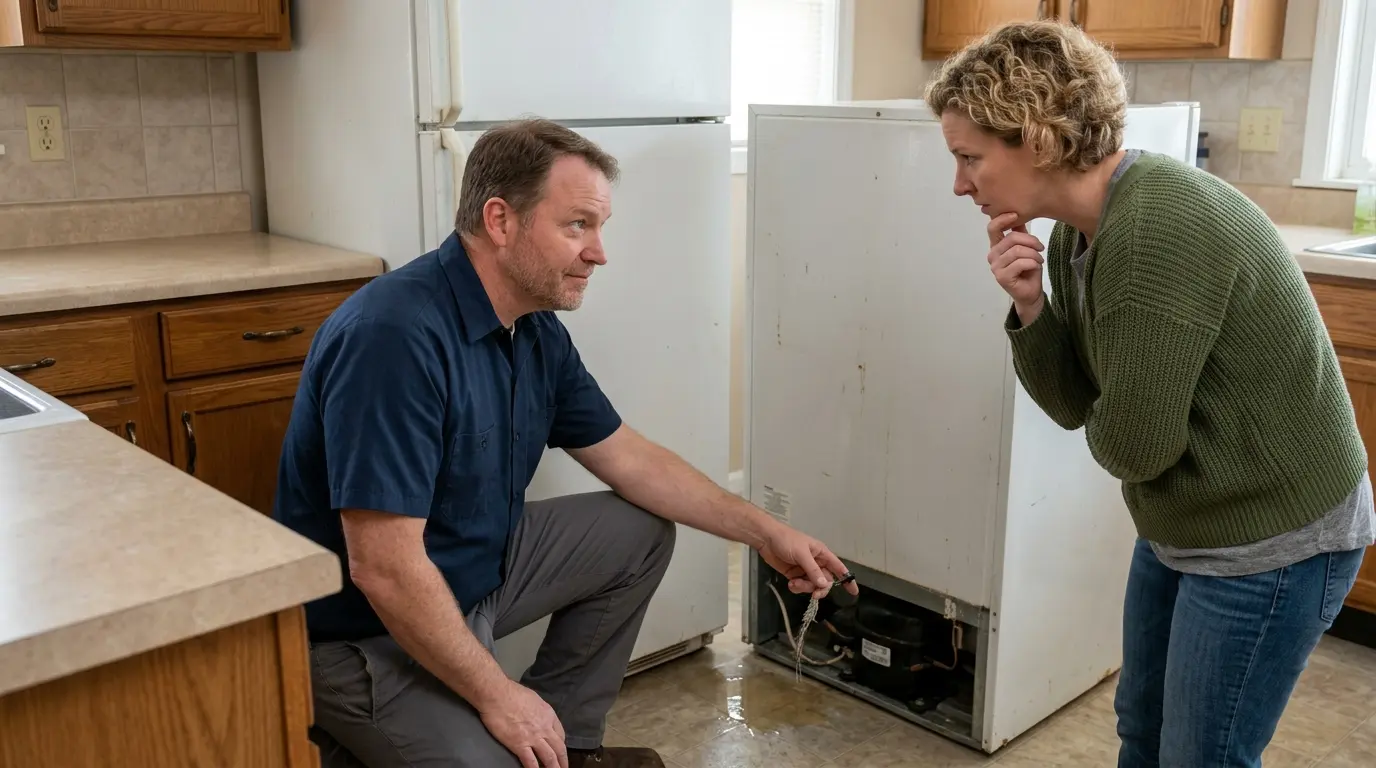
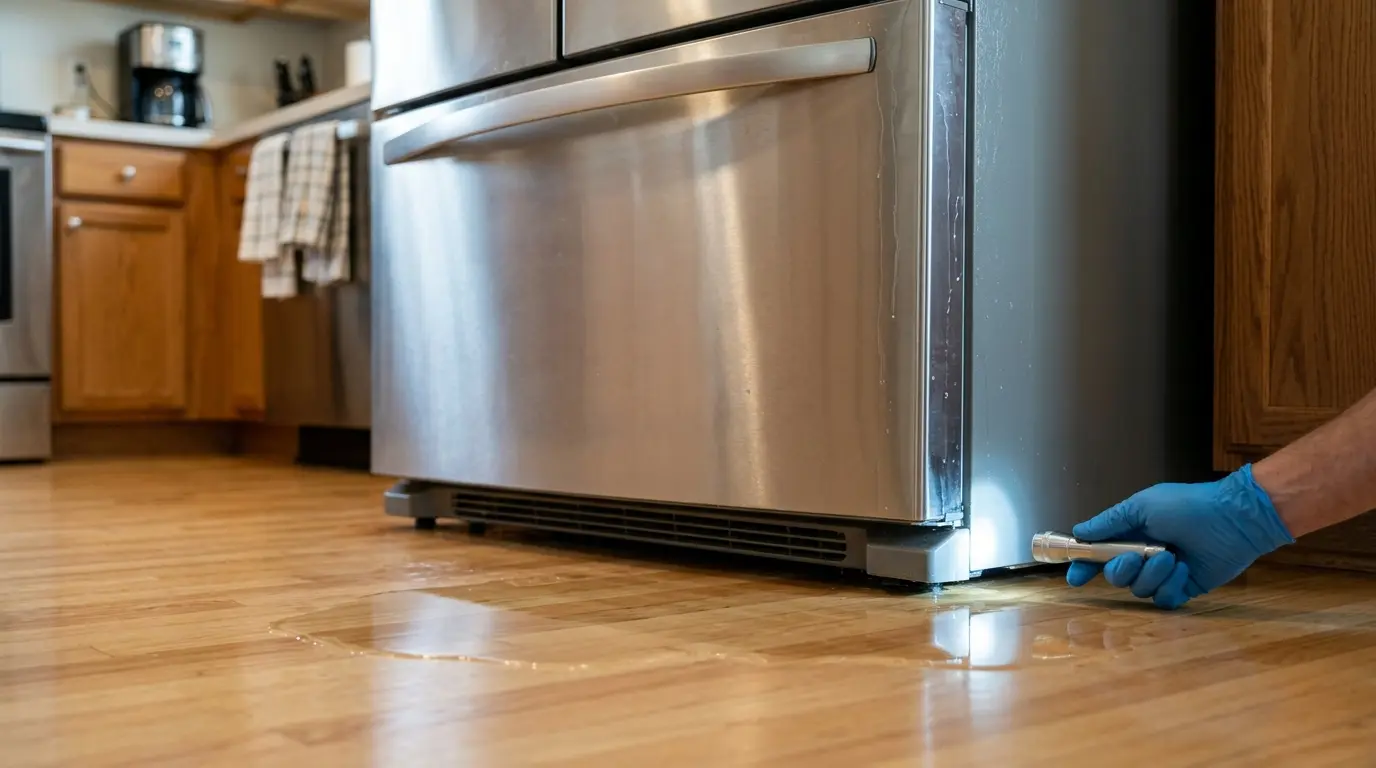





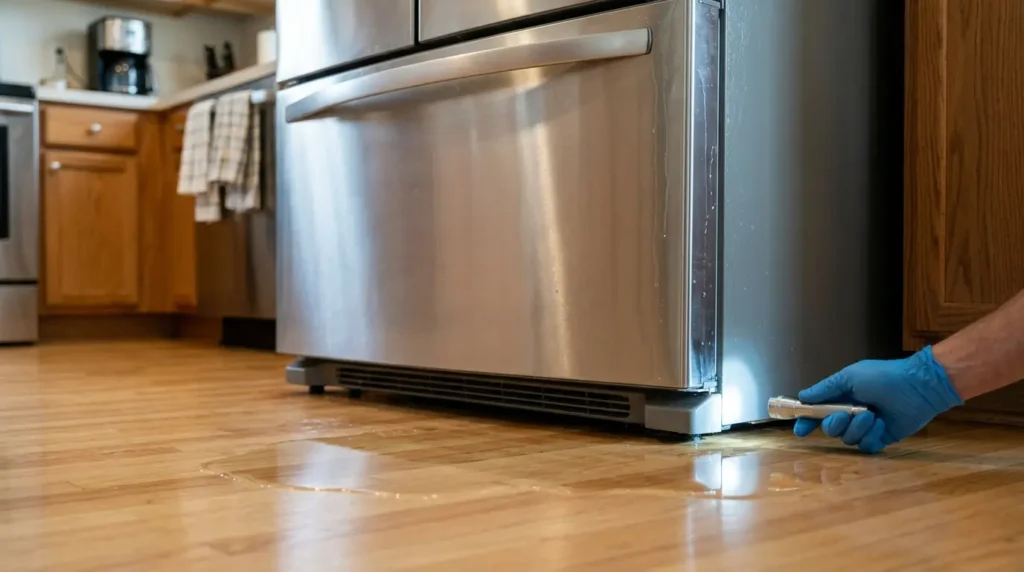
It is more than just an inconvenience when you find a puddle under your refrigerator. A refrigerator leaking water can result from something simple, such as a clogged drain or a problem with the water supply line, ice maker, or another component.
One of the key things to watch for when you own a home in Orlando is refrigerator moisture. Central Florida has warm conditions for much of the year, and Orlando regularly experiences hot, rainy weather. So when an appliance starts leaking, proper moisture control and rapid water damage prevention are helpful.
Why Is My Refrigerator Leaking Water?
The location of the water can provide an important clue. If you notice the fridge leaking inside, water under the crisper drawers, or a puddle on the kitchen floor, check these common causes first.
1. Clogged Defrost Drain
One of the most common causes of water in or under a refrigerator is a clogged defrost drain. The defrost cycle causes ice to melt, which must pass through the drain into the drain pan. If objects such as food, ice, or debris get stuck in the venting passages, water may back up and accumulate in the refrigerator or freezer. Another frequent cause of refrigerator leaks, according to Whirlpool, is a clogged defrost drain.
| DIY fix: Check your owner’s manual for the drain location. If you can safely access it, remove visible debris and ice without using sharp objects that could damage the appliance. |
2. Damaged Door Gasket
If the gasket on the door is damaged or worn, the refrigerator may not seal. Warm air is introduced, which may lead to condensation and icing. Look at the door seal for any cracks, gaps, looseness, or loose areas that do not fit snugly against the cabinet. The damaged gasket may need to be replaced, which can help to improve cooling efficiency and eliminate the issue.
3. Damaged Water Supply Line
When you notice water behind or under your refrigerator, check the water supply line if your refrigerator has an ice maker or dispenser. Persistent leaks may occur through cracks, kinks, loose connections, or damaged fittings. According to the manufacturer’s advice, check for visible damage to connections that are accessible and to the supply tubing.
Before inspecting the line, unplug the refrigerator when appropriate and shut off the water supply.
4. Ice Buildup or Defrost Problems
Too much ice can build up around the evaporator/freezer compartment to make normal drainage difficult. As this ice eventually turns to water, more will enter the drainage system than normal. If the ice keeps coming back after being removed, the issue could be related to the defrost system and not just a blockage. If there is frost or water buildup on the appliance repeatedly, it should be inspected.
5. Full or Damaged Drain Pan
Water generated from normal defrosting is collected in the drain pan. If it is cracked, displaced, or not able to store the recommended amount of water, you could see water underneath the refrigerator. Light moisture in the drain pan is expected; water spilling onto the floor means something is wrong.
6. Refrigerator Is Not Level
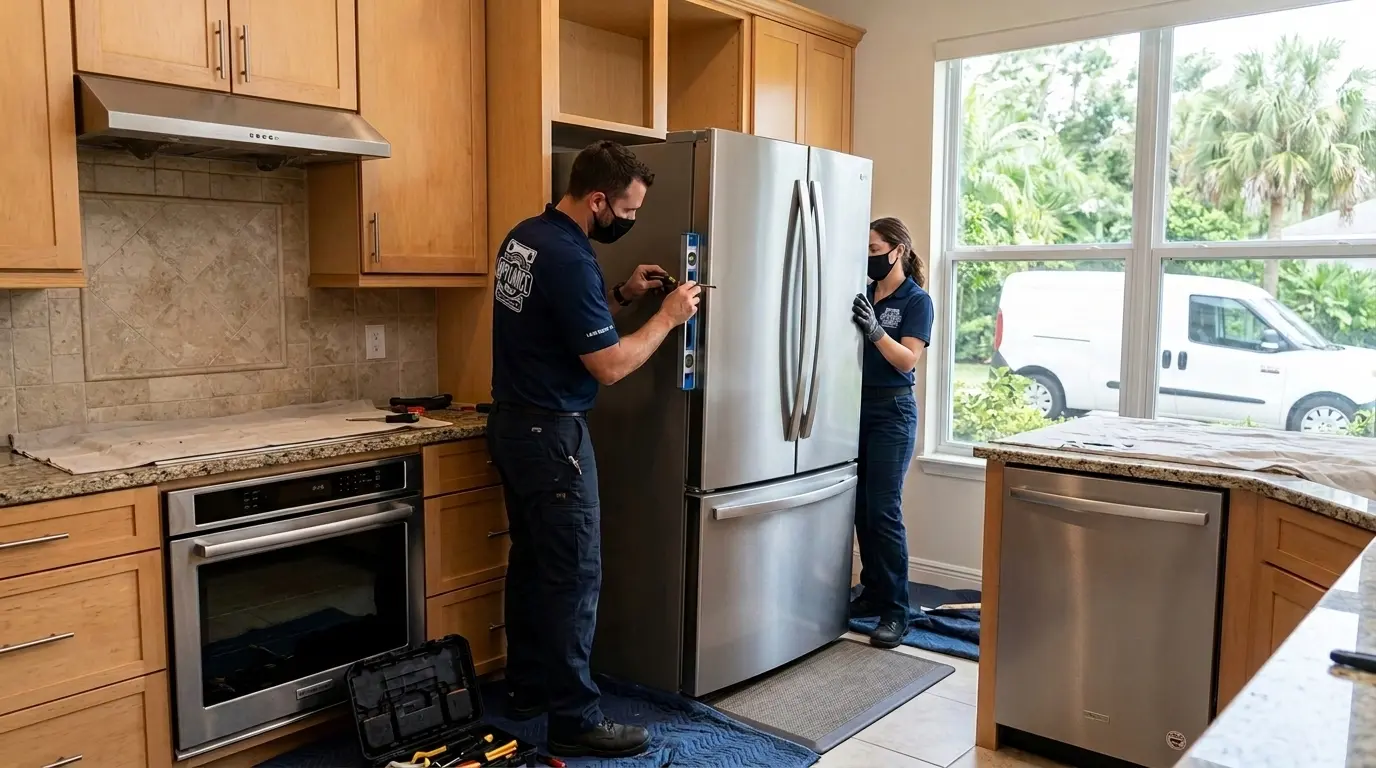
The water flow in the drainage system may be influenced by an improperly placed refrigerator. If the appliance is tilted improperly, there could be water pooling where it is not supposed to. Check the leveling requirements in your owner’s manual before making adjustments. In addition, the correct positioning can ensure that the doors close properly.
7. Ice Maker or Water Dispenser Problems
Possible causes of a leaking ice maker are a misaligned fill cup, too much ice, or a problem with the water connection. A dripping dispenser or an improperly installed filter can also leave water around the front of the refrigerator. Pay special attention to the filter and water connections if the leak is seen shortly after using the dispenser.
Where Is the Water Coming From?
Identifying the location can narrow down the cause:
| Where You See Water | Possible Cause |
| Inside refrigerator | Clogged defrost drain or excess condensation |
| Inside freezer | Ice buildup or drainage problem |
| Under the front | Drain pan, leveling, or internal drainage issue |
| Behind refrigerator | Water supply line or connection |
| Around dispenser | Filter, dispenser, or water line |
| Under crisper drawers | Blocked drain or excess moisture |
Do not presume that where you see water is the spot where the issue is occurring. Water may flow up internal surfaces prior to touching the floor.
Safe DIY Fixes You Can Try
There are some standard tests that people can make for themselves before booking a service.
Clear away any blockages to the defrost drain, such as food or containers. Inspect the refrigerator for damage to the door gasket; position the refrigerator according to the manufacturer’s leveling instructions.
Check easily accessible connections for moisture if you have a water dispenser or ice maker. Do not attempt to disassemble sealed refrigeration components or force frozen parts loose. For Orlando homes, reducing unnecessary warm-air entry also helps with moisture control. Keep the door closed as much as possible and make sure the gasket creates a consistent seal.
When Should You Call for Refrigerator Repair?
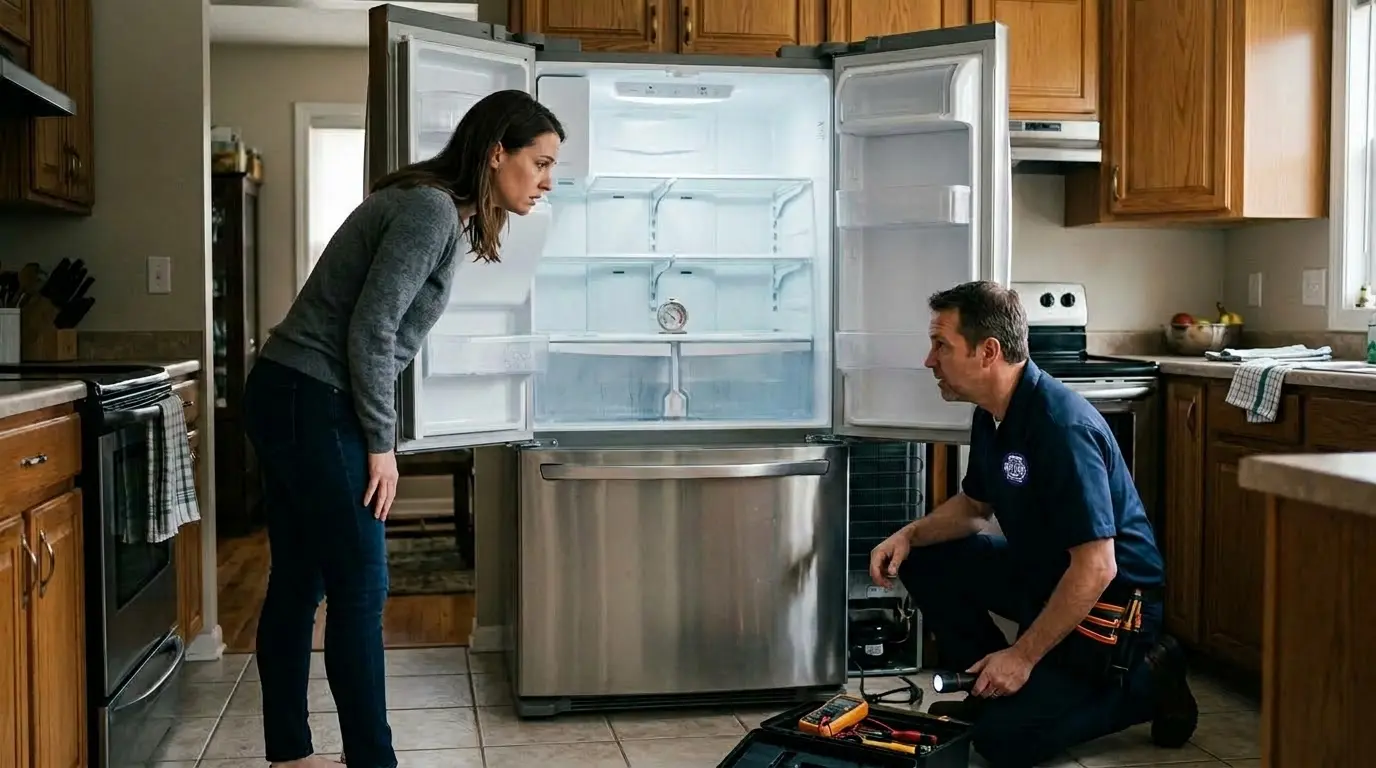
If the leak persists after simple checks, is persistent, or seems to be emanating from an internal source, then a professional inspection is advisable.
You should also consider refrigerator repair service when:
- Water is leaking continuously
- The refrigerator is not cooling properly
- Ice keeps building up
- The water line is cracked or damaged
- The drain repeatedly becomes blocked
- The appliance makes unusual noises
- Water is reaching electrical components
- You cannot pinpoint where the leak started
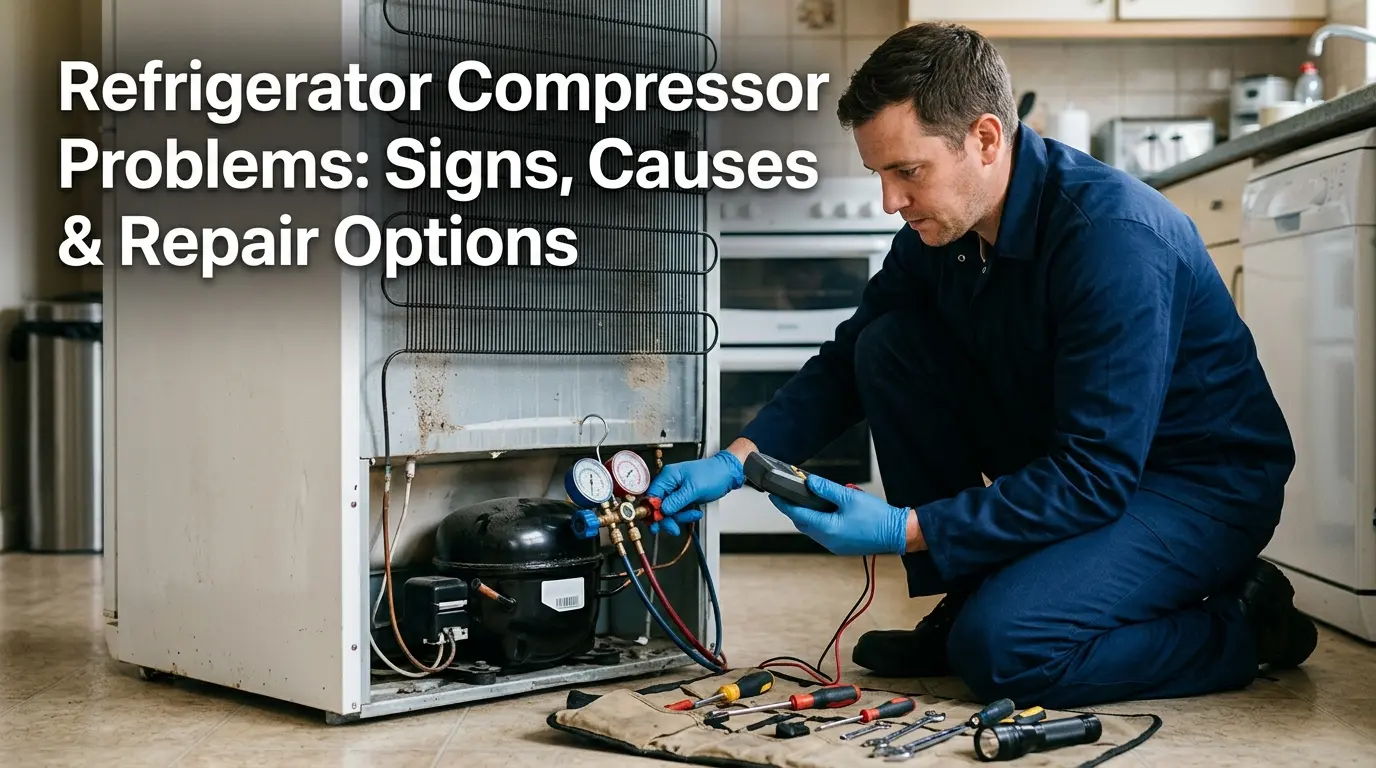
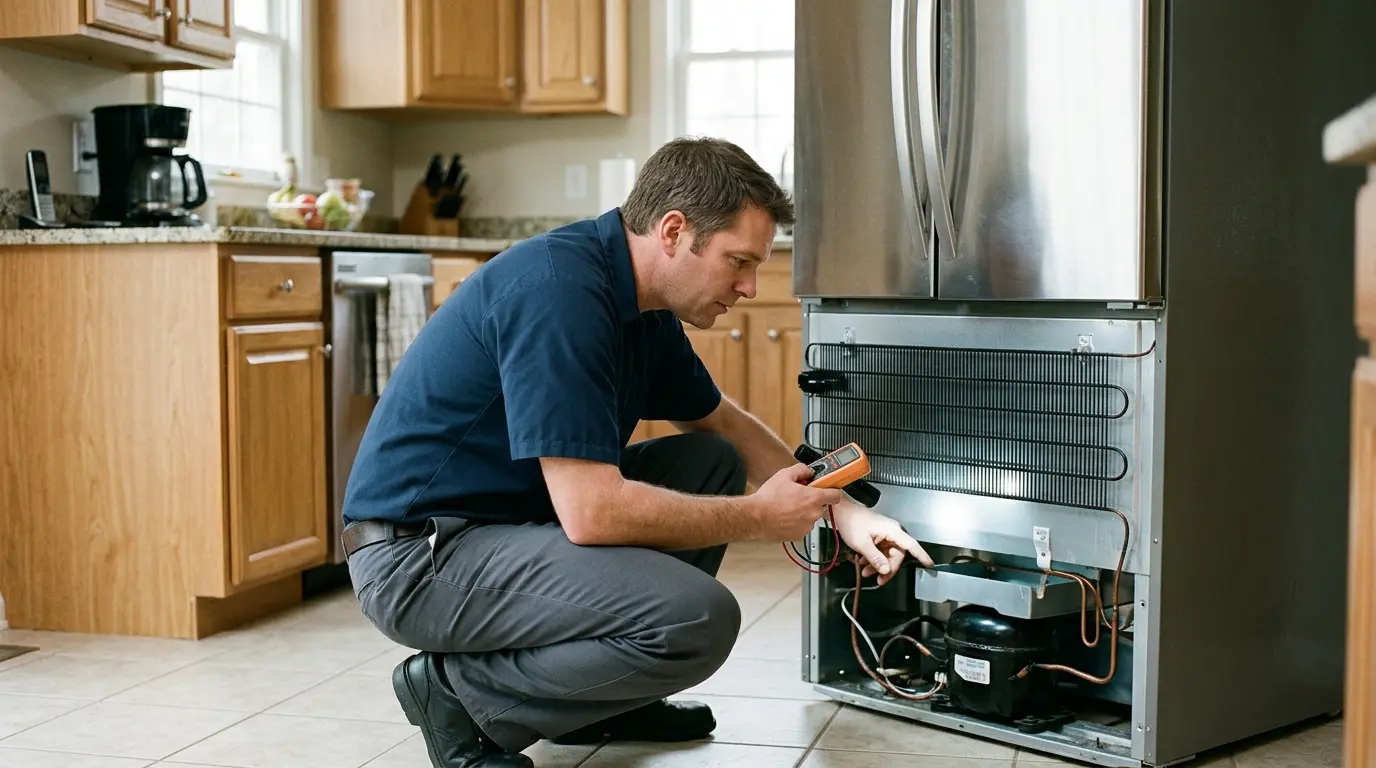
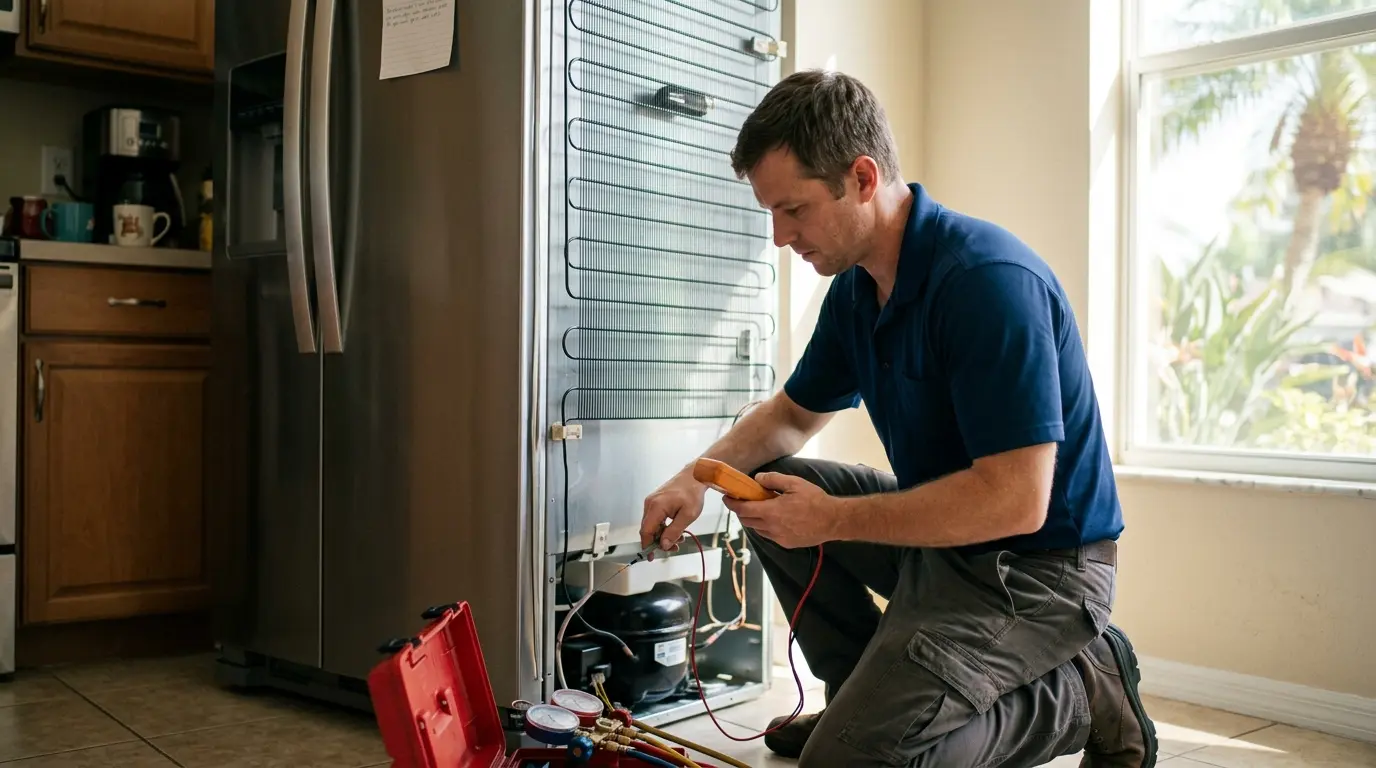
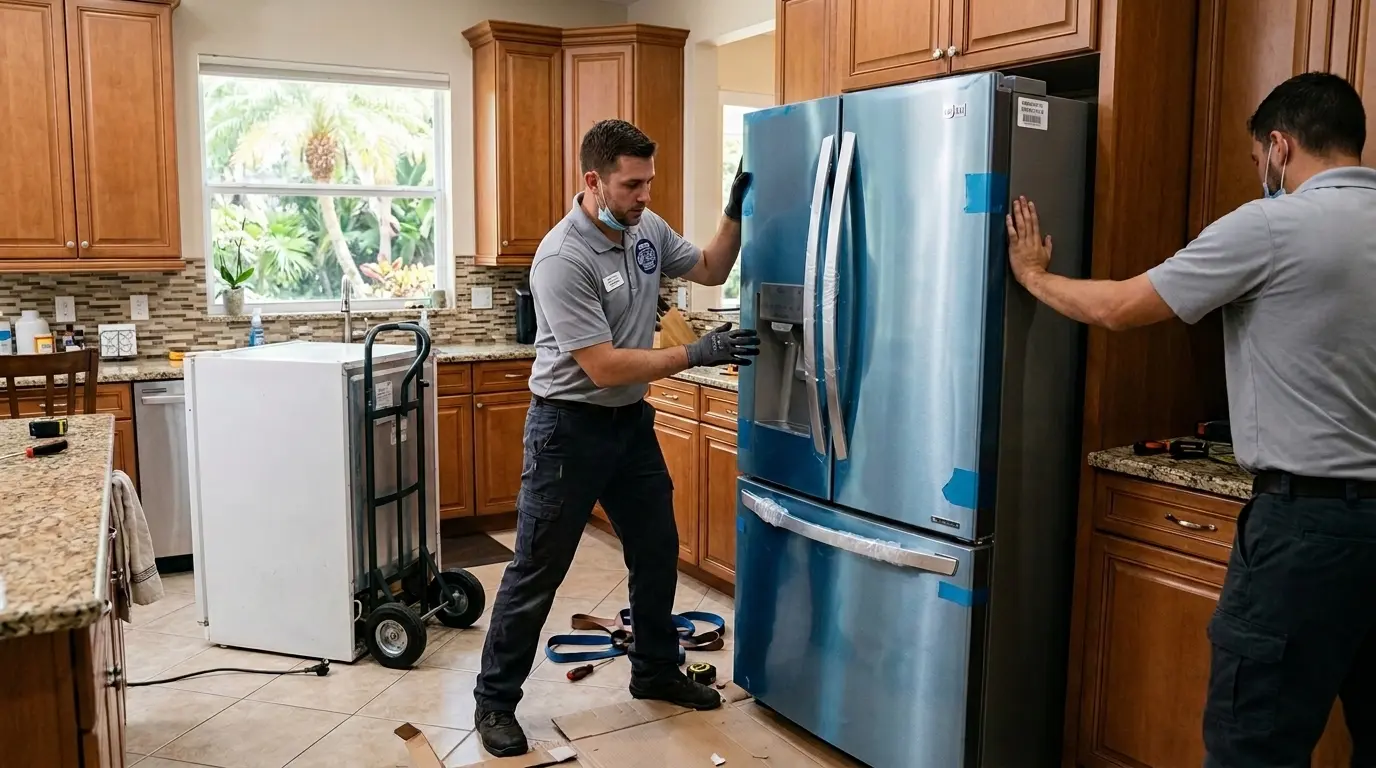
A technician can check the parts of the drainage system, defrost system, water connections, door seal, drain pan, and more instead of just the puddle that is clearly visible. For Orlando homeowners, Discount Appliance Repair of Central Florida can be an option when a recurring leak requires professional appliance inspection rather than another temporary fix.
How to Prevent Refrigerator Water Leaks
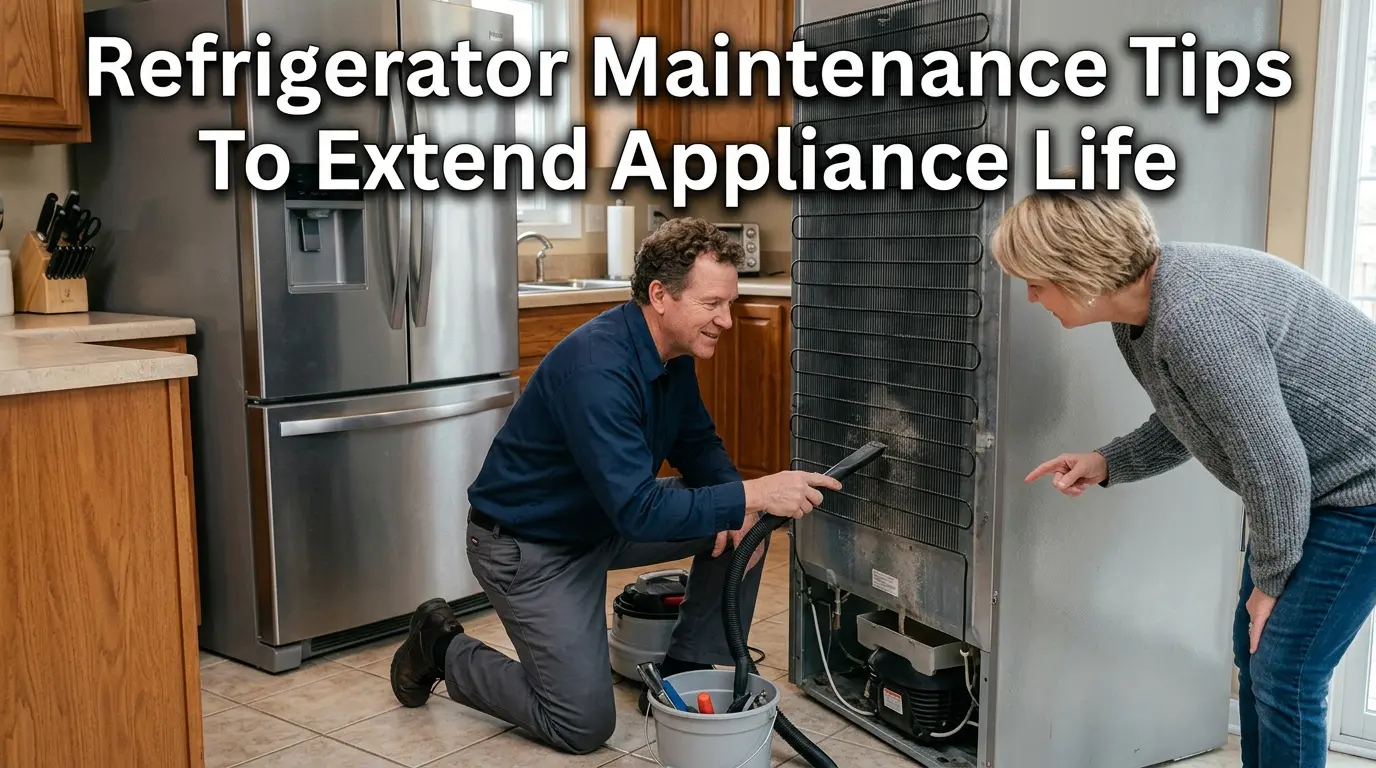
Proper upkeep can minimize the risk of future issues. Organize the refrigerator to ensure that food items do not obstruct drainage areas, check the door gasket occasionally, and change water filters as recommended by the appliance manufacturer.
It’s also a good idea to periodically inspect the space behind the refrigerator. It is easier to deal with moisture issues around a water connection if they are caught early than if they have caused damage to a floor or cabinets.
Final Thoughts: Stop Refrigerator Leaks Before They Cause Damage
Just because your refrigerator is leaking doesn’t mean you need a new one. Things like clogged drains, worn gaskets, lousy water lines, or drainage issues are often worth fixing if you catch them early.
If your refrigerator continues leaking despite basic checks, Discount Appliance Repair of Central Florida can help identify the underlying issue and determine whether repair is appropriate. Acting early can help prevent excess water from damaging nearby flooring, cabinets, and other parts of your Orlando home.
Frequently Asked Questions
Why is my refrigerator leaking water from the bottom?
Usually, water puddling at the bottom means you’ve got a clogged defrost drain, a damaged drain pan, a bad water supply connection, or maybe the fridge isn’t leveled right. The source of the water is also very important, whether it is in front of, behind, inside, or surrounding the dispenser. That assists in narrowing down the underlying issue.
Can a clogged defrost drain cause a refrigerator to leak?
If the defrost drain gets blocked by ice or debris, the water has nowhere to go. It backs up inside the fridge or freezer and eventually finds its way onto your floor.
Is it safe to use a refrigerator that is leaking water?
It depends on the source and location of the leak. If there’s water near any electrical parts, unplug the fridge immediately and get it checked. If it’s just a bit of condensation, it’s not as urgent, but recurring leaks always need attention.
How do I stop my refrigerator from leaking water?
Start by checking the basics: look at the defrost drain, door gasket, drain pan, water connections, and make sure the fridge is level. If that doesn’t fix things, or you can’t pinpoint the issue, it’s safer and usually more effective to call in a professional than repeatedly trying DIY fixes.