










When a washing machine not draining, wet clothes and standing water can disrupt the whole laundry routine. If your washing machine is not draining in Sanford, FL, the cause could be a kinked drain hose, a blocked filter, a household drain obstruction, or a failing pump.
Before calling for repairs, try a few simple checks you can safely handle. The key is to identify what you can inspect without exposing yourself to electrical hazards or risking further damage to the washer.
Start With the Symptoms
Pay attention to what happens at the end of the wash cycle. The symptoms can help narrow down the possible cause.
- Water remains, but the washer makes a humming sound: The drain pump may be struggling with a blockage or may have developed a fault.
- The washer stops before spinning: The washer may not remove enough water to start the spin cycle. A lid switch, door lock, or control problem is another possibility.
- The machine is completely silent: A power supply issue, faulty switch, or electronic control fault may be involved.
- Water drains slowly: Look for a pinched hose, blocked filter, or clog in the household drain.
- An error code appears: Record the code and check the owner’s manual for its meaning before resetting the appliance.
These signs are clues, not a final diagnosis. Several different faults can produce similar symptoms.
Inspect the Drain Hose for Bends and Clogs
A bent or compressed drain hose can prevent wastewater from leaving the washing machine. This is one of the first things to inspect because you may be able to spot the problem without opening the appliance.
Before checking behind the washer, turn it off and unplug it if the plug and surrounding area are dry and safe to reach. Do not move a heavy machine alone or pull it by its hoses.
Look for these issues:
- A hose bent sharply behind the washer.
- A drain hose pinched between the washer and wall.
- Visible damage, leaks, or a loose connection.
- A drain hose that has slipped out of its proper position.
Correct only an obvious, accessible kink. Do not disconnect a hose full of water unless you know how to contain the spill safely. If the hose looks clear but water still will not drain, the blockage may be inside the pump or plumbing.
Inspect the Washer Filter Carefully
Many front-loading washing machines use a pump filter to collect lint, coins, buttons, and other debris before it can enter the pump. If this filter gets blocked, the appliance may drain more slowly or leave standing water in the drum. Some top-load washers also have accessible filters, while others use different designs.
| Important Tip: Not every model has a user-accessible drain filter. Check the owner’s manual before opening an access panel or taking anything apart. |
If your manual includes filter-cleaning steps, follow them carefully. Unplug the washer first, allow hot water to cool, and prepare towels and a shallow container because water may spill out. Never force open a filter cover or remove a panel that requires tools if you are unsure what is behind it.
Stop if the water level is high, the access area is difficult to reach, or the instructions are unclear. A technician can safely drain the machine and inspect the pump assembly.
Check Whether the Household Drain Is Clogged
Sometimes the washing machine is not the source of the problem. A clogged standpipe or household drain can slow wastewater flow or cause water to back up.
Look for these warning signs:
- Water rises in the laundry standpipe while the washer drains.
- A nearby sink or floor drain backs up at the same time.
- Water returns to the washer’s drain area.
- Drainage problems affect more than one fixture.
If the problem appears limited to the household plumbing, a plumber may be needed rather than an appliance technician. Avoid pouring chemical drain cleaner into the washer or its hoses. These products can damage components and create a hazard during later servicing.
When the Drain Pump or Electrical System May Be at Fault
If the hose and accessible filter appear clear, the drain pump may be blocked internally, worn out, or unable to operate. A failed pump motor, damaged wiring, faulty lid switch, door-lock problem, or control-board fault can also interrupt drainage.
Do not remove electrical panels, test live wiring, bypass a safety switch, or reach into the pump while the appliance is connected to power. If you notice a burning smell, sparks, unusual electrical buzzing, or water near an outlet, stop using the washer. Disconnect power only if it is safe to do so, and keep clear of wet electrical areas.
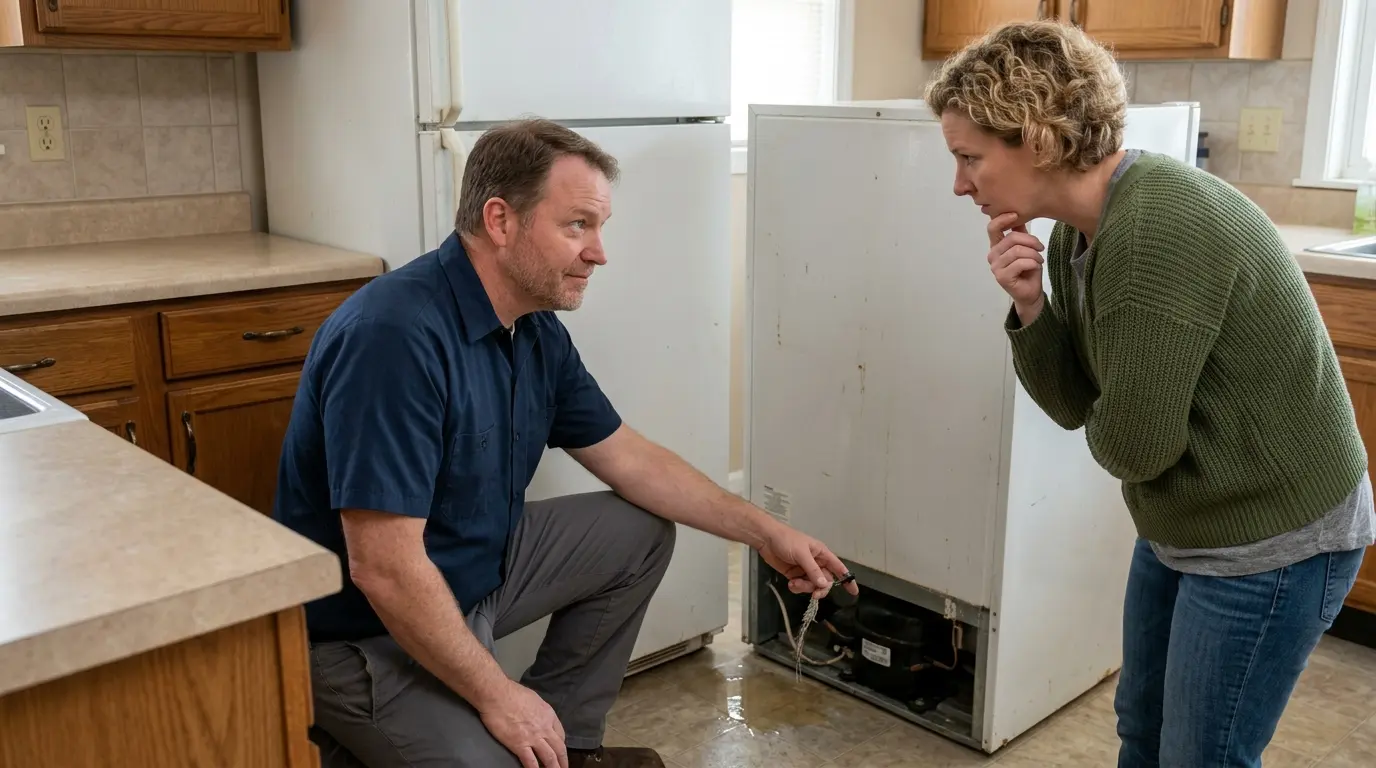
For persistent drainage failure, Discount Appliance Repair of Central Florida can assess the washer, identify the underlying fault, and determine whether a repair or replacement part is appropriate.
What Does Washer Repair Cost in Sanford, FL?
Online repair cost estimates for washing machines in Sanford can vary. One local estimate places a typical repair around $261–$272, while another lists a broader estimated range of approximately $255–$277. These are third-party estimates, not guaranteed prices or a quote for your specific washer.
The final cost depends on the model, diagnostic findings, parts, labor, and whether the issue involves a simple obstruction or a failed pump. Ask for the diagnosis and total expected cost before authorizing work. If you are deciding whether to repair or replace the appliance, a technician can help you evaluate its age, condition, and estimated repair cost.
When to Call an Appliance Technician
Arrange professional service if the washer repeatedly leaves standing water, displays an unresolved error code, makes unusual pump noises, or will not enter the spin cycle after basic checks. Professional service is also the safest option if the filter cannot be reached or the problem may involve wiring, controls, or internal pump parts.
Avoid repeatedly restarting a washer that cannot drain. Extra cycles may not clear the obstruction and can increase the risk of leaks or further component damage.
Frequently Asked Questions
Can I run a spin cycle if water is still in the washer?
Follow the manufacturer’s instructions. If the washer is showing an error, making unusual noises, or failing to drain, do not keep restarting it. Resolve the drainage issue first.
Is it safe to clean the drain pump filter myself?
Only if your model has a user-accessible filter and the manual explains the procedure. Unplug the washer, prepare for water spillage, and stop if the filter is stuck or the instructions are unclear.
Why does my washer drain sometimes but not every time?
An intermittent blockage, failing pump, loose connection, or control issue may cause inconsistent drainage. The pattern and any displayed error code can help a technician narrow down the fault.
Final Thoughts: Get the Drainage Problem Diagnosed Correctly
A kinked hose or accessible filter blockage may be simple to identify, but persistent standing water can point to a more serious mechanical or electrical issue. Start with safe visual checks, avoid opening components you are not qualified to handle, and seek professional diagnosis when the problem continues. Discount Appliance Repair of Central Florida helps Sanford homeowners identify washer problems and make informed repair decisions.