











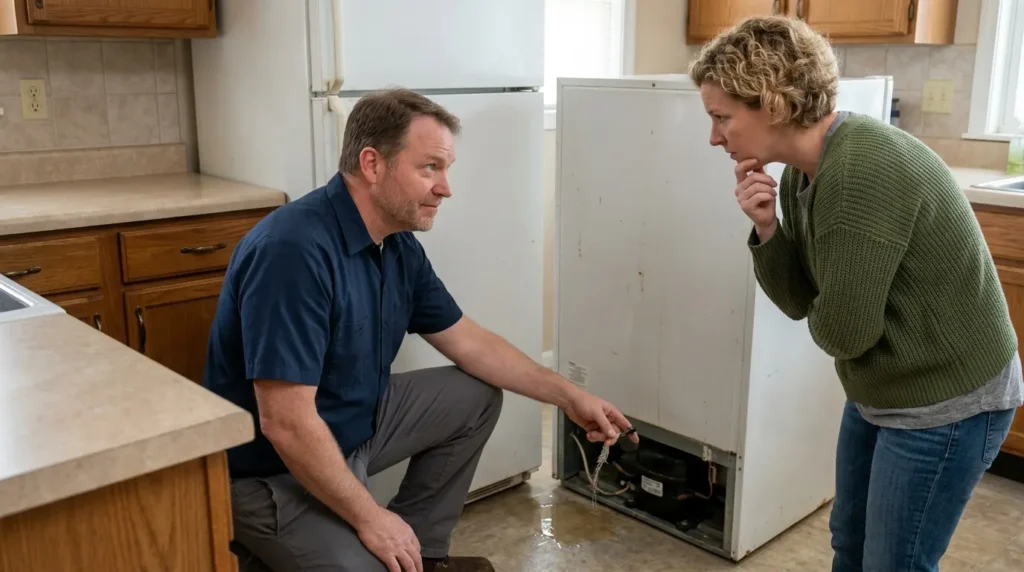
A refrigerator may still be operating and performing normally for many years after the initial issues arise, but this doesn’t always mean repairing is the best solution. As a unit gets older, repeated repairs, rising energy consumption, and declining performance can change the overall cost of ownership.
If you are trying to decide whether to repair or replace refrigerator equipment in your Orlando home, look at more than one symptom. By combining the age of the appliance, repair costs, energy consumption, and condition, you can indicate whether another repair is warranted or if it is time to replace the appliance.
Start With the Refrigerator’s Age and Condition
Each refrigerator has its own expiration date. ENERGY STAR makes an assumption of a refrigerator’s average life of approximately 12 years in its refrigerator savings assumptions, while other government-industry research has estimated longer average lives based on the type of refrigerator and data source.
That makes age a useful starting point, not an automatic replacement rule.
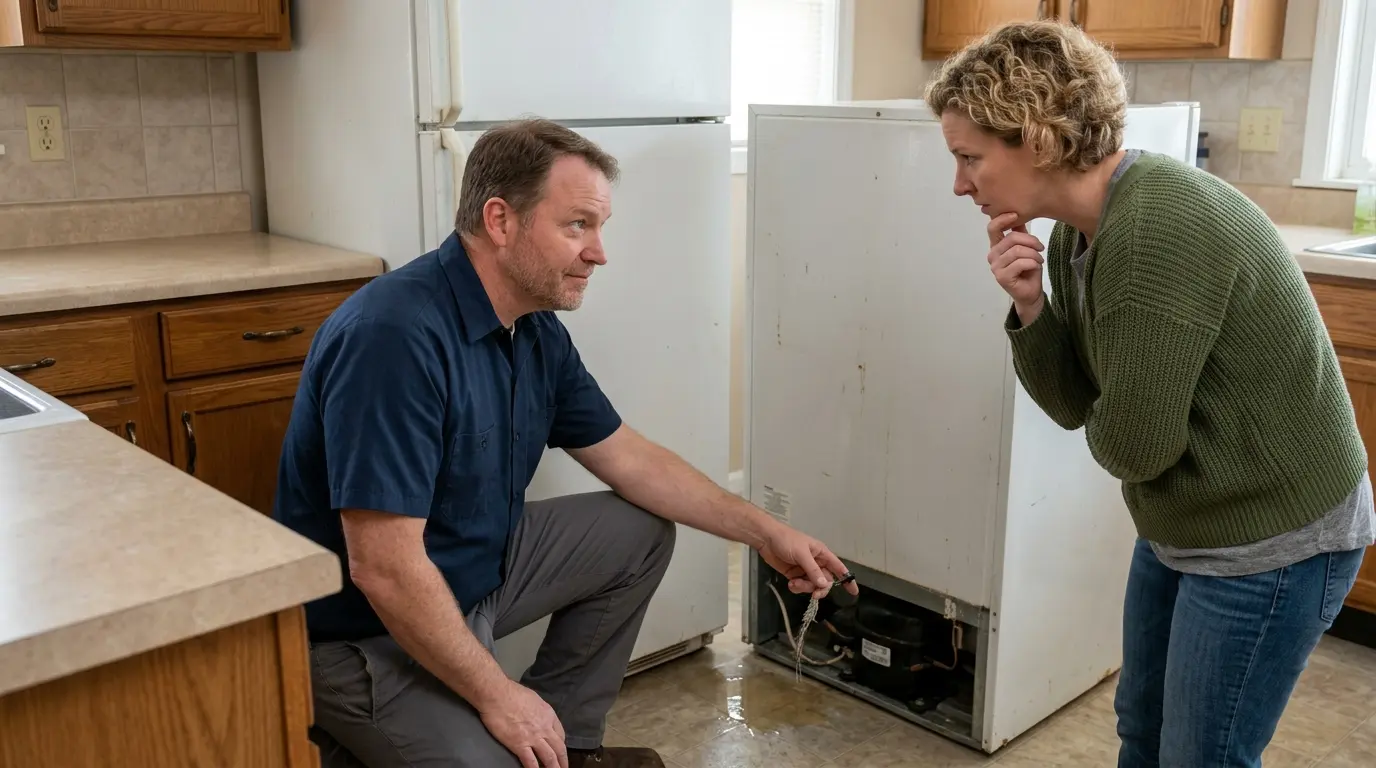
A 10-year-old refrigerator that has a minor issue with its door seal could be worth repairing. A 12-year-old unit that has had its compressor replaced, with a conditioner that continues to have cooling issues and is seeing a rise in energy costs, is definitely a closer cost comparison.
7 Signs Your Refrigerator May Need Replacement
1. Repairs Are Becoming Too Frequent
One repair does not necessarily mean your refrigerator has reached the end of its refrigerator lifespan. The bigger concern is a pattern of repeated failures.
Add the cost of any repeated repairs to the ice maker, thermostat, control board, water dispenser, or cooling system. Regular maintenance can make an otherwise inexpensive appliance into a costly long-term investment.
2. A Major Repair Has a High Price
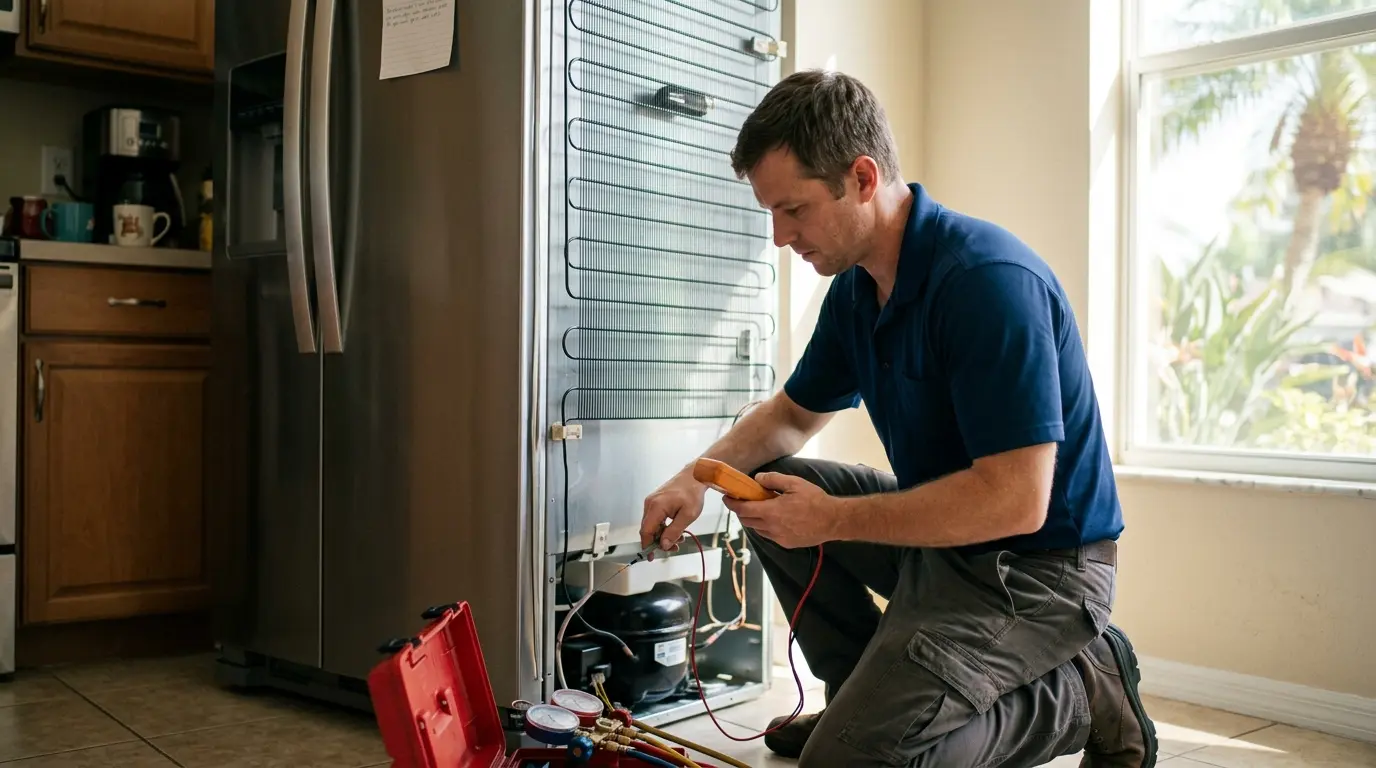
Not every repair should be treated equally. Changing a door gasket or any other relatively small part is quite different from a compressor or sealed refrigeration system repair job.
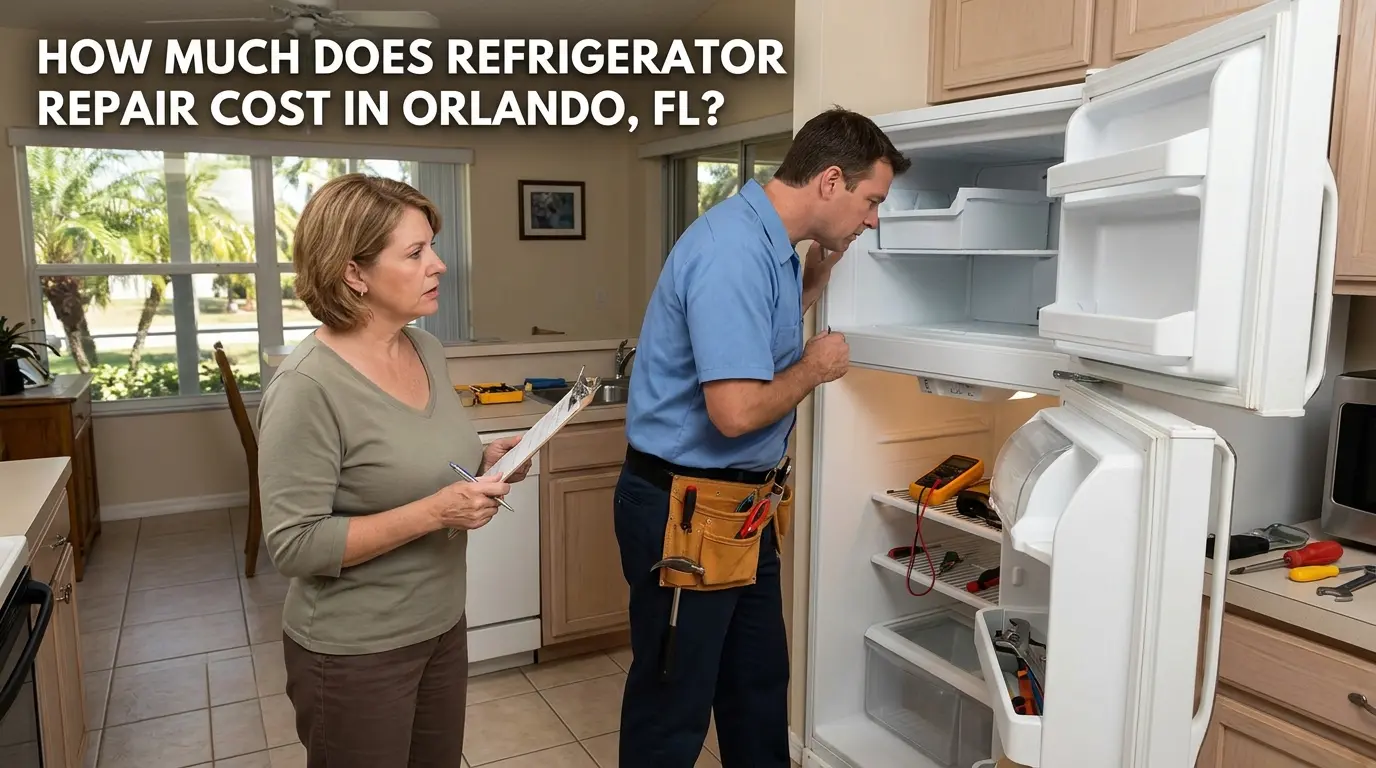
The cost of refrigerator repair services is estimated to lie in the range of approximately $95 to $1295 on average, as per the current estimate in the Orlando area, depending upon the problem and the refrigerator parts involved. Some of the more costly repairs include compressor replacement, which can cost around $375 to $1,295. These are local estimates and do not constitute a guarantee of actual costs, which will depend on the refrigerator and diagnosis.
When considering an expensive fix, think in terms of new refrigerator expenses before you accept the quote.
3. Your Energy Bills Keep Rising
Older refrigerators can use more electricity than newer, efficient refrigerators. ENERGY STAR claims that refrigerators more than 15 years old can cost more to run, and an older refrigerator can use approximately 20% more energy on average than an ENERGY STAR refrigerator.
This does not imply that all of the older fridges need to be replaced immediately. However, unusually high energy consumption can become part of the ownership cost when combined with expensive repairs. Check your refrigerator’s age, energy information, and current utility costs before making the decision.
4. It Cannot Maintain Consistent Temperatures
Food should stay properly chilled without the refrigerator constantly struggling to maintain temperature.
Watch for:
- Food spoiling sooner than expected
- A refrigerator section that feels too warm
- Freezer temperatures that fluctuate
- Excessive frost
- A compressor that appears to run nearly nonstop
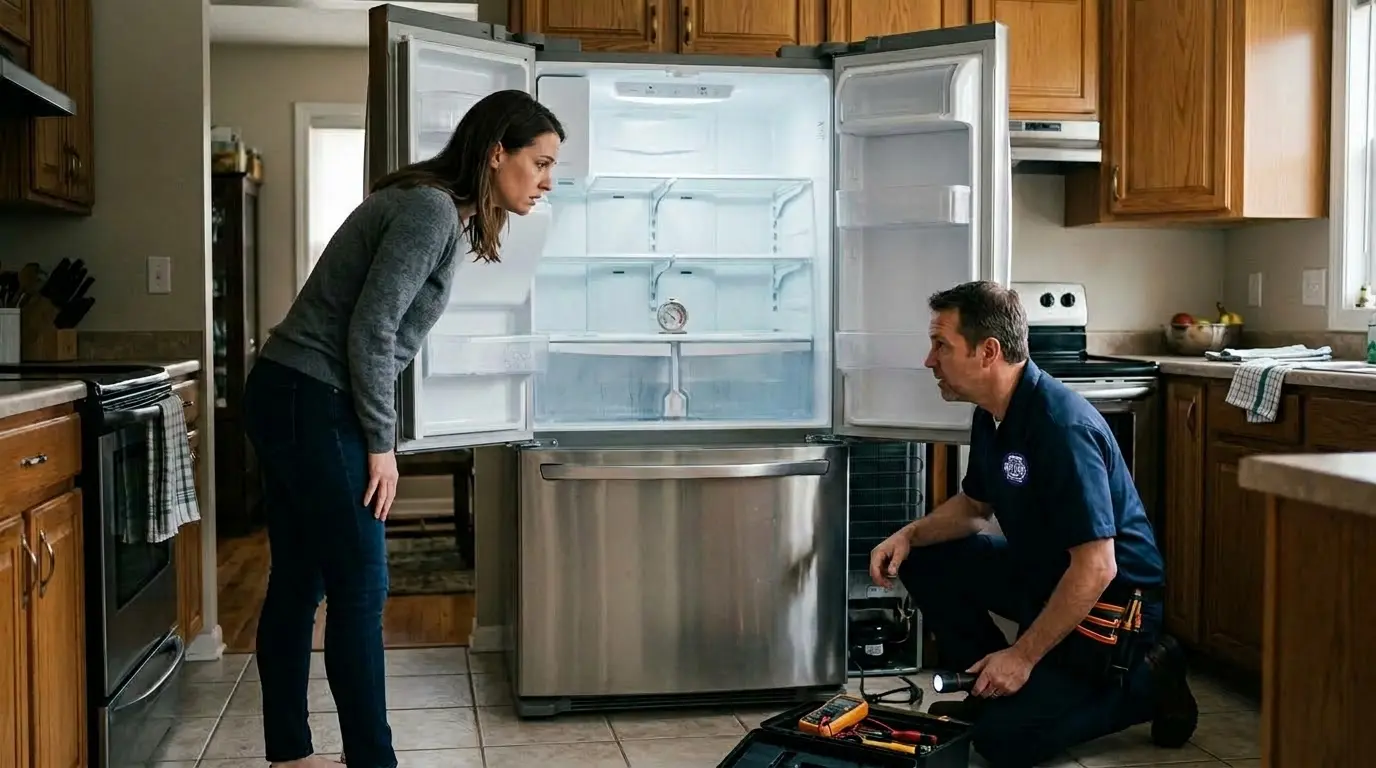
Dirty condenser coils, malfunctioning doors, fans, or thermostats can lead to cooling problems. Some can be repaired, and it is crucial that professionals diagnose the problem before making the decision of replacement.
5. The Compressor or Sealed System Is Failing
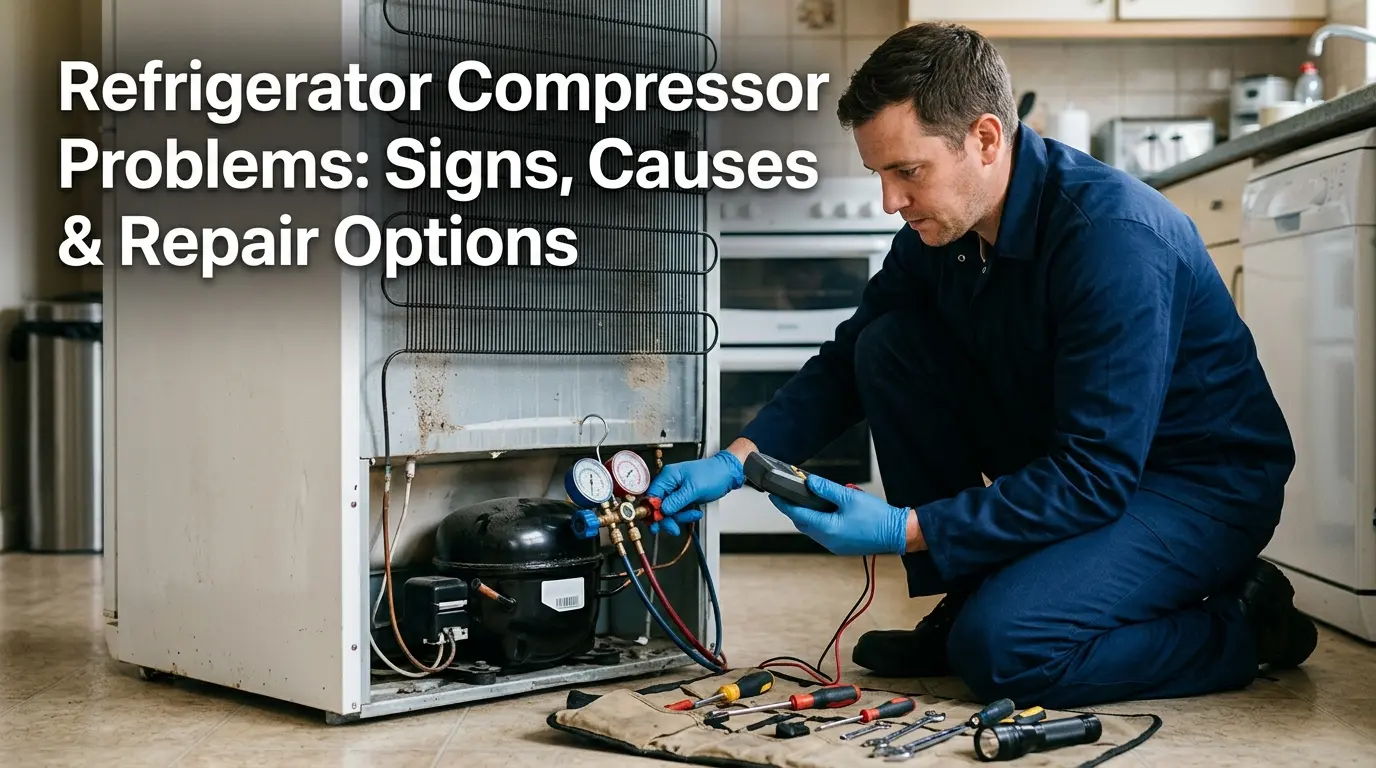
One of the most crucial and costly parts of the refrigerator is the compressor. When it doesn’t work on an older appliance, repair costs can be a big investment. If you have a compressor problem, it’s not necessarily a replacement issue. The choice depends on the age, condition, repair estimate, warranty status of a refrigerator, and the replacement cost.
For an older unit already experiencing several other problems, a major sealed-system repair may be difficult to justify financially.
6. Several Parts Are Failing at Once
An appliance becomes harder to justify when multiple components begin causing problems during the same period.
For example, imagine an older refrigerator with:
- A failing ice maker
- A damaged door seal
- Cooling fluctuations
- Frequent frost buildup
- Rising energy consumption
Each problem might be repairable individually. Together, they can indicate that the appliance is entering a more expensive stage of its lifecycle.
7. The Refrigerator No Longer Fits Your Needs
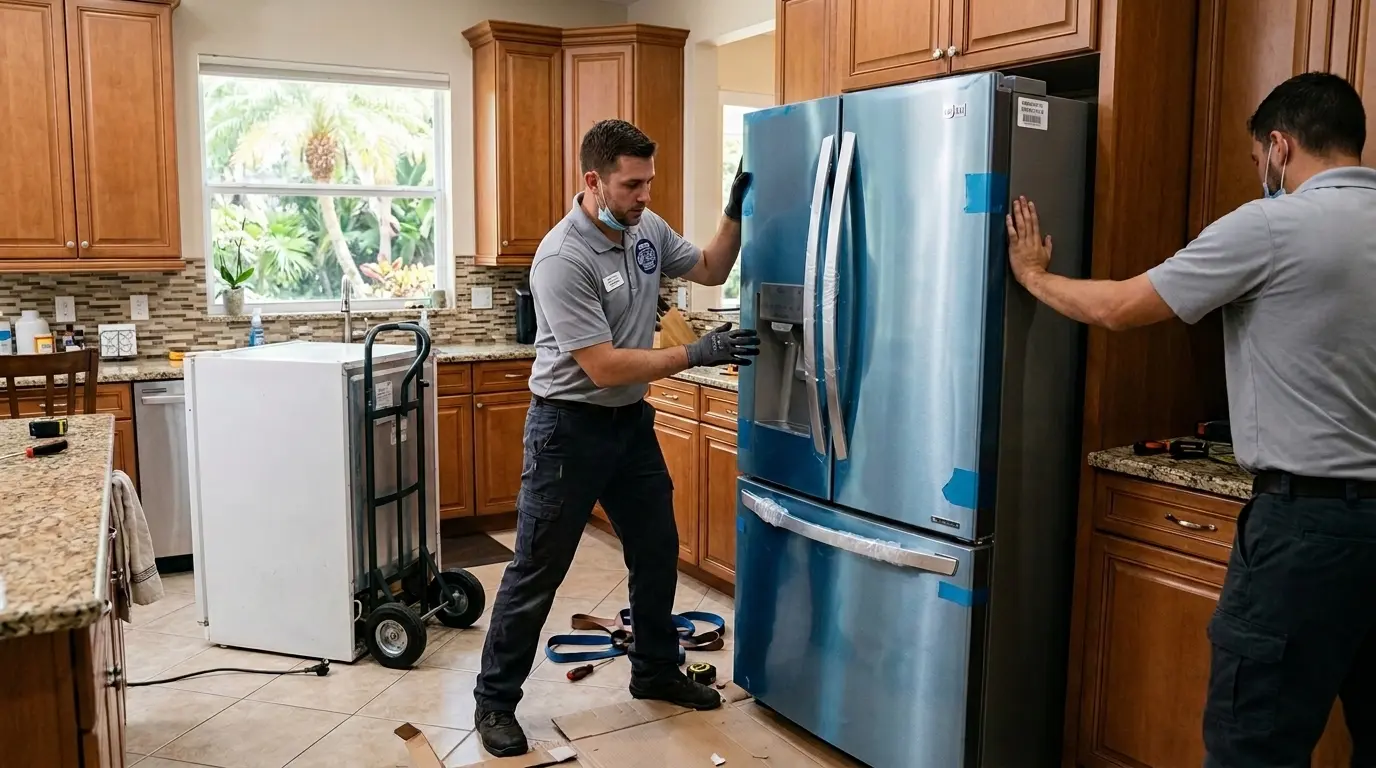
Sometimes replacement is not only about failure. Your refrigerator may still work but no longer meet your household’s needs. The family may require additional space, temperature control, an alternate arrangement, or more efficient operation. If the top freezer is already out of style and not efficient, it might be a good idea to replace it with a newer model.
The important point is to compare the total ownership cost rather than focusing only on the purchase price.
Repair or Replace? Use This Quick Comparison
| Situation | Consider |
| Minor repair on a newer refrigerator | Repair |
| Door seal or simple component failure | Repair |
| One moderate repair on a well-maintained unit | Usually repair |
| Repeated failures | Compare replacement cost |
| Major compressor repair on an older unit | Compare carefully |
| Rising energy use plus frequent repairs | Replacement may make more financial sense |
| Refrigerator cannot maintain safe, consistent cooling | Diagnose promptly |
This is a set of guidelines and not a rule of thumb. A professional diagnosis will determine if there is a relatively minor component failure or a larger problem with refrigeration-system issues.
When Repair Still Makes Sense
Don’t replace a refrigerator just because it’s old. An appliance that needs one fairly simple repair can operate for years if cared for.
Some basic issues like a worn door seal, dirty condenser coils, a malfunctioning thermostat, or some of the parts of the ice-maker could be worth fixing. The average range of several common repairs on components is well below those for major work around the sealed system, according to Orlando repair estimates.
However, regular maintenance is also important. Maintain condenser coils clean as per the manufacturer’s instructions, inspect door seals, prevent interior air blockages, and replace the water filter as per the manufacturer’s guidelines.
What to Consider Before Buying a Replacement Refrigerator
If replacing your old fridge makes more sense money-wise, don’t just pick one that looks good; check out all the details that matter.
Look at:
- ENERGY STAR certification
- Annual energy consumption
- Refrigerator capacity
- Door configuration
- Ice maker and water dispenser features
- Expected operating costs
- Warranty coverage
- Available repair support
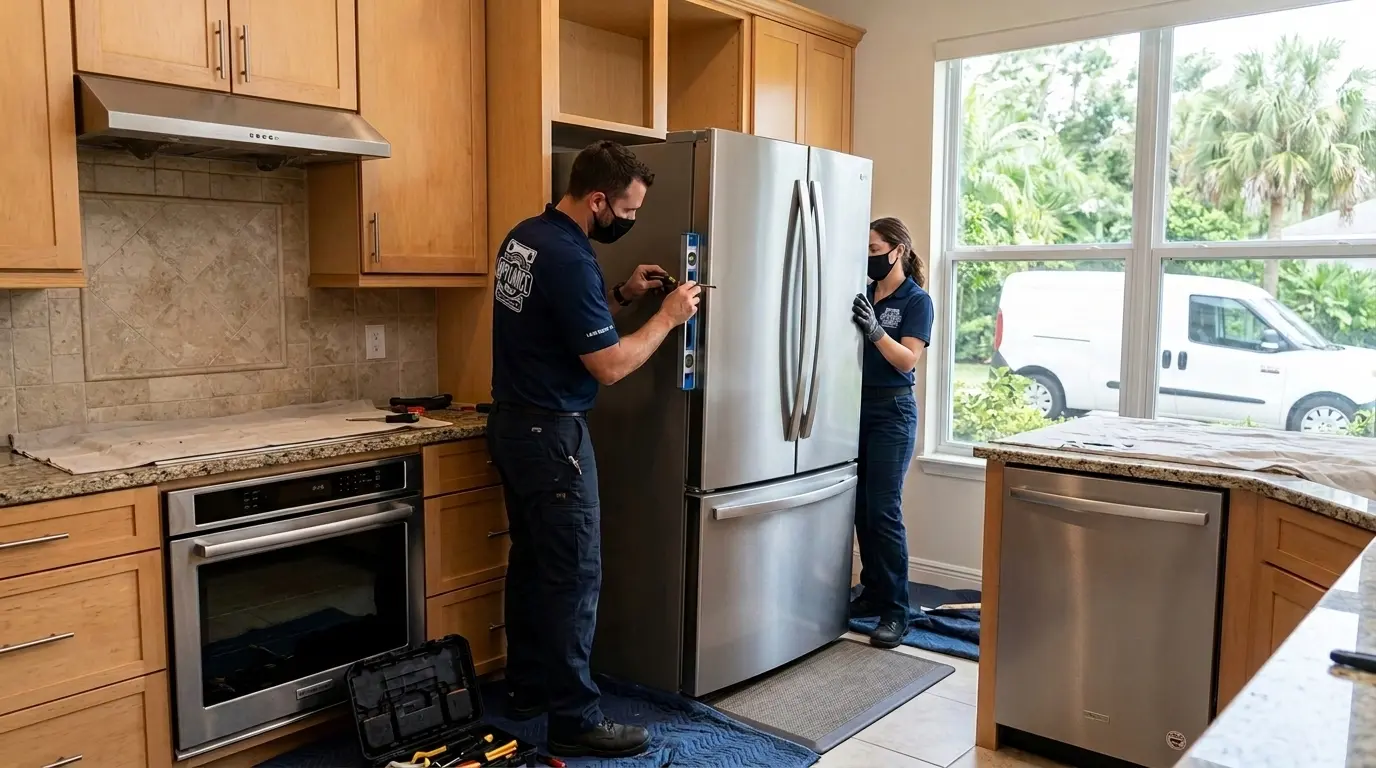
- Fit within your existing kitchen space
ENERGY STAR fridges use about 9% less energy than models that just meet the federal standard. Don’t go straight for a French door refrigerator just because it’s loaded with extra features. Pick the model that suits your household’s storage needs and budget.
Should You Repair or Replace Your Refrigerator?
The answer depends on everything, not just the age or one repair. Age alone doesn’t mean your fridge is ready to go, and one fix doesn’t mean it’s on its last legs.
Instead, compare the repair costs, age, energy use, history of repairs, and future ownership costs. If your fridge isn’t that old and the issue is simple, repairs make sense. But if it’s older, keeps breaking down, wastes energy, and needs a big fix, you’re probably better off swapping it out.
Discount Appliance Repair of Central Florida can help Orlando homeowners identify the actual problem before making an appliance replacement decision. A proper diagnosis gives you information about the repair itself instead of forcing you to guess from symptoms alone.
Frequently Asked Questions
Is a 10-year-old refrigerator worth repairing?
It can be. A 10-year-old refrigerator with one reasonably priced repair may still be practical. However, if it has repeated failures or needs a major component, compare the repair estimate with the cost and efficiency of a replacement before spending more.
How long does a refrigerator usually last?
There is no guaranteed lifespan for every model. ENERGY STAR uses an average life of about 12 years for its refrigerator savings assumptions, while actual service life can vary based on design, maintenance, usage, and repair history.
Should I replace a refrigerator if the compressor fails?
Not automatically. Compressors aren’t cheap to replace, so look at your fridge’s age, condition, warranty, repair cost, and what a replacement costs. If your fridge is old and has other issues, getting a new one might make more sense financially.
Can cleaning condenser coils extend refrigerator life?
Cleaning the condenser coils helps your fridge work right, but always follow the manufacturer’s instructions; different models have different cleaning needs and coil locations. Cleaning the coils doesn’t guarantee a longer appliance life.
Final Thoughts: Making the Right Refrigerator Replacement Decision
Knowing when to repair or replace refrigerator equipment requires more than looking at one warning sign. Think about your fridge’s age, repair history, energy use, how well it cools, and what the next repair will cost.
Discount Appliance Repair of Central Florida can help homeowners get the refrigerator diagnosed before committing to a major repair or replacement. With the actual problem and repair cost in hand, you can make a more informed investment decision for your Orlando home.