











Your refrigerator operates day and night, so any minor issues that arise in the future can have a negative impact on cooling efficiency, energy consumption, and refrigerator life. This is particularly important in Orlando, where warm temperatures make home appliances go around 24/7 much of the year.
The National Weather Service recorded a 2025 average maximum temperature of 84.1°F at Orlando International Airport, compared with a 1991–2020 normal of 83.2°F. Keeping the refrigerator clean, properly ventilated, and correctly adjusted can help it maintain steady performance in a warm environment.
The refrigerator maintenance tips offered here will allow Orlando homeowners to get in the habit of caring for their refrigerator without an issue with cooling ever arising.
1. Clean the Condenser Coils Regularly
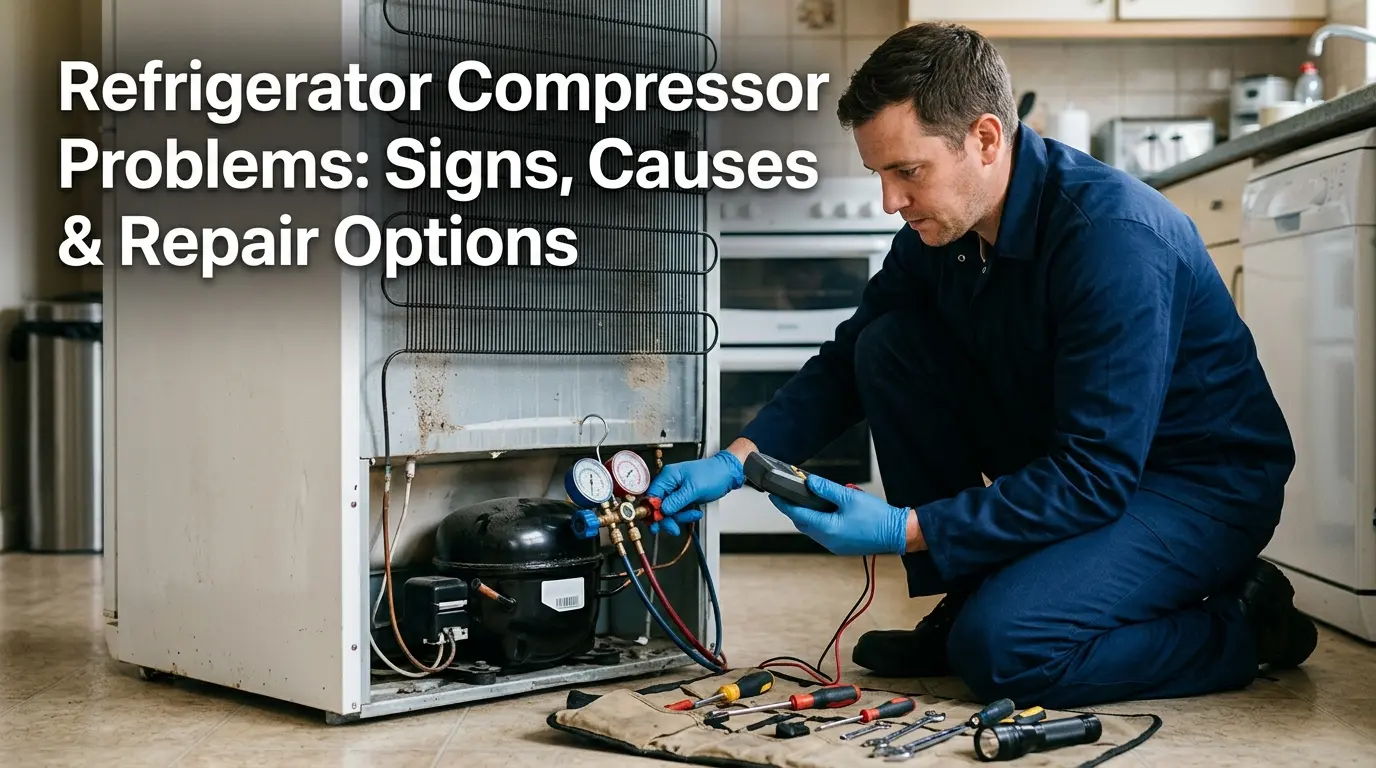
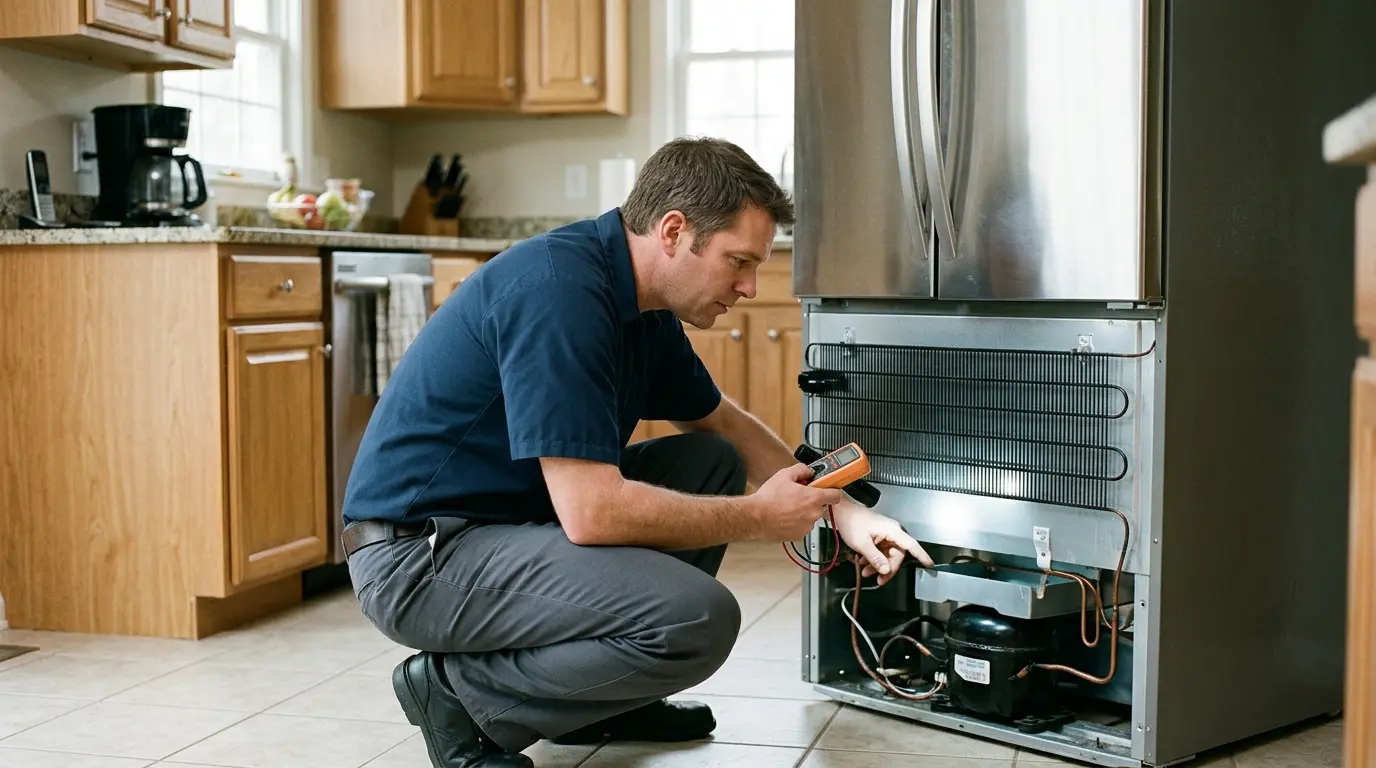
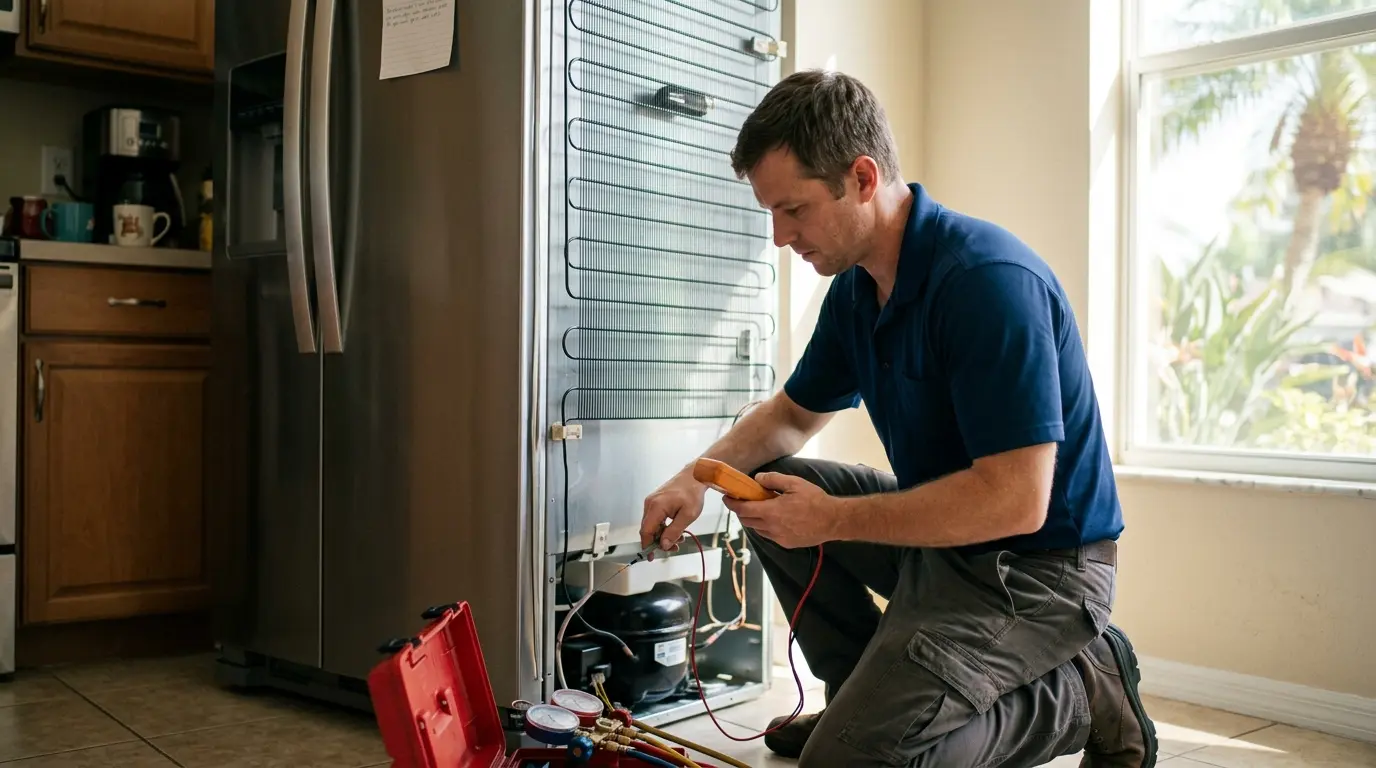
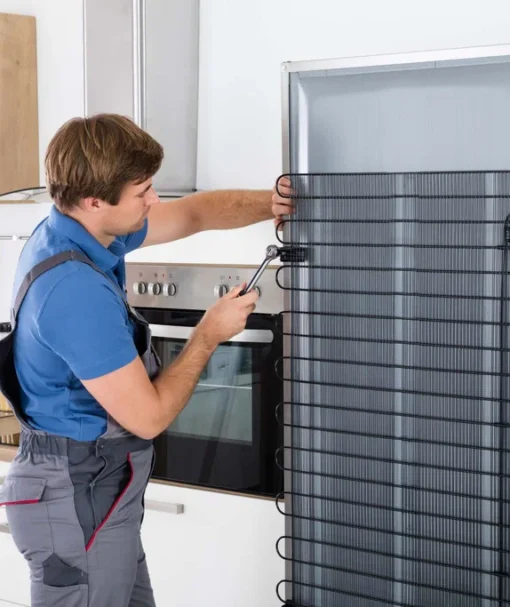
The condenser coils remove heat from the refrigeration unit. They can accumulate dust and dirt, causing the refrigerator to have to work harder to remove heat. Before you start cleaning, refer to your owner’s manual, as the location of the coils and how to clean them differ by model. Clean accessible coils on the refrigerator gently (as per the manufacturer’s recommendation).
Never forcibly slide in or out a component or dismantle covers that were not intended to be removed by homeowners. When coils are out of reach, or the refrigerator is already experiencing cooling issues, professional service might be safer.
Regularly cleaning the coils is one of the basic tasks worth including in an appliance maintenance routine.
2. Check the Refrigerator Temperature
Appliance performance and food safety are both affected by temperature. The Food and Drug Administration (FDA) suggests that the optimal refrigerator temperature is 40º F or less and a freezer temperature is 0º F or lower. An appliance thermometer will give a truer temperature of the refrigerator than a control setting.
Some manufacturers have a smaller range for energy efficiency. For instance, the temperature of refrigerators is recommended to be between 35°F and 38°F by ENERGY STAR, and homeowners are encouraged to consult the product manual.
Don’t change the temperature setting over and over again without measuring the temperature. If the food is continually too hot or the refrigerator does not achieve the desired temperature, it could be a problem that requires appliance repair.
3. Inspect the Door Seal
If the gasket is worn or if it does not seal properly, the compressor will have to run longer and at reduced efficiency to get the proper cooling effect. During routine refrigerator maintenance, inspect the gasket around the entire refrigerator door. Look for:
- Cracks or tears
- Gaps around the corners
- Loose sections
- Dirt or food residue
- Spots where the gasket no longer presses firmly against the door
Use warm water and a mild cleaner specifically recommended for refrigerator gaskets to clean the gasket. Avoid the use of strong chemicals, which may weaken and/or affect the seal. If the gasket is still loose or damaged, refer to the manufacturer’s instructions for replacement.
4. Keep the Refrigerator Clean
The refrigerator will be easier to inspect and maintain if it is clean. Spills, food residue, and old products can cause odors and make it more difficult to detect potential issues. To get basic fridge cleaning ideas, take food out before cleaning the shelves and inside surfaces of the fridge. When recommended by the manufacturer, use warm water and a mild detergent to clean surfaces and dry them before placing food back in.
Also, the FDA advises cleaning the interior of the refrigerator regularly and cleaning up any spills immediately. Never overlook the bottom shelf, drawers, corners, and under containers. These areas can catch small spills that are not noticed.
5. Keep Airflow Inside the Fridge Clear
The refrigerator’s internal temperature must be maintained evenly, and cooling needs to be carried out effectively. Overfilling shelves may cause poor circulation and even temperature variations. Don’t obstruct interior vents with large containers or fill all spaces. The FDA cautions against overpacking because cold air must be able to circulate around refrigerated food.
A good way to organize a space is to leave space around the vent, and don’t close the vent tightly unless the appliance instruction manual says it’s okay.
6. Clean and Inspect the Ice Maker
Mineral deposits, spilled food particles, and residue may accumulate in ice makers over time. Regularly inspect and clean the ice bin as per the manufacturer’s instructions. When ice making does not occur, does not come out in the normal size, or when the ice maker starts to leak, don’t assume that cleaning is the answer. Water supply problems, inlet valves, sensors, and more may need professional diagnosis.
If your refrigerator has a water dispenser, check the manufacturer’s suggested water filter change-out schedule. A dirty filter can cause ice to form poorly and/or flow issues.
7. Check the Drip Pan and Drain Area
Condensation and defrost water are controlled using a drain system on some refrigerators. A clogged drain can also be a factor in water pooling where it shouldn’t. Before cleaning a drain opening or drip pan, refer to the owner’s manual because the designs differ significantly from model to model.
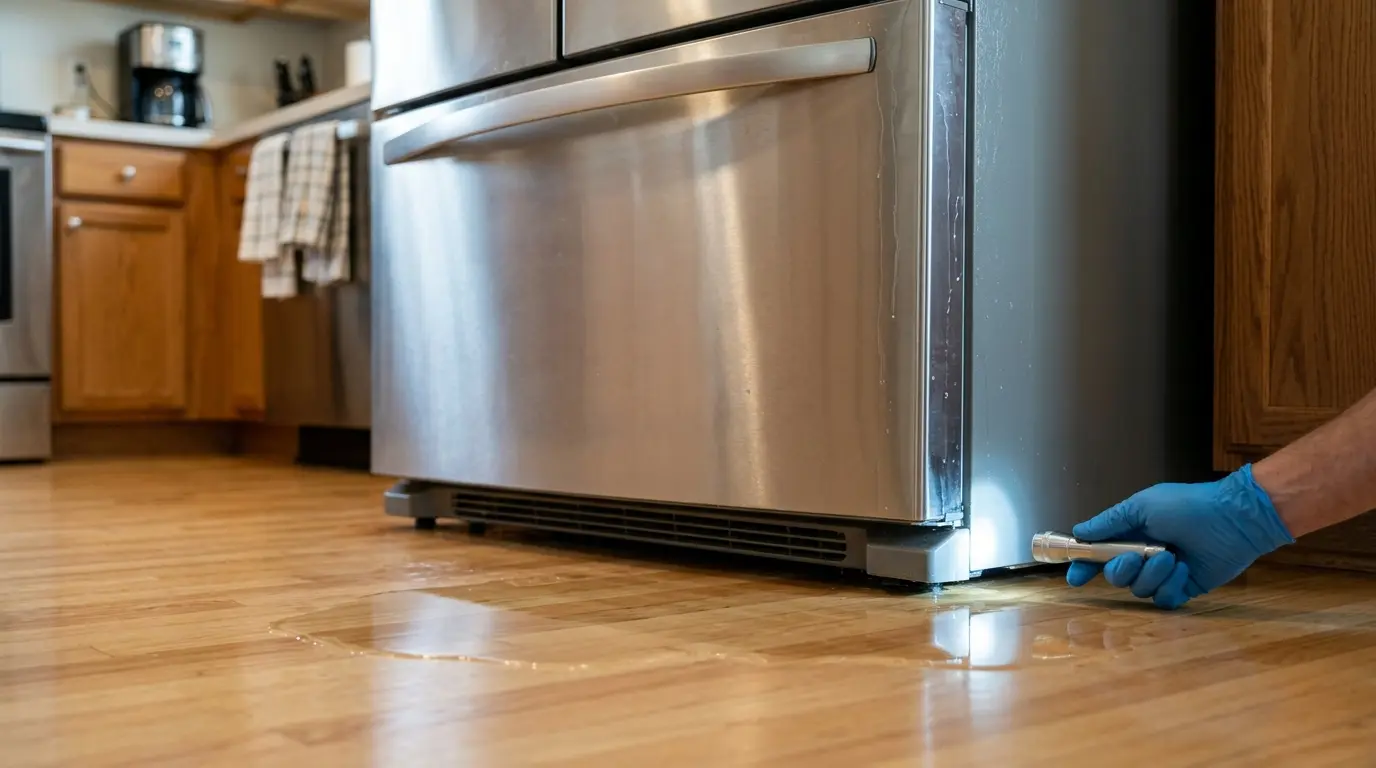
Whenever water keeps building up inside the refrigerator, under the drawers, or around the refrigerator, look into the cause of the water problem and don’t keep wiping it up and over. If the drain is blocked, the drain tube is frozen, the seal is damaged, and more, it may need service.
8. Give the Refrigerator Enough Space
There has to be proper air circulation around the refrigerator. If it is tightly pressed against a wall or surrounded by other heat-generating appliances, it will impact its ability to release heat efficiently. ENERGY STAR suggests placing 12 inches of space between the refrigerator and the wall, and away from heat-generating appliances, like an oven, dishwasher, or direct sunlight.
This is especially helpful in Orlando kitchens since the environment around the house can be warm for much of the year.
9. Avoid Keeping the Door Open
This is especially helpful in Orlando kitchens since the environment around the house can be warm for much of the year. Keep often-used foods in easy-to-reach areas. Close the door immediately after removing or storing food.
Examine the door gasket, or the container, shelf, drawer, or worn gasket, to see if it is preventing the door from sealing properly.
10. Know When Maintenance Is Not Enough
Routine maintenance can prevent some avoidable problems, but it cannot fix every refrigerator issue.
Consider professional appliance service if you notice:
- Refrigerator temperature staying above the safe range
- Excessive frost or ice buildup
- Repeated clicking or unusual noises
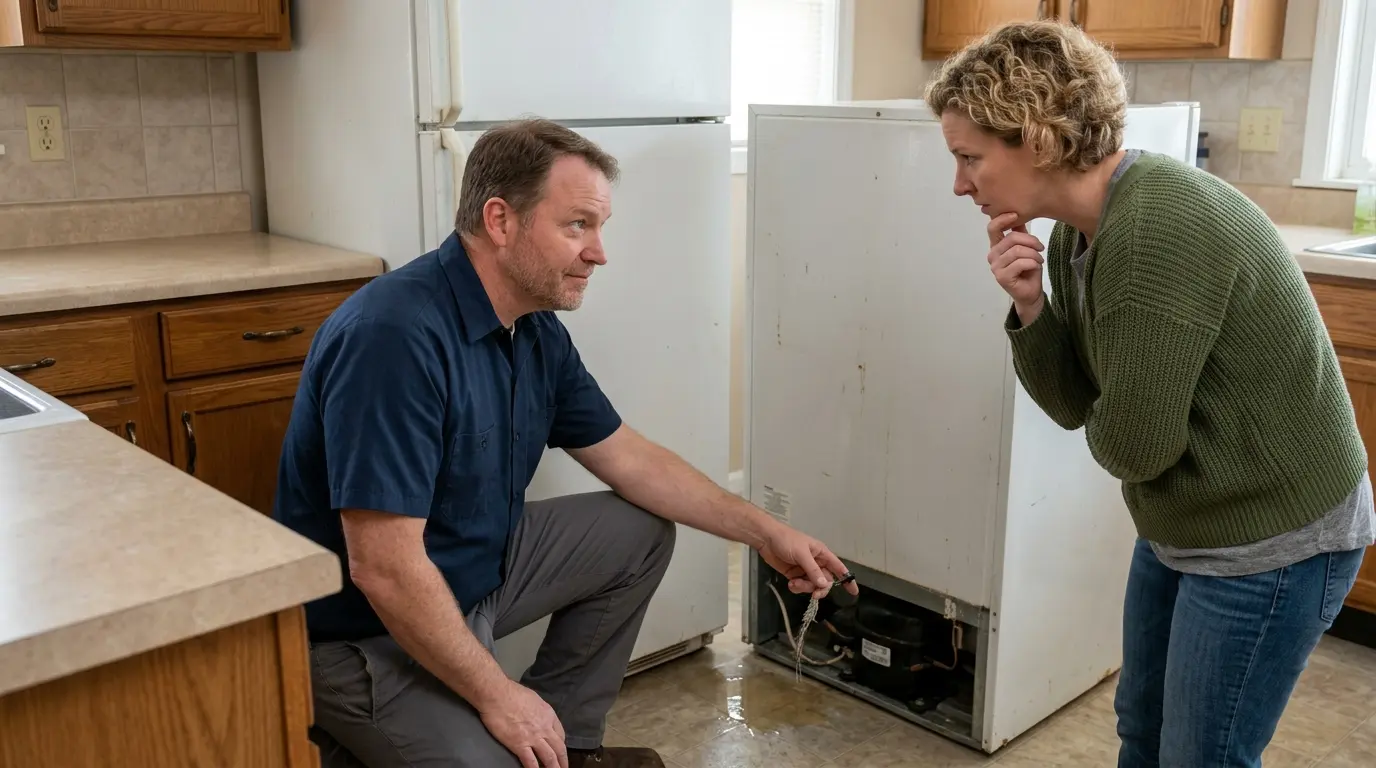
- Water leaking repeatedly
- Ice maker failure
- Refrigerator running almost constantly
- Food freezing in the refrigerator compartment
- A sudden increase in operating noise
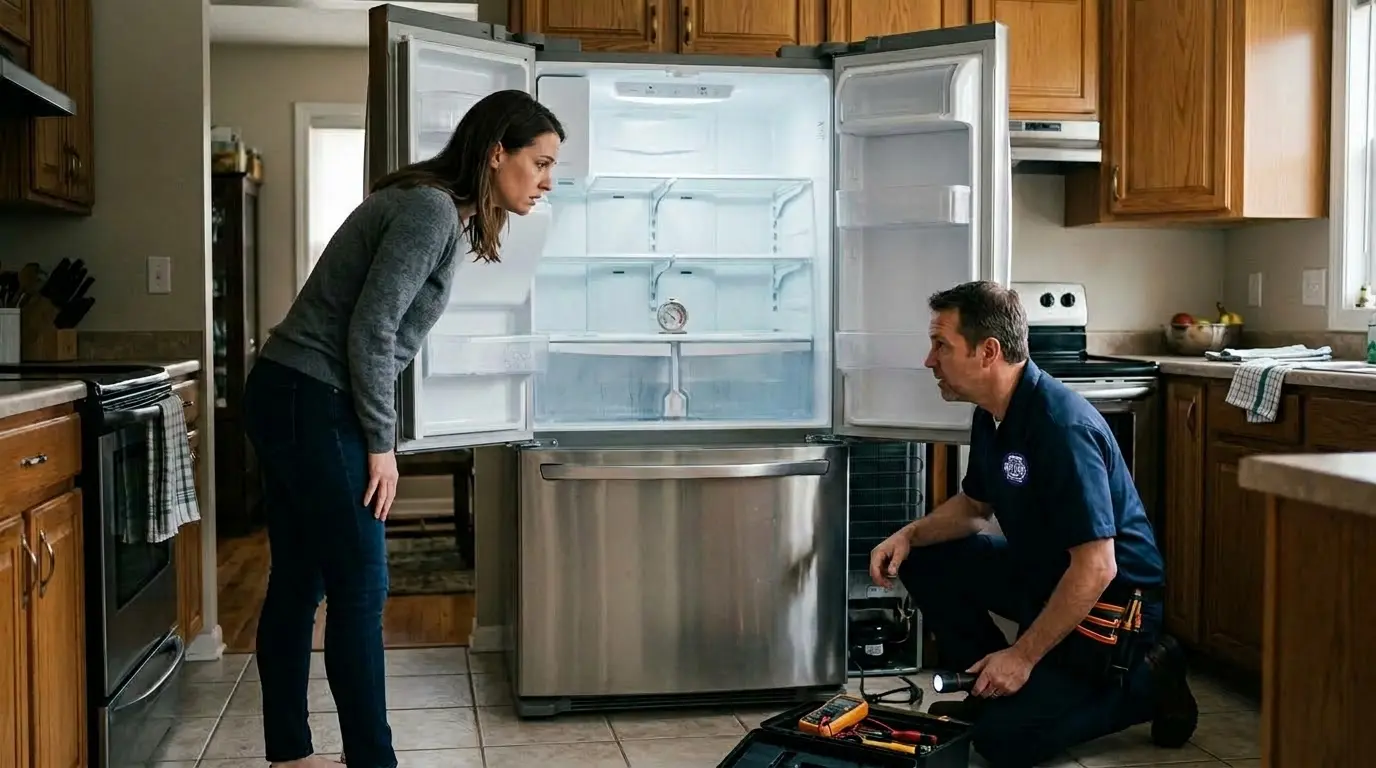
If your refrigerator’s working harder, there’s probably an issue with airflow, temperature control, fans, sensors, seals, or something similar. Discount Appliance Repair of Central Florida can help Orlando homeowners determine whether a maintenance issue has developed into a repair problem.
A Simple Refrigerator Maintenance Schedule
You don’t have to do everything every week. A quick routine keeps the important checks on track.
Weekly: Check how your food looks, wipe up spills, and be sure the temperature’s right.
Monthly: Look over the door seal, clean up any obvious gunk inside, and check the ice maker and water dispenser.
Every few months: Check the coils you can reach and clear the area around the fridge to make sure dust or junk aren’t blocking airflow. Always follow the manufacturer’s instructions.
As needed: Change the water filter when the manufacturer says it’s time, and handle leaks, weird noises, or cooling troubles right away.
Frequently Asked Questions
How often should I clean refrigerator coils?
That really depends on the fridge model, where it’s installed, and the manufacturer’s instructions. Instead of sticking to one schedule, take a look at the coils once in a while and check for dust. If they’re hard to reach, call in a professional to avoid messing anything up.
What temperature should my refrigerator be?
The FDA says 40°F or lower for the fridge, and 0°F for the freezer. Use an appliance thermometer to check; don’t just trust the control settings, because the number you set isn’t always what you get inside.
How do I know if my refrigerator door seal is bad?
Look for cracks, gaps, loose spots, or parts that don’t sit flat against the cabinet. Dirt buildup can also mess with the seal. Clean the gasket following the manufacturer’s advice. If things don’t improve after cleaning, you probably need to replace it.
When should I call an appliance repair technician?
Call for service if regular maintenance doesn’t solve the issue, or if your fridge can’t stay cool enough. If you keep dealing with leaks, loud or odd noises, ice buildup that comes back again and again, cooling failures, or the fridge just won’t quit running, those are signs something crucial needs attention.
Final Thoughts: Make Refrigerator Maintenance Part of Home Care
Refrigerator maintenance shouldn’t be a headache. Cleaning the coils, checking the door seal, keeping the temperature right, swapping filters, making sure air can move around, and fixing small problems early really helps your fridge last longer.
For Orlando homeowners, these simple habits are especially useful because refrigerators operate in a warm climate for much of the year. Discount Appliance Repair of Central Florida can provide professional help when routine appliance care is no longer enough and your refrigerator needs diagnosis or repair.