




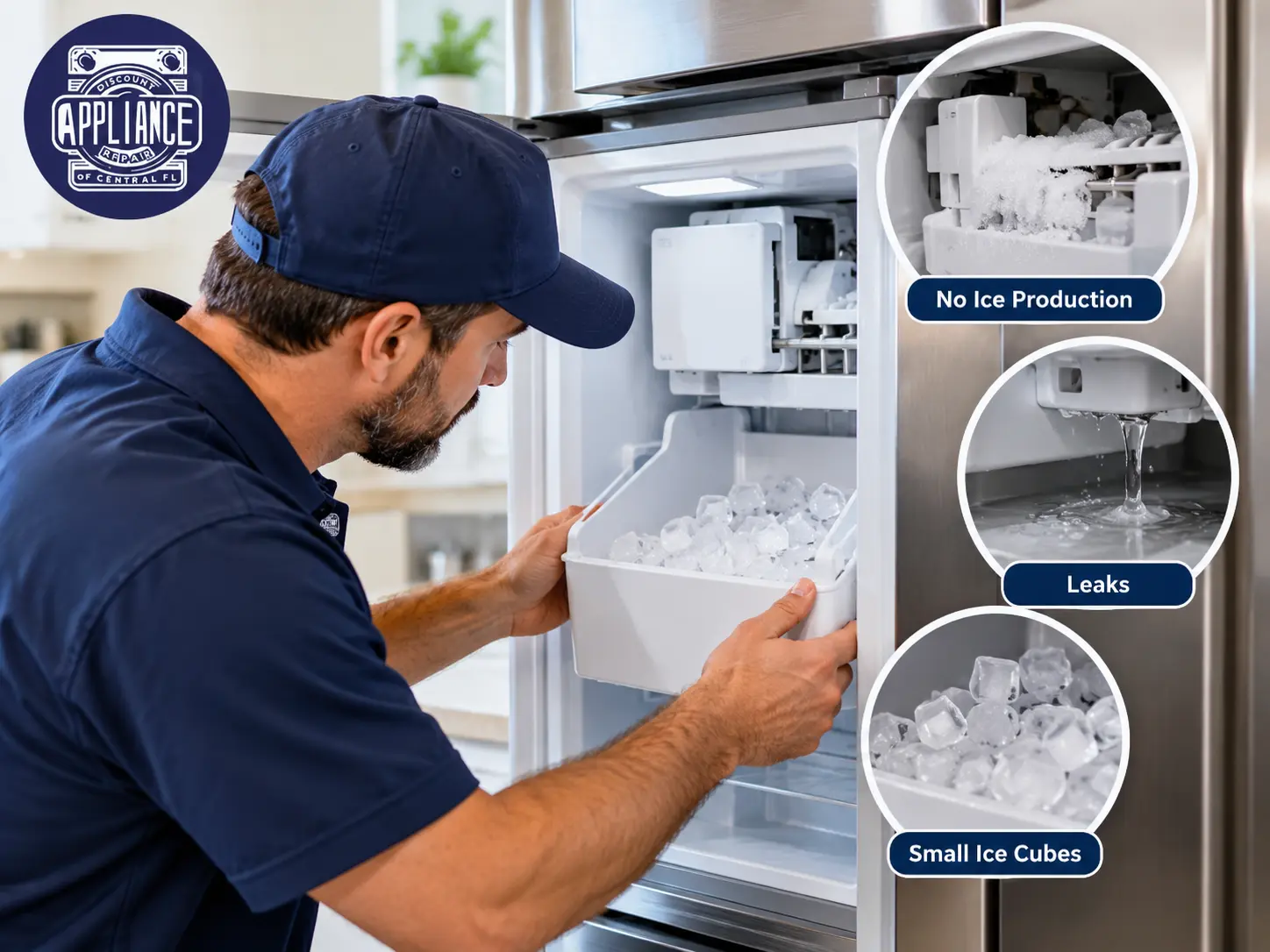


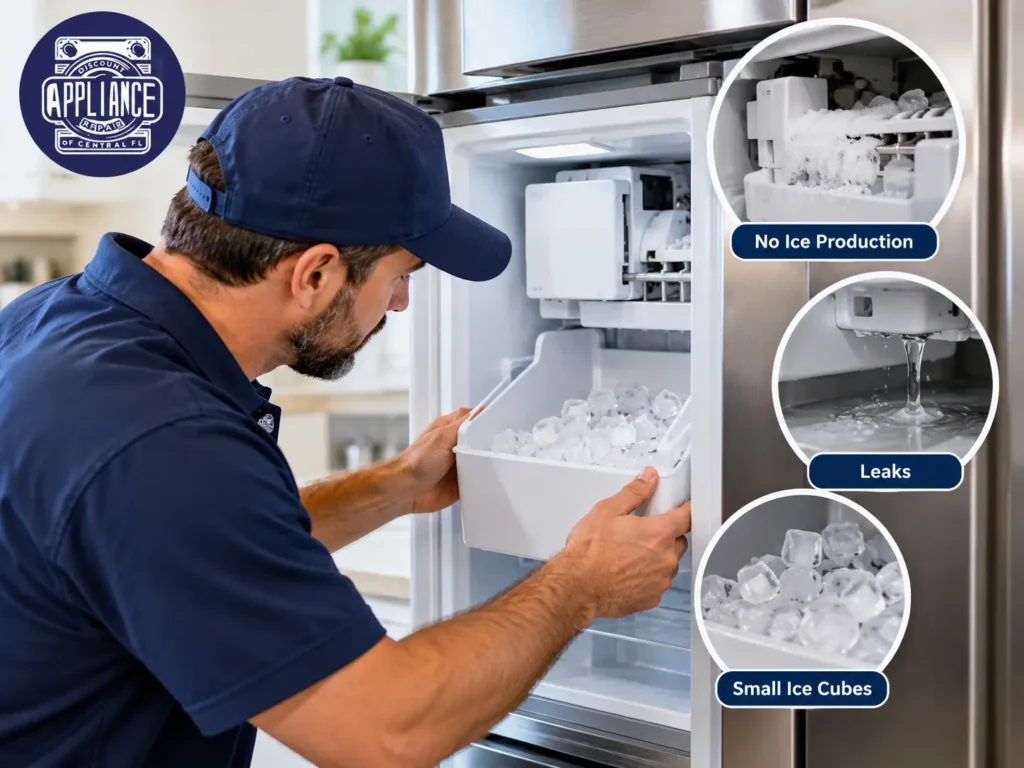
An ice maker can go from filling a glass every afternoon to leaving an empty bin without much warning. Sometimes the cause is simple, such as a filter restricting water flow. Other times, the trouble sits inside the ice maker itself, where a faulty motor, frozen fill tube, or failing valve can interrupt production.
For homeowners in Sanford, FL, recognizing the difference between these problems can save time and prevent unnecessary part replacements. The useful clue is not just how much ice is missing, but what the refrigerator is doing when the problem occurs.
When the Ice Bin Stays Empty
Start by making sure the ice maker is turned on, and the shutoff arm or sensor has not paused production after detecting a full bin. Some refrigerators also have a control lock or settings that disable ice production.
If those settings look correct, check the water supply line for a visible kink and confirm that its shutoff valve is open, if safely accessible. A clogged filter can also restrict the flow needed to fill the ice mold.
Try this first: If the refrigerator was recently installed or its water filter was changed, check the manufacturer’s instructions. Some new installations need around 24 hours before ice production begins, and full production may take longer. Avoid repeatedly resetting the appliance before it has had time to operate normally.
Why Is the Ice Maker Producing Less Ice Than Usual?
Slow ice production is frustrating when the household uses ice throughout the day. The cause may be a freezer that is not cold enough, restricted water flow, or a refrigerator door that is not closing properly.
Use this symptom guide to narrow down the possibilities:
| What you notice | Possible explanation |
| Smaller-than-usual cubes | Restricted water flow or incomplete filling |
| Ice production slows gradually | Clogged filter or freezer temperature issue |
| No water enters the ice mold | Supply problem, frozen fill tube, or faulty inlet valve |
| Ice forms but stays in the mold | Ejector mechanism or motor problem |
| Ice appears in clumps | Melting and refreezing inside the storage bin |
Check the freezer’s actual temperature instead of relying only on its control setting. Many refrigerator manufacturers recommend approximately 0°F (-18°C) for the freezer, but the correct operating range for ice production depends on the specific model.
Water Leaks, Frozen Lines, and Unusual Ice
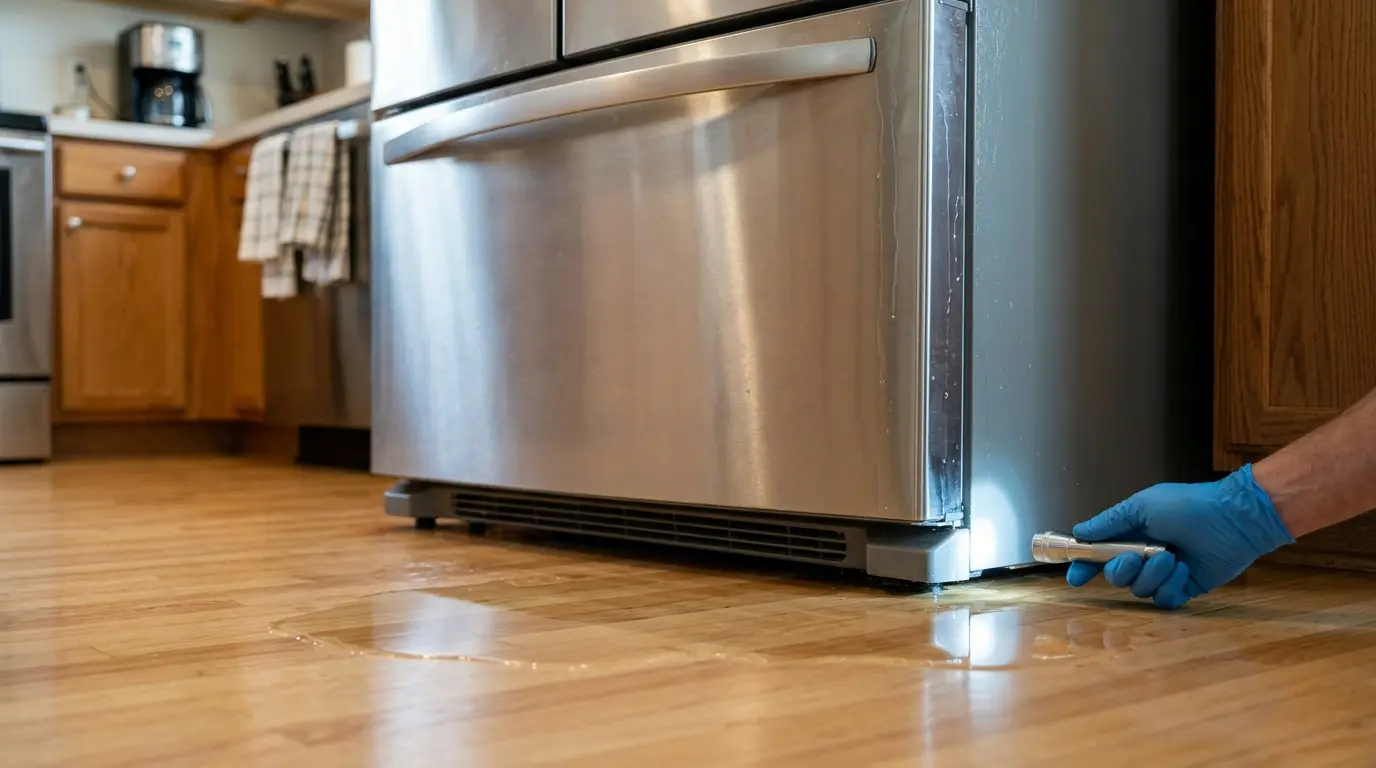
Even with a steady supply of ice, any moisture found near the refrigerator may signal a leak. A loose connection, damaged supply line, poorly seated filter, or leaking inlet valve can allow water to escape.
Look for moisture around the filter housing, behind the refrigerator, and beneath the appliance. Do not pull a heavy refrigerator out alone or reach behind it near wet electrical connections. If water is actively leaking, shut off the water supply if you can do so safely and arrange an inspection.
A frozen fill tube presents a different problem. Water cannot reach the ice mold when ice blocks the narrow passage. Avoid using knives, sharp tools, or direct high heat to clear it; these methods can damage components or create a safety hazard.
When the Dispenser Fails but Ice Is Still Being Made
An ice maker and its dispenser are related, but they do not always fail together. If the bin contains plenty of ice but nothing comes through the dispenser, the issue may involve the dispenser controls, a jammed chute, clumped cubes, or the mechanism that moves ice toward the opening.
Try these checks before arranging service:
- Confirm that the dispenser or control lock is not enabled.
- Check whether the ice bin is seated correctly.
- Inspect the dispenser chute for frozen buildup or other obstructions.
- Consult the owner’s manual for model-specific reset instructions.
If you hear grinding from the motor or get no response from the dispenser, avoid repeatedly pressing the controls. Continued operation against a blockage may cause further damage.
Sanford’s Heat Makes Temperature Checks Worthwhile
Sanford’s July average high is about 92°F, based on NOAA’s 1991–2020 climate normals. Hot weather does not automatically cause ice maker problems, but it is a good reason to make sure the refrigerator has enough ventilation and its doors seal properly.
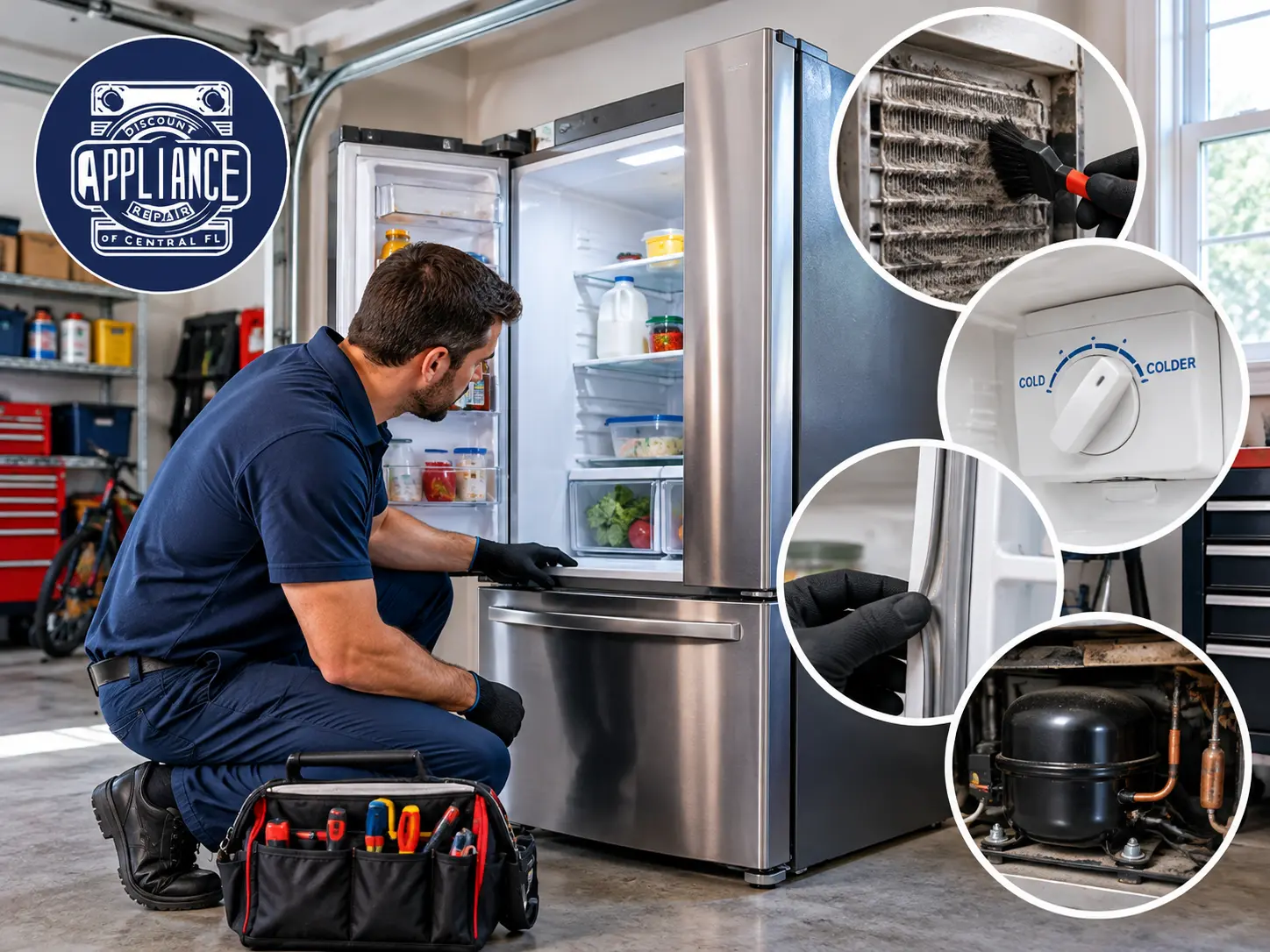
Keep the space around the appliance clear according to the manufacturer’s clearance requirements. Check that door seals are clean and intact, and avoid leaving the refrigerator door open for extended periods. Warm air entering the freezer can interfere with temperature stability and slow ice production.
If the freezer temperature keeps rising despite normal settings, the problem may involve airflow, a fan, the defrost system, or another refrigeration component. An ice maker repair alone will not solve an underlying cooling issue.
When Several Appliance Problems Appear Together
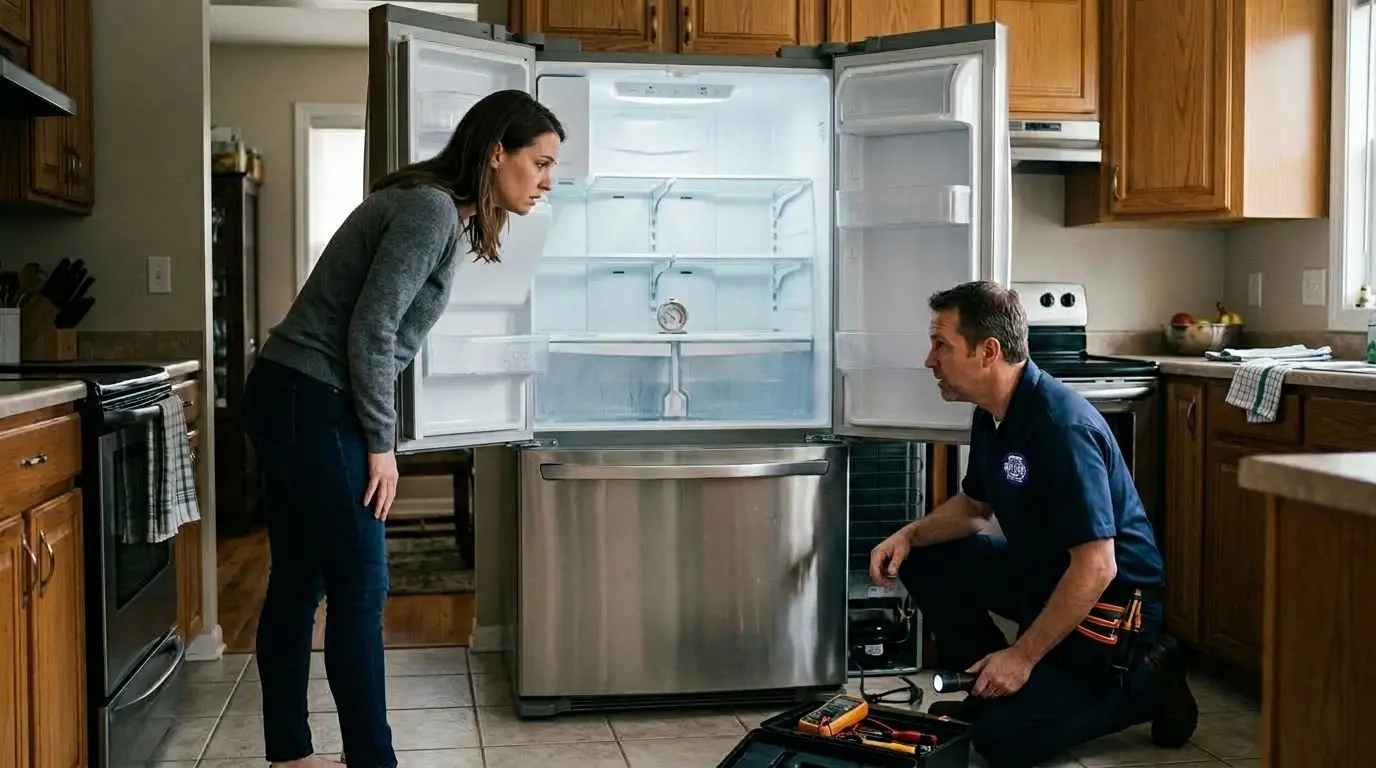
An ice maker that stops producing ice may be one isolated fault. However, if the refrigerator is also failing to cool properly or another appliance is showing symptoms, it is worth describing the full picture to a technician rather than requesting a single part replacement.
For example, uneven oven heating points to a separate appliance issue, but recording both problems helps keep service concerns organized. The technician can assess each appliance on its own merits instead of assuming that unrelated symptoms share one cause.
Discount Appliance Repair of Central Florida can help homeowners identify whether an ice maker needs a straightforward repair or a more detailed diagnosis of the refrigerator’s water and cooling systems.
Should You Repair the Ice Maker or Replace the Appliance?
A faulty inlet valve, filter issue, or accessible ice maker component may be repairable without replacing the refrigerator. A more expensive decision may arise when the appliance also has cooling problems, repeated breakdowns, or other aging components.
When deciding whether to repair or replace, consider the appliance’s age, repair estimate, previous service history, and overall condition. Compare the likely cost of restoring reliable operation with the cost of a suitable replacement. There is no single age or price threshold that makes replacement right for every household.
Frequently Asked Questions
When can you expect the first batch of ice to be ready?
After a new installation, some models need about 24 hours to begin producing ice, with full production taking longer. Follow your refrigerator’s manual for the correct startup period.
Can a clogged water filter stop ice production?
Yes. A clogged or incorrectly installed filter can restrict water flow, resulting in small cubes, slow production, or no ice at all.
Why does my ice maker make hollow or small cubes?
Restricted water flow or incomplete filling may cause small or poorly formed cubes. The issue could stem from the water filter, supply line, or inlet valve.
Is it worth resetting an ice maker that no longer works?
Use only the reset instructions provided for your specific model. A reset may resolve a minor control issue, but it will not fix a blocked water line or failed component.
When should I call an appliance repair technician?
Arrange service if the unit repeatedly stops, leaks, makes unusual mechanical noises, or fails to produce ice after basic checks. Seek prompt help for active leaks or cooling problems.
Does hot weather affect ice production?
High room temperatures can increase the refrigerator’s cooling workload, especially if ventilation is restricted or the door seal is poor. Proper clearance and a stable freezer temperature help the appliance operate as intended.
Final Thoughts: Find the Cause Before Replacing Parts
An empty ice bin is only one clue. Cube size, leaks, dispenser behavior, and freezer temperature can all help identify what is going wrong. Checking simple settings and the water supply first may resolve minor issues, while persistent symptoms call for a proper diagnosis.
Discount Appliance Repair of Central Florida can help Sanford homeowners determine the source of recurring ice maker problems and provide a practical next step based on the appliance’s condition.