

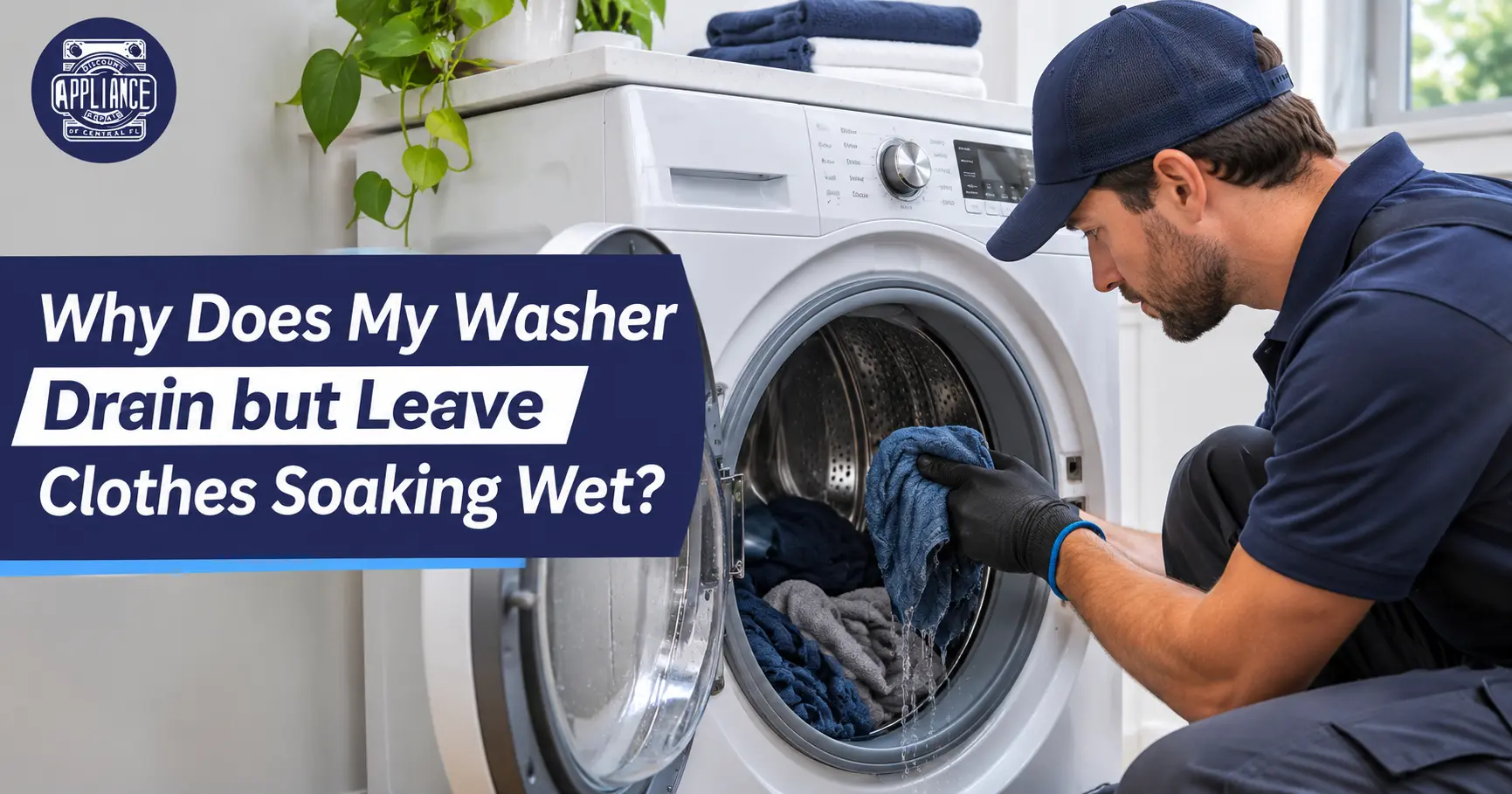







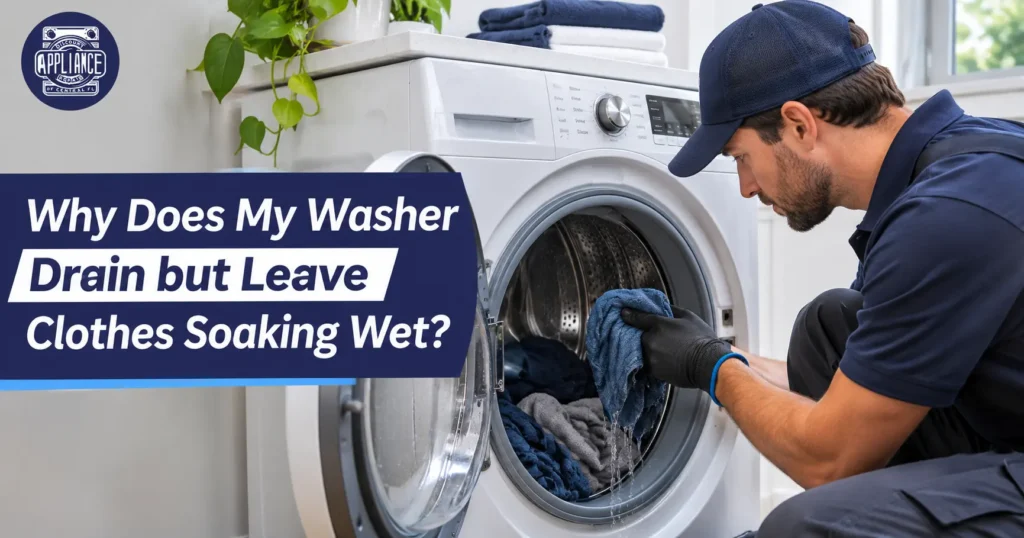
Your washer finishes the cycle, pumps the water out, and leaves you with a drum full of soaking-wet clothes. It can seem confusing because the machine has completed one important job but failed at another. Drainage and spinning are connected, but they rely on different parts and controls.
When a washer drains normally but will not spin, the problem may involve an unbalanced load, a lid or door lock, the drive system, motor, or electronic controls. Understanding the difference helps you check a few safe, simple causes before deciding whether the machine needs professional diagnosis.
Why Draining Does Not Mean the Spin Cycle Is Working
The drain pump removes water from the tub. The spin system then turns the basket at a much higher speed to force moisture out of the clothes. A washer can therefore pump water away while still having a problem that prevents the basket from rotating.
Modern washers also use sensors and safety checks before allowing a high-speed spin. If the control detects an unlocked door, excessive vibration, an unsuitable load, or a motor fault, it may cancel or reduce the spin cycle even after draining successfully.
| Quick distinction: If water remains pooled in the drum, investigate drainage first. If the tub is empty but clothes are still dripping wet, focus on the spin system and its safety controls. |
Common Reasons Your Washer Drains but Will Not Spin
Not every spin failure means the motor has burned out. Start with the conditions that can interrupt the cycle, then consider mechanical or electrical faults.
| Possible cause | What you may notice | What it means |
| Unbalanced or bulky load | Washer pauses, shakes, or repeatedly tries to redistribute clothes | The machine may reduce or stop spinning to prevent excessive movement |
| Lid switch or door lock fault | Cycle drains, but spin does not begin; lock light may flash | The washer may not receive confirmation that the door is safely secured |
| Worn drive belt or coupler | Motor noise without normal basket movement, or weak spinning | Power may not transfer properly to the basket |
| Motor or motor-control problem | Drum does not turn, or an error code appears | The drive motor or its electronic control may need testing |
| Control board or sensor issue | Cycle stops at the same stage or behaves inconsistently | The washer may not be sending or receiving the correct operating signals |
Load Balance and Spin Settings
A single comforter, bath mat, or heavy item can gather on one side of the basket. The washer may attempt to rebalance the load and then stop if it cannot distribute the weight safely. Overloading can cause a similar problem.
Check that you have not selected a delicate or low-spin setting. Some cycles intentionally use slower spin speeds, so clothes may come out wetter even though the washer is operating as designed.
Lid Lock and Door Switch Problems
Top-load washers commonly use a lid switch or lock assembly. Front-load models use a door-lock mechanism. If the control cannot confirm that the lid or door is secured, it may allow parts of the cycle to run but prevent high-speed spinning.
Do not bypass the lock or push a latch into place with a tool. These components are safety devices, not optional cycle controls.
Drive Belt, Motor, and Electronic Controls
On belt-driven models, a worn, stretched, or broken belt can stop the basket from turning even when the drain pump works. Other designs use direct-drive systems, so the exact parts depend on the washer model.
A failed motor, motor coupling, speed sensor, wiring connection, or control board can also interrupt drum rotation. Error codes and unusual humming, grinding, or burning smells can help narrow the cause, but they do not confirm which component has failed.
Safe Checks to Try Before Booking a Repair
You can rule out several simple causes without opening the cabinet or touching internal wiring.
- Pause and redistribute the laundry. Remove some items if the tub is tightly packed. Spread heavy pieces evenly and avoid washing one bulky item alone if the manual advises against it.
- Check the selected cycle. Choose the appropriate spin speed or a dedicated Drain and Spin/Spin Only option if your model provides one.
- Confirm the washer is level. Gently check whether the cabinet rocks. Adjust the leveling feet according to the owner’s manual.
- Inspect the lid or door area. Remove clothing caught near the latch and close it firmly. Look for a displayed lock error.
- Reset the controls only if the manufacturer advises doing so. Whirlpool, for example, advises disconnecting certain washer models from power for five minutes before reconnecting. Follow your own model’s instructions rather than assuming every washer resets the same way.
Stop troubleshooting if you smell burning, see sparks, hear severe grinding, notice leaking near electrical parts, or the breaker trips repeatedly. Unplug the washer if it is safe to do so, shut off its water supply if needed, and arrange service.
What Might Washer Spin Repair Cost in Orlando?
The final price depends on the brand, model, part availability, labor, and whether the washer needs diagnosis beyond a simple component replacement. A current Orlando-area cost guide estimates common spin-related repairs at approximately $180–$340 for a lid switch or door lock, $160–$290 for a drive belt or motor coupler, and $250–$480 for a drive motor or stator. These are estimates, not fixed quotes.
Ask whether the diagnostic fee is separate, whether the estimate includes parts and labor, and whether the repair carries a parts or workmanship warranty. Discount Appliance Repair of Central Florida can assess the symptoms and identify whether the issue is a load-related interruption, a failed component, or an electronic control problem.
Frequently Asked Questions
Why does my washer drain but leave clothes soaking wet?
The drain pump may be working while the basket fails to reach spin speed. An unbalanced load, door lock fault, belt problem, motor issue, or control fault can prevent proper spinning.
Can an unbalanced load stop a washer from spinning?
Yes. Many washers detect excessive movement and reduce or cancel the spin cycle to protect the machine. Adjust the load evenly and restart the appropriate spin setting.
Is it safe to keep running a washer that will not spin?
Repeatedly restarting it is not a good idea if it shakes violently, makes unusual noises, smells hot, or trips a breaker. Stop using it and arrange an inspection.
Could a broken lid switch cause this problem?
Yes. A faulty lid switch or door-lock assembly can prevent the washer from entering high-speed spin, even if it has already drained the water.
When should I call an appliance repair technician?
Arrange service if the drum will not turn with a balanced load, the problem returns after basic checks, an error code persists, or you suspect a belt, motor, lock, wiring, or control-board failure.
Final Thoughts: Diagnose the Spin Problem, Not the Drain
When a washer drains but does not spin, the drain pump may be doing its job while another part of the machine prevents basket rotation. Check the load, settings, and visible door or lid area first, but avoid opening electrical or mechanical components without the right training.
A proper diagnosis can prevent unnecessary part replacement and help restore normal spin performance. Discount Appliance Repair of Central Florida can help Orlando homeowners identify the cause and provide repair options for their washer.