

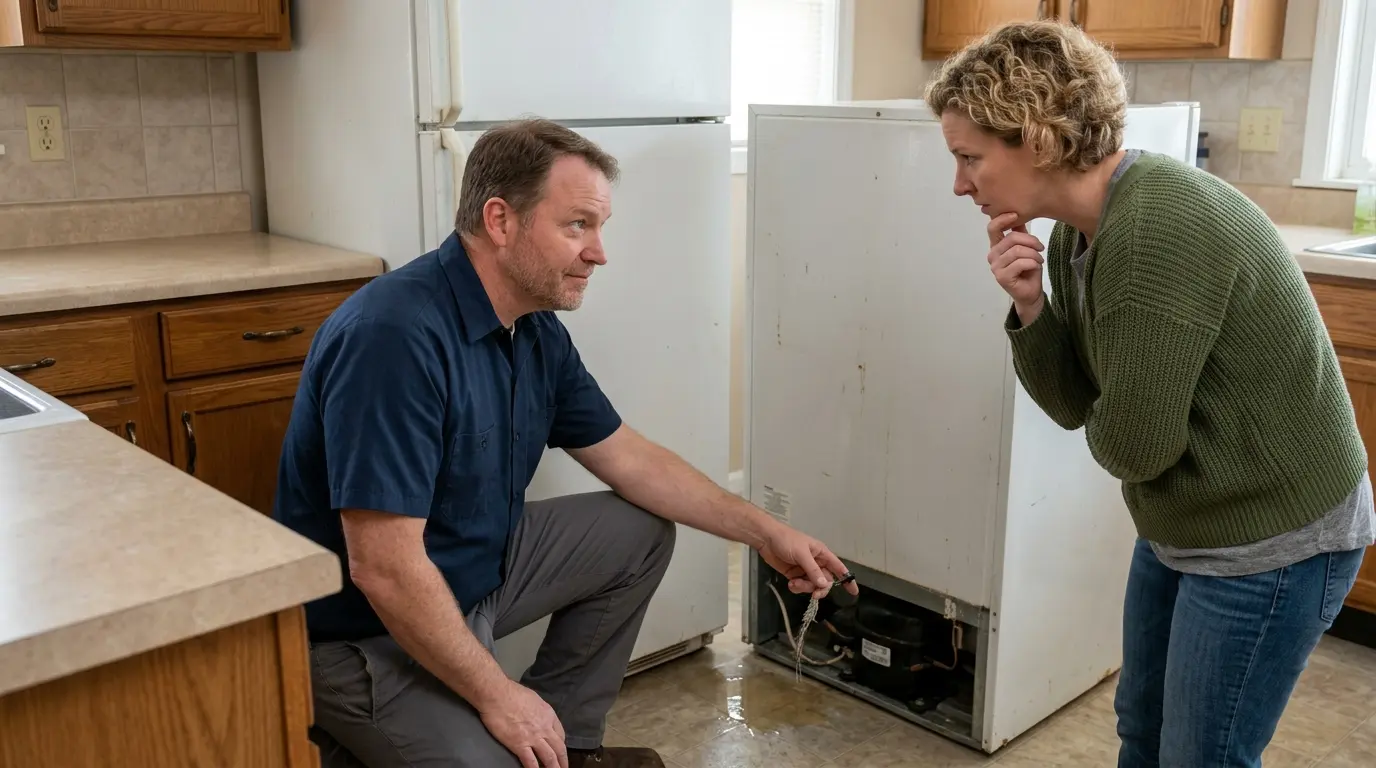







A refrigerator is never completely silent. Humming, clicking, buzzing, and possibly some sounds during cooling cycles may be normal. The problem begins when a familiar sound is amplified, occurs often, or is accompanied by other changes such as poor cooling, frost formation, leaking, or any other change.
When your refrigerator making noise that is louder than usual, knowing the source of the noise can help narrow down the issue. During hot seasons like Orlando, refrigerators can also be used for extended periods, causing the cooling systems to work longer and harder. The main point is the understanding of what sounds should be normal and which sounds should be inspected by a professional.
Is That Refrigerator Noise Normal?
There are some sounds from appliances that are a normal part of their function. A fridge humming noise can come from the compressor operating during a cooling cycle. Some fans may be operating when circulating air through the refrigerator and freezer. Clicking can be heard at the start or end of cooling cycles, and a short buzzing noise can be heard from the ice maker or water valve.
The important difference is change. If a sound is suddenly louder, more prolonged, or associated with cooling issues, it’s time to pay attention.
What Different Refrigerator Sounds Can Mean
Humming or Buzzing
A steady, moderate hum is often normal. Humming noises may come from either the compressor or the condenser fan when the refrigerator is running. When the hum is noticeably increased, or the refrigerator is operating almost continuously, it can be a problem with the refrigerator keeping the temperature as required. Dirty condenser coils, airflow issues, or any compressor-related issues may contribute to this behavior.
Clicking Repeatedly
A refrigerator clicking sound that occurs once during a normal cycle may not indicate a problem. Repeated clicking followed by a failed cooling cycle is different. The compressor could be trying to turn on and then off again. This pattern can be caused by a problem with the start relay, the overload protector, the wiring, or a problem with the compressor.
If the refrigerator is warm while repeated clicking continues, a repair assessment is recommended.
Grinding or Rattling
Grinding is often an indicator of a moving component. Ice/ice crystals or some other object (debris) may be touching a fan blade or something inside the refrigerator. Rattling may also result from a loose tube, a loose drain pan, loose shelving, or any other part of the appliance vibrating when it is working.
Pay attention to see if the refrigerator door noise changes when opened. A sound that ceases when the freezer door is opened can be useful to a technician to determine that there is a problem with the evaporator fan.
Squealing or High-Pitched Sounds
High-pitched noises may mean that the fan motor or moving parts are wearing out. Abnormal noises are also a sign of ice build-up around the fan. Do not think that any squeal is an indicator of a compressor failure. Diagnosis of components is important, as some components can make similar sounds.
Clicking, Buzzing, or Humming From the Ice Maker
The ice maker can be programmed to produce a number of normal sounds. During its cycle, you can hear a motor, water valve, or ice-release mechanism. But if the ice maker is buzzing over and over without water flowing into it, it may be a problem with the water supply or the water valves. Frozen water lines can also be a problem.
Loud Compressor Noise
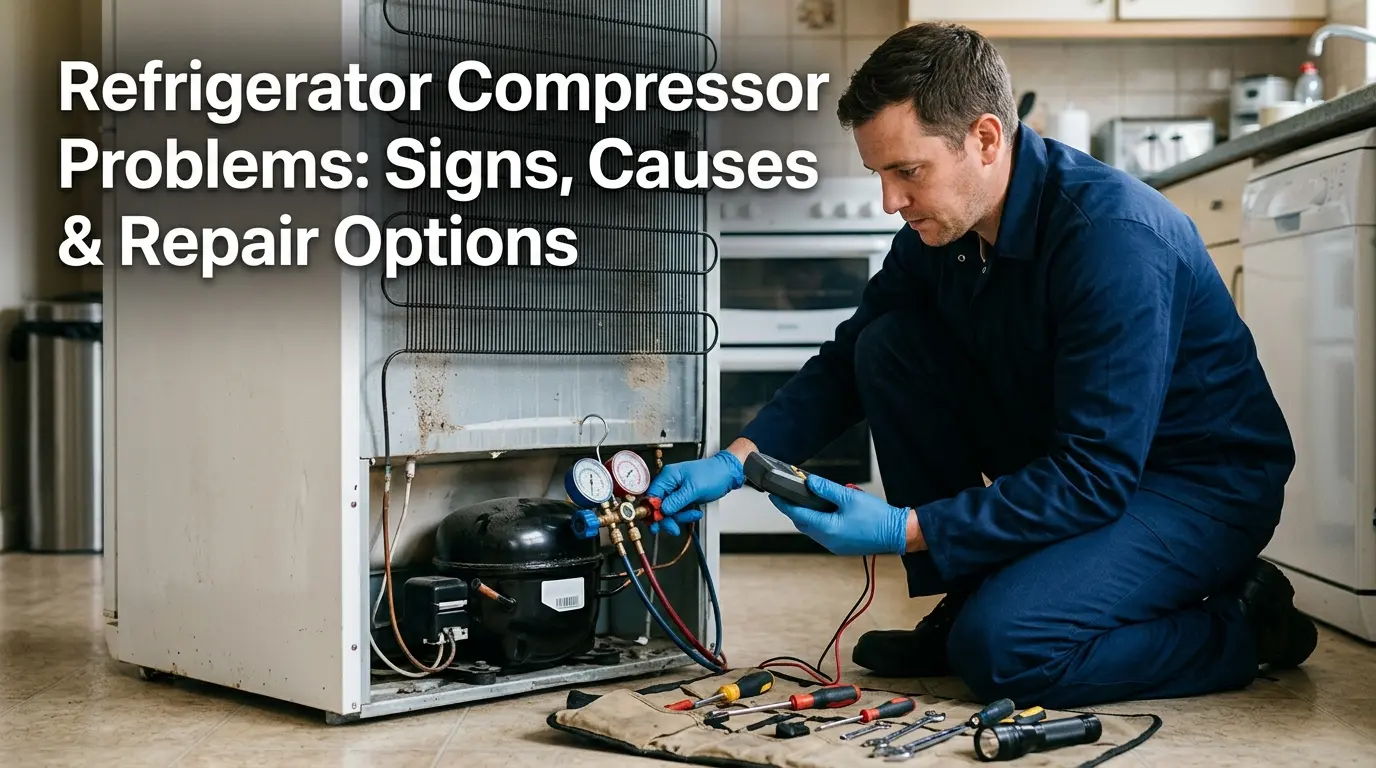
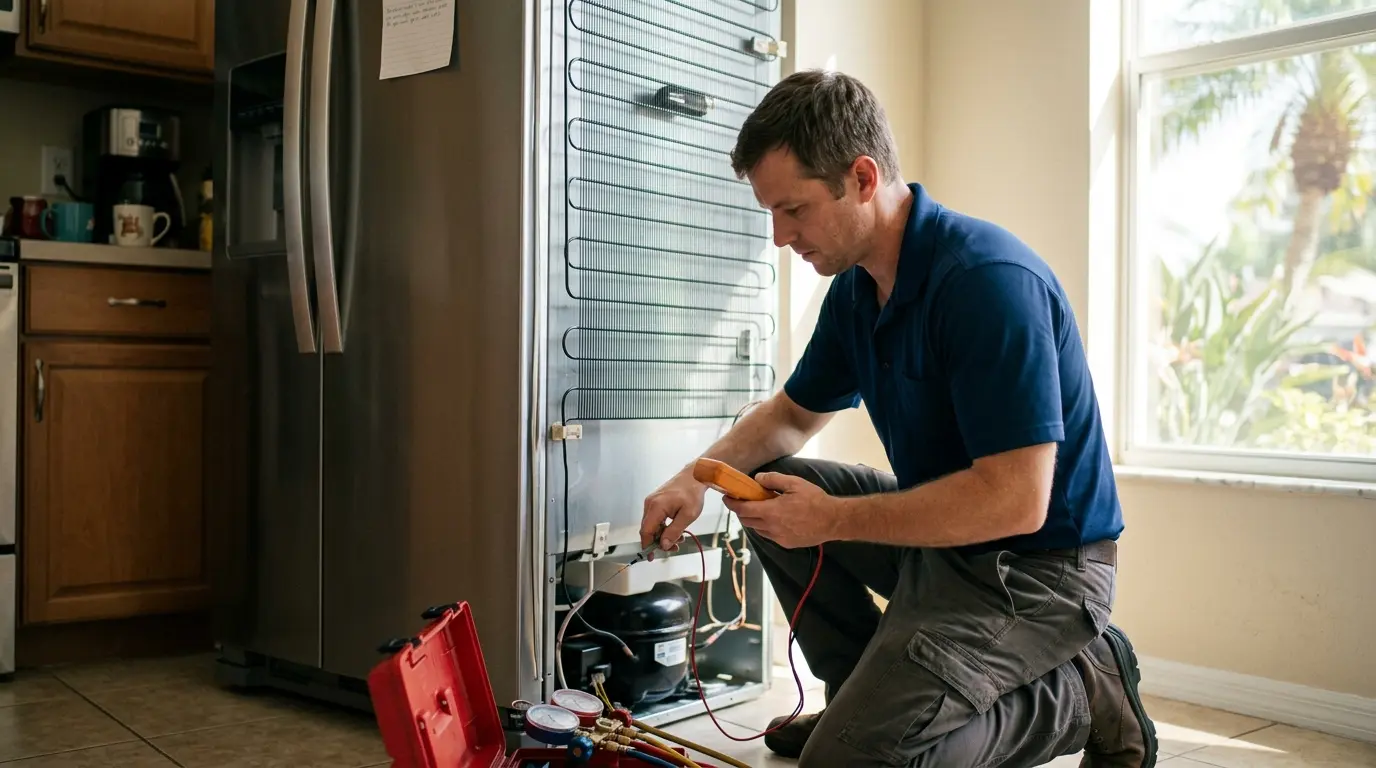
There will be some noise from the compressor when it is running, but if there is a sudden increase in compressor noise, that should be considered. Mechanical or electrical issues can be evident through loud knocking or grinding, repeated clicking, or strong vibrations. If there are any issues with the refrigerator’s cooling capacity, a technician needs to check the compressor and other components of the sealed system.
What Can Cause a Noisy Refrigerator?
Different problems can create similar sounds. Common causes include:
- Dirty condenser coils
- Worn fan motors
- Fan blades hitting ice or debris
- Loose drain pans or tubing
- Ice buildup around the evaporator fan
- Faulty compressor-start components
- Ice maker or water valve problems
- Refrigerant or sealed-system issues
- Loose internal or external components
That is why it can be a waste of money to replace a part just for the sound. A proper mechanical inspection will help to determine the true cause.
What You Can Safely Check Yourself
There are a number of simple tests that can be done without breaking the refrigeration system before the time for a service. First, make sure the refrigerator is standing level and is not touching a wall or cabinet that could amplify vibration. Look and listen for anything on top of or to the side of the appliance that is rattling.
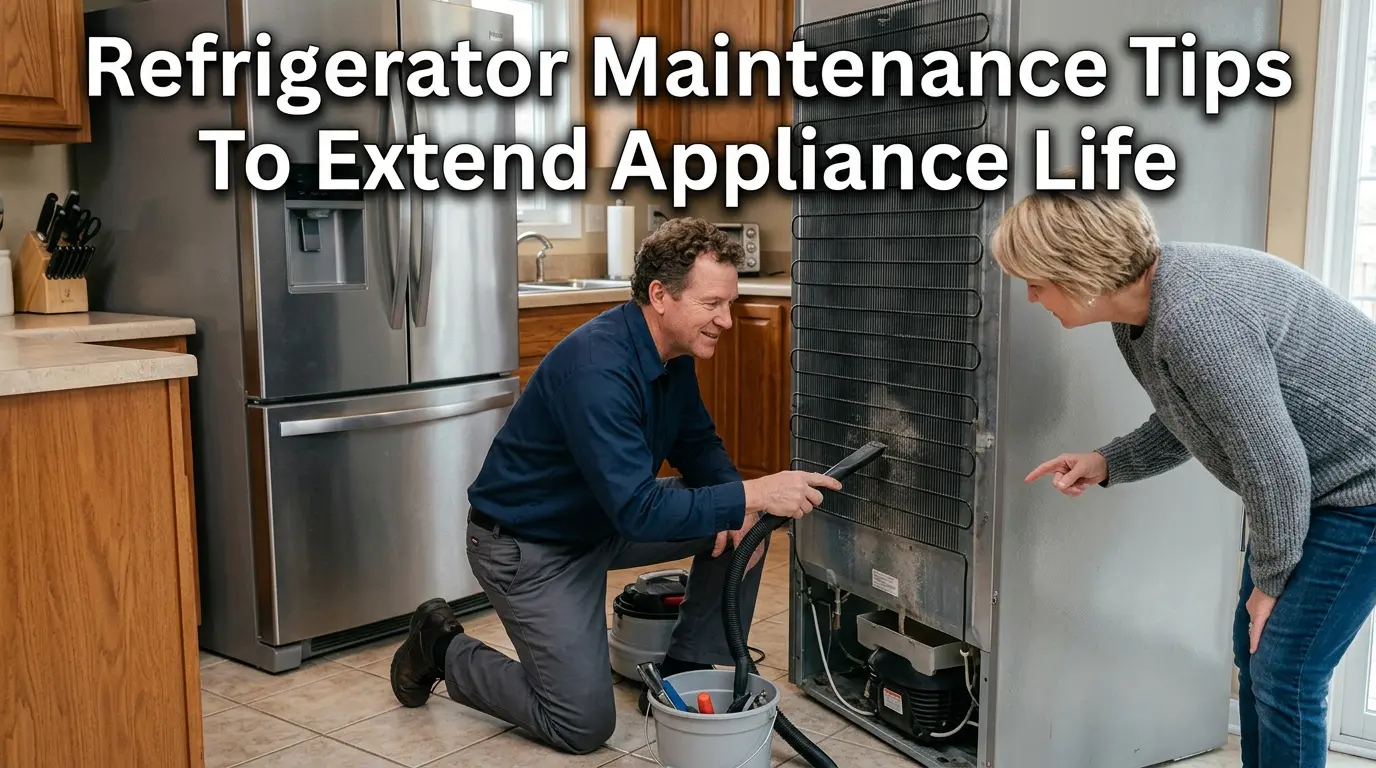
If the model permits, you can check for excess dust in the visible condenser. Maintain clearance around the area for proper airflow. When fan blade noises are heard with ice buildup, do not try to rapidly dislodge the ice around the internal parts. Do not use sharp objects or heat sources to force ice away.
If the electrical troubles are excessive, the circuit breaker has been tripping a lot, or there is a possible refrigerant leak, this should only be done by a qualified technician.
When Refrigerator Noise Means You Need Repair
When a noise occurs in combination with another symptom, it becomes more problematic.
For instance, if the refrigerator doesn’t start even after repeated clicking, it could signify a compressor-start problem. If there is a grinding noise and the airflow is not as normal as it should be, it could indicate a problem with the fan motor. If it is making a loud sound and getting warmer, it may be a problem with the cooling system.
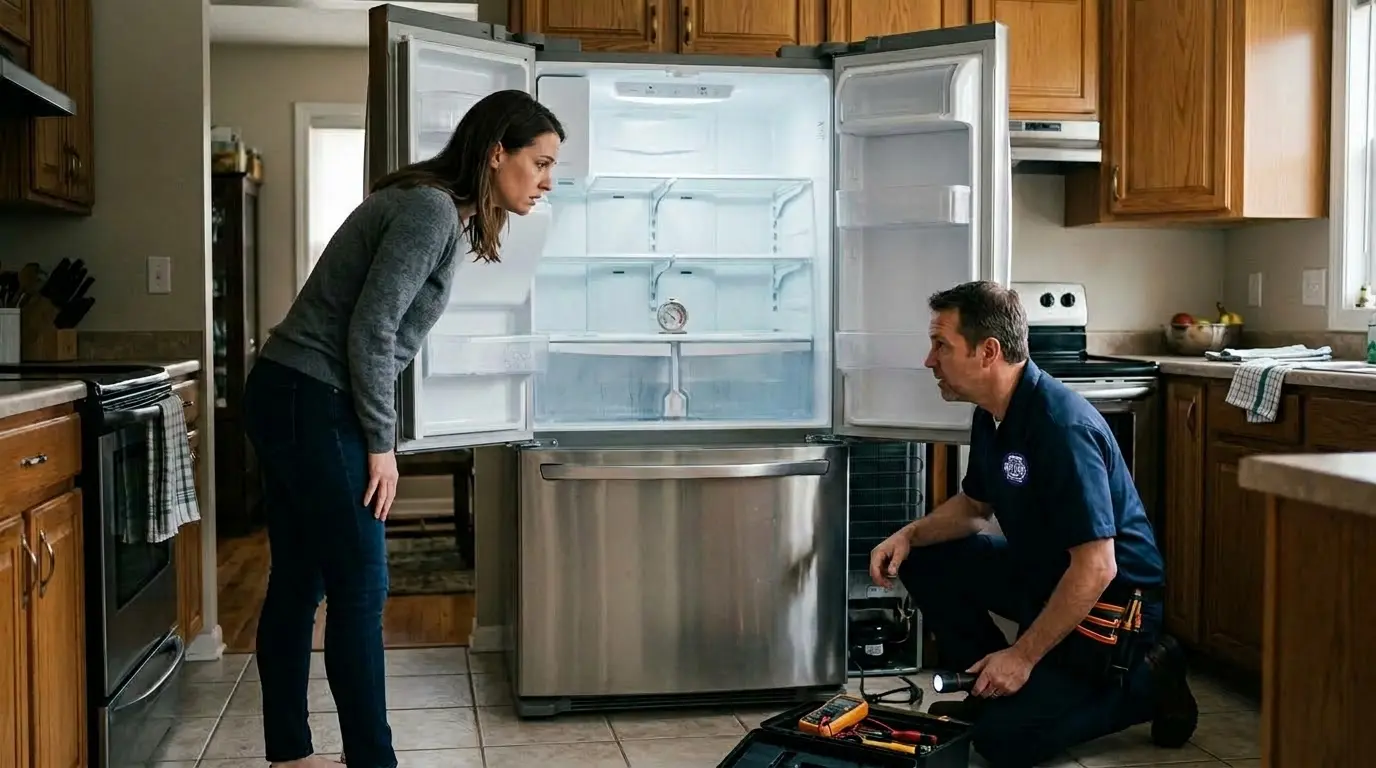
If the refrigerator is making noise and food is no longer staying cold, arrange service rather than waiting for the appliance to fail completely. Discount Appliance Repair of Central Florida can perform a component diagnosis to determine whether the problem involves a fan, compressor, ice maker, electrical component, or another part.
How Orlando’s Climate Can Affect Refrigerator Operation
The warm climate of Orlando can increase the amount of heat the refrigerator needs to extract from both the appliance and the air surrounding it during warmer seasons. According to the National Weather Service climate record, Orlando’s summer high temperatures are typically in the upper 80s and 90s.
Not all noisy refrigerators are climate-related. But when it’s hot, it can be more apparent when the airflow is restricted, coils are dirty, there is poor ventilation, or when the cooling system is already stressed.
Keeping the appliance properly ventilated and addressing unusual sounds early can help prevent avoidable stress on its components.
How to Prevent Refrigerator Noise Problems
A little regular maintenance goes a long way in keeping your refrigerator’s moving parts and cooling system running smoothly. Just keep it reasonably clean, make sure it has enough ventilation, and check the door seals for any damage. Don’t ignore frost or ice buildup they can mess with the fan blades.
Pay attention to the usual sounds your fridge makes. If something changes, don’t brush it off. Spotting a problem early can mean fixing a small part instead of dealing with a bigger breakdown later.
If you keep hearing a strange sound, note when it happens and whether the fridge is still cooling the way it should. That kind of detail helps a technician figure out what’s really going on during a repair visit.
Final Thoughts: Do Not Ignore Changes in Refrigerator Sounds
Not every noise from your fridge is a disaster. Humming, clicks, and even ice maker sounds happen. It’s the sudden change, especially with cooling loss or electrical trouble, that’s worth noticing.
Discount Appliance Repair of Central Florida can help identify the source through proper testing instead of replacing parts based on sound alone. Catching odd sounds early helps you avoid expensive repairs and keeps your fridge working longer.
Frequently Asked Questions
What causes a refrigerator to hum so loudly?
Humming usually comes from the compressor or condenser fan doing its job. But if it suddenly gets much louder, lasts much longer, or shows up when the fridge isn’t cooling well, you could be looking at an airflow, fan, compressor, or cooling-system problem requiring professional diagnosis.
Why is my refrigerator clicking repeatedly?
If you hear repeated clicking, that’s often the compressor trying to start but failing. A faulty start relay or overload protector can do this, but sometimes, it means the compressor itself is bad. If your fridge isn’t cooling, have a technician test it.
Can ice buildup cause refrigerator noise?
Yes. Ice can block the evaporator fan and make scraping, rattling, or grinding noises. Too much frost also slows down cooling because of bad airflow. Don’t just clear away the visible ice; find out what’s causing it in the first place.
Can a refrigerator’s compressor make loud noises?
Yes. Compressors normally hum and vibrate, but if you hear loud knocking, grinding, or constant clicking, there’s a problem. Let a technician check the compressor and the starting components before you think about repair or replacement.
When should I call a refrigerator repair technician?
Call for service when an unusual noise is persistent, getting louder, or accompanied by poor cooling, food spoilage, frost buildup, leaking, or repeated electrical problems. Early refrigerator repair can help identify the source before a minor component issue becomes a larger failure.