



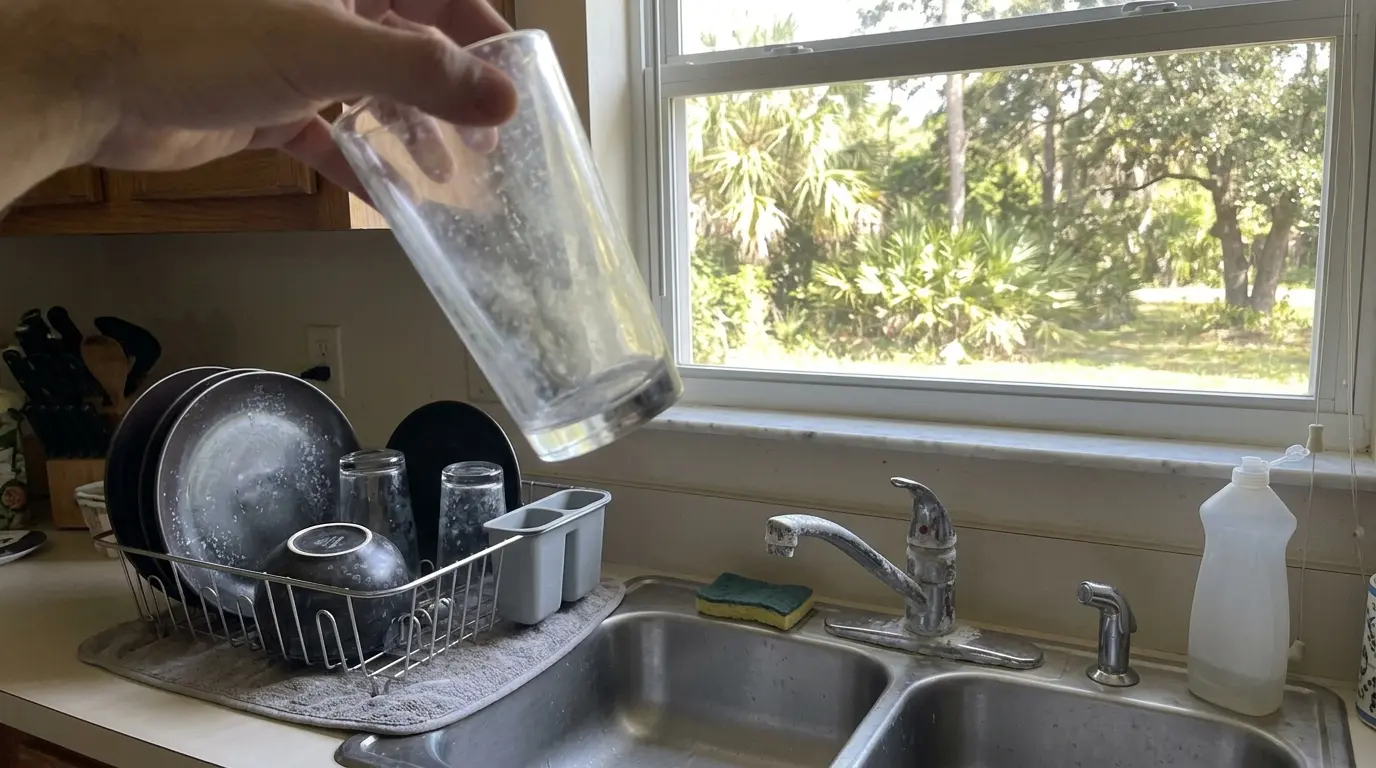

















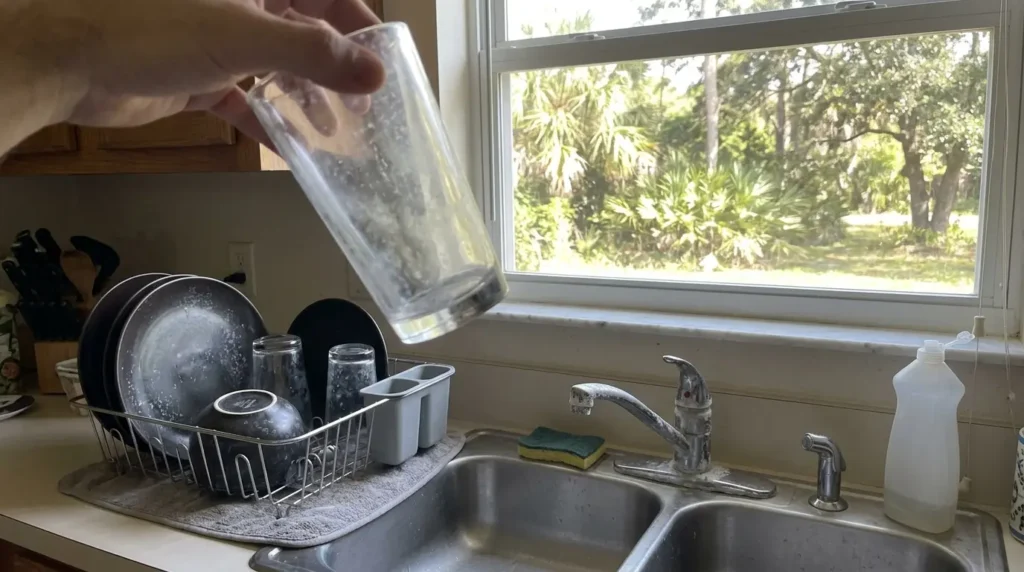
Have you ever unloaded the dishwasher expecting clean plates and clear glasses, but instead, you find white dots, cloudy patches, or a chalky film? Rewashing is a time-consuming process, and sometimes changing the detergent doesn’t help. If you are dealing with white spots on dishes in Apopka, FL, the cause may be your water, detergent, rinse cycle, or a dishwasher component that is not working correctly.
It is important to first check local water conditions. According to the City of Apopka’s 2024 Water Quality Report, its water is moderately hard between 120 and 200 milligrams per liter (7.0–11.7 grains per gallon). That range is significant in terms of minerals that could be present in any quantity that would have an impact on spotting. But the hardness of the water does not account for all water that causes clouds or white film on the glassware.
Apopka’s Water Conditions: Why Minerals Matter
Minerals, primarily calcium and magnesium, are present in hard water. The water is distributed over dishes during the rinsing of a dishwasher, which is part of the rinse cycle. This can result in the formation of a white tinge or chalky film as the droplets of minerals dry.
The City of Apopka also points out that hardness may be different in different locations. The range of possible water conditions in your home may not accurately reflect the conditions found in a published water system, especially if you have a private water well or a separate water treatment system.
Here are some common signs to help narrow down the cause:
| What you notice | Possible explanation |
| White dots that wipe away | Mineral deposits from drying water |
| Chalky film on plates and utensils | Hard water or detergent residue |
| Cloudy glasses after every wash | Mineral deposits or glass etching |
| Powdery detergent marks | Detergent not dissolving or rinsing properly |
| Residue across the dishwasher interior | Mineral scale, detergent buildup, or maintenance issues |
These clues are helpful hints and are not a diagnosis. There are several reasons that could create a similar mark.
Four Reasons Your Dishwasher Leaves White Residue
1. Calcium and Magnesium Remain on the Dishes
A common reason for a dishwasher to leave a white residue is because of mineral buildup. Calcium and magnesium deposits can be left on the interior of the dishwasher, plates, and glassware as water evaporates.
The issue might be more apparent on drinking glasses because the smallest deposits are visible on transparent surfaces. White marks can also be seen on the edges of cups or where water collects.
A simple check: Put a dab of white vinegar on a non-permanent area of one glass and rinse. If the mark begins to fade, mineral deposits are probably to blame. Don’t use this test for fragile or acid-sensitive items, or for regular use in the dishwasher unless the manufacturer states otherwise.
2. Detergent Is Not Dissolving or Rinsing Away
More detergent does not necessarily produce cleaner dishes. An excessive dose, an unsuitable product, or detergent that does not dissolve properly can leave a cloudy coating.
Water temperature also matters. If the water entering is too cold for the detergent & cycle, some detergent may not dissolve. If the rack is overloaded, it can cause another problem because water cannot be applied to all surfaces.
Try these adjustments:
- Measure detergent according to its packaging and your dishwasher’s instructions.
- Check whether the detergent is old, damp, or clumped together.
- Leave space between plates, bowls, and glasses.
- Make sure tall items do not block the detergent dispenser.
- Use a cycle appropriate for the load and soil level.
In the event that these changes cause the residue to disappear, the problem may have been caused by the detergent or loading of the filter rather than from the water supply.
3. The Rinse Aid or Rinse Cycle Is Not Doing Its Job
Rinse aid helps water drain from dish surfaces instead of forming droplets that dry into visible spots. When the dispenser is empty, or its setting is too low for your water conditions, cloudy dishes after the dishwasher cycle may become more noticeable.
Inspect the rinse aid dispenser and add rinse aid as needed. If the issue persists, check the owner’s manual to determine if the dose is set correctly.
Also, do not use a quick rinse or short cycle when the dishes should be washed thoroughly. Other shorter programs will provide different wash conditions and might not yield the results you are looking for with heavily soiled loads.
4. The Filter or Spray Arms Need Attention
Water circulation is essential to a dishwasher’s ability to clean. Spray-arm & filter openings can allow food particles, grease, and mineral scale to build up and reduce water distribution to dishes.
Dirty filters are not always the root cause of white spots, but can lead to suboptimal cleaning and residual film.
Verify the removable filter as per the manufacturer’s guidelines. Wash it according to instructions, check for blocked spray arms, and ensure that the arms move properly. When water is left in the appliance bottom, or there is a decline in the level of cleaning on multiple loads, it may be necessary to examine this problem in detail.
A Practical Cleaning Plan for Spot-Free Dishes
Before purchasing a water softener or arranging a repair, work through these steps in order.
Step 1: Identify the residue. Use a moistened cloth to clean a spot. If it comes off easily, it may be surface residue. If the glass is still cloudy after cleaning, it may be a permanent etching.
Step 2: Check detergent and rinse aid. Ensure you’re using the correct amount of detergent and rinse aid dispenser is full.
Step 3: Inspect the filter and spray arms. Clear away easy-to-reach material and perform maintenance as specified in your manual.
Step 4: Run a dishwasher cleaning cycle. Use a dishwasher cleaner that is suitable for your dishwasher. Use it as specified in the manufacturer’s cleaning guidelines. Normal cleaning removes deposited grease, detergents, and some mineral deposits.
Step 5: Reassess after another normal load. If the spots are still present, check the water hardness in the house and the performance of the appliance before doing any more changes.
| Helpful note: Do not combine vinegar, bleach, or other cleaning chemicals. Never pour a household cleaning product into the dishwasher unless its manufacturer permits that use. |
When White Spots Point to a Bigger Problem
If you cleaned the filter, adjusted the detergent, and refilled the rinse aid, but those white spots continue to show up. This is the time to examine your water’s hardness level. If your home has a water softener, check if it’s working the way it should, and find out if your dishwasher’s water-hardness setting should be modified.
If the stains don’t go away, you could be dealing with a broken detergent dispenser, water not heating enough, blocked spray arms, or a drainage problem. Sometimes the issue is glass etching, a permanent kind of damage you usually can’t fix by just scrubbing or changing out products.
If basic troubleshooting does not resolve the problem, Discount Appliance Repair of Central Florida can help investigate ongoing dishwasher issues and identify whether a component needs repair.
Frequently Asked Questions
What causes white spots to appear on my dishes after a dishwasher cycle?
Hard water minerals, using too much detergent, not enough rinse aid, or weak water circulation can cause the trouble. Check the residue, make sure you’re using the right amount of detergent, and don’t skip the rinse aid.
Is Apopka, FL, known for hard water?
Apopka’s water is moderately hard. The latest 2024 numbers put water hardness between 120 and 200 mg/L, or 7.0 to 11.7 grains per gallon. The actual number in your house might be a little different.
Will rinse aid stop white spots on glasses?
Rinse aid often reduces water spots by helping water drain off surfaces. It may improve results, but it will not correct every cause of residue, such as a clogged spray arm or a malfunctioning dispenser.
When should I call an appliance repair technician?
If residue stays after you try the common fixes, the dishwasher leaves water in the bottom, dishes keep coming out dirty, or you think it’s not heating, dispensing, or circulating properly, contact a professional who understands the job.
Final Thoughts: Get to the Cause of Cloudy Dishes
White spots don’t always spell disaster for your dishwasher. In Apopka, mineral deposits are likely because of the moderately hard water, but detergent residue, rinse aid settings, blocked spray arms, or something broken inside can give you the same headache.
Start with simple checks, clean the accessible components, and make one adjustment at a time. If the residue keeps returning, Discount Appliance Repair of Central Florida can help identify whether your dishwasher needs a repair rather than another round of cleaning products. The goal is not just to remove today’s spots. It is to find the reason they keep coming back.