

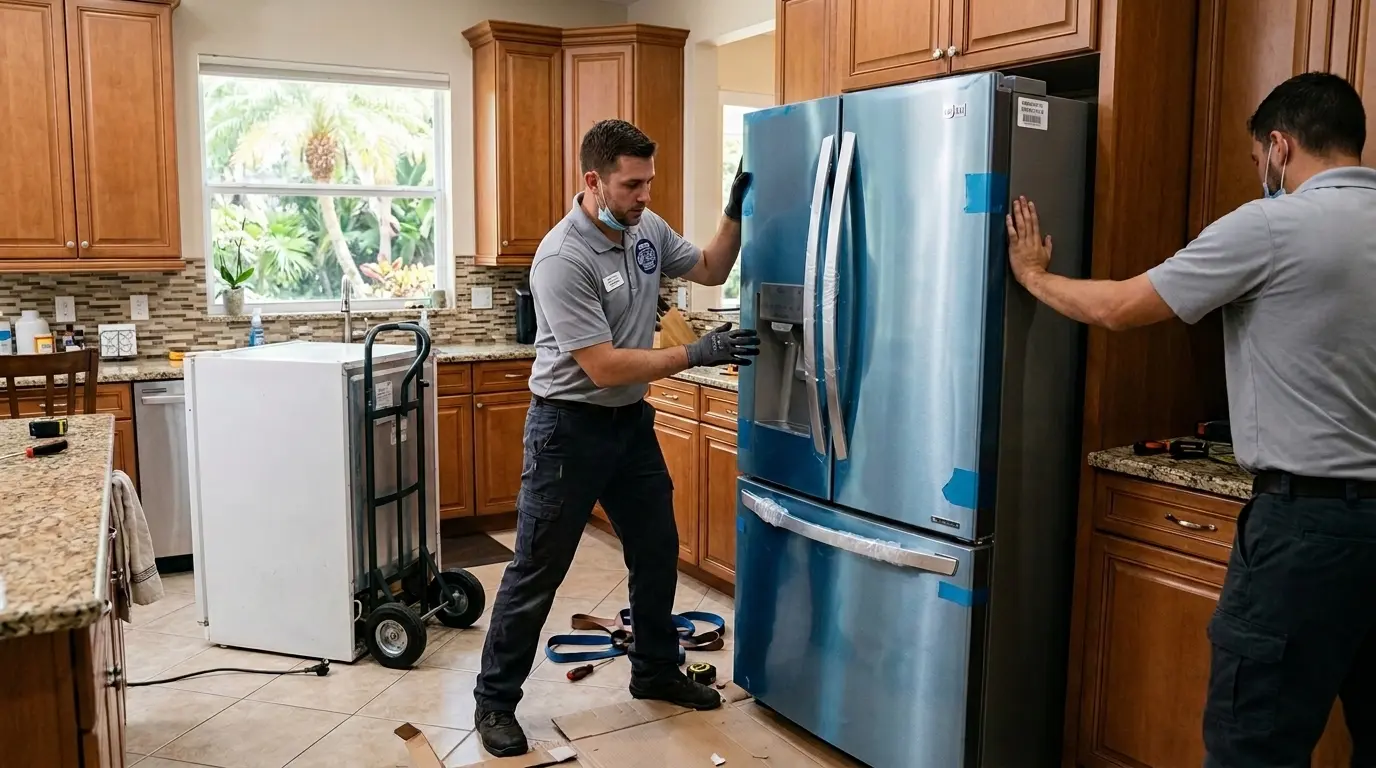
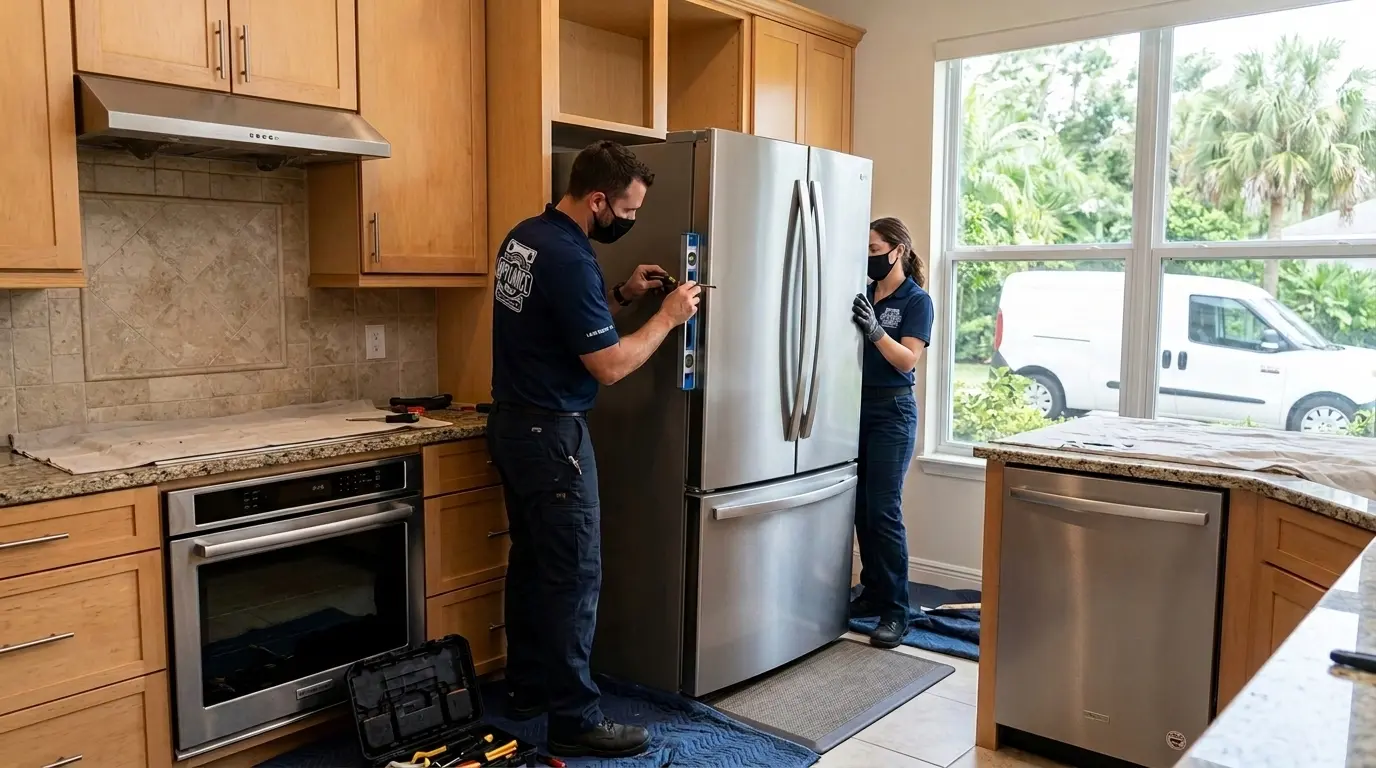





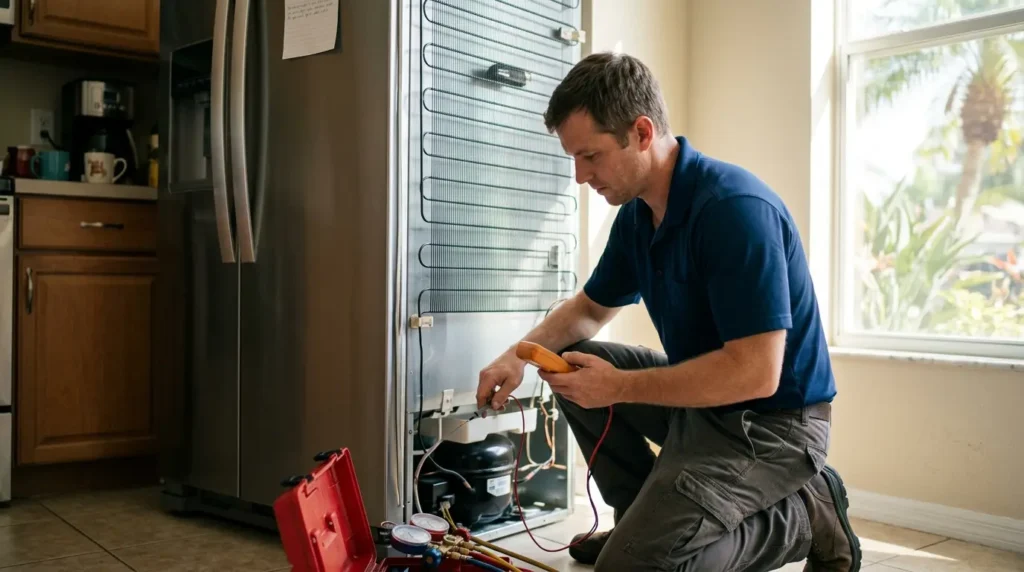
A refrigerator is an appliance that you don’t give much thought to until you have a problem with it. A minor issue can turn into a big nuisance when the food begins to warm up, water starts to drip on the floor of the kitchen, or the ice maker no longer functions.
Refrigerator performance is important year-round for Orlando homeowners. Orlando’s climate is warm, with the National Weather Service reporting the average temperature of approximately 75°F annually at Orlando International Airport in 1991-2020, as well as substantial amounts of rainfall and hot weather throughout the year.
This guide explains the most common refrigerator issues, typical 2026 repair costs, maintenance steps, and the scenarios where professional refrigerator repair services in Orlando, FL, are better suited than troubleshooting and doing more repairs yourself.
Common Refrigerator Problems Orlando Homeowners Experience
There are multiple problems that may arise in refrigerators with the wearing out of components or changes in operating conditions. There are some problems that are easy to solve and some that need a specialized test and replacement parts.
Refrigerator Not Cooling Properly
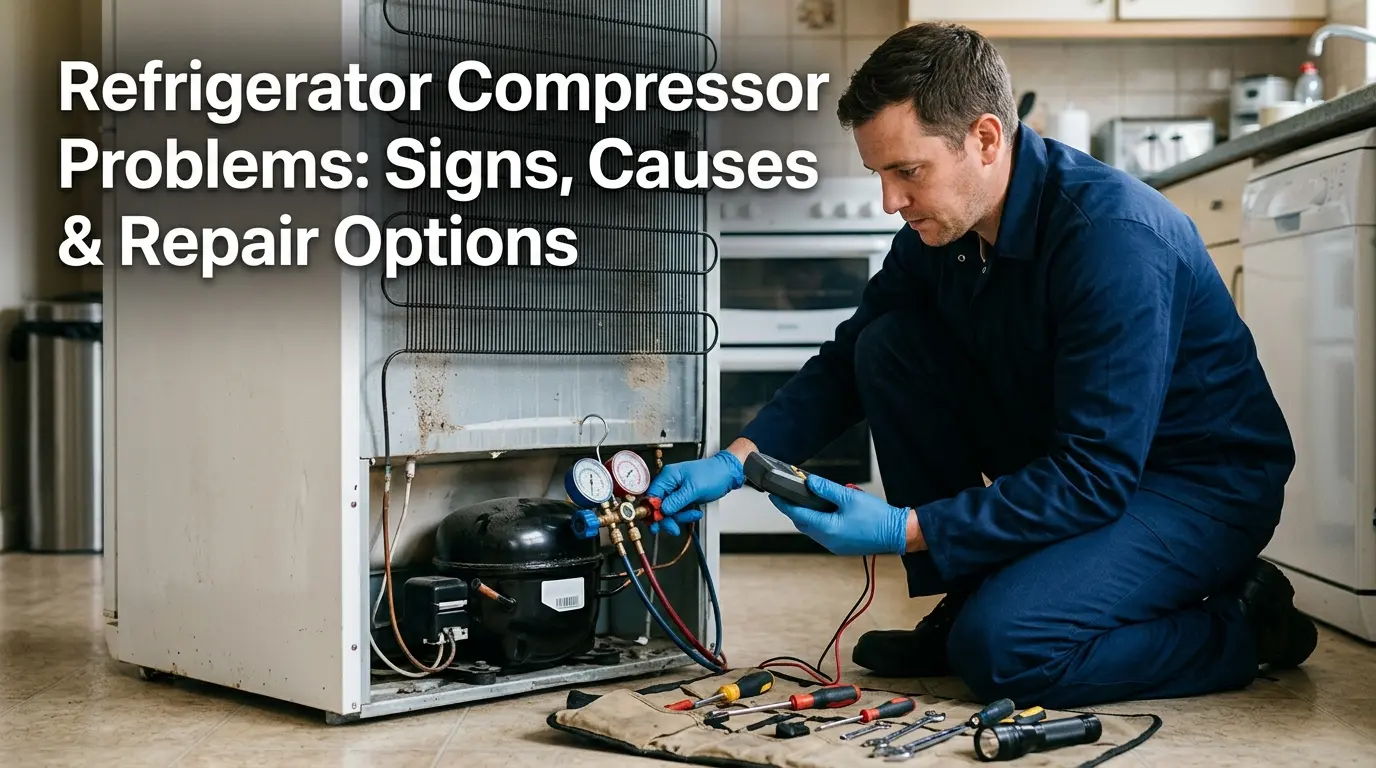
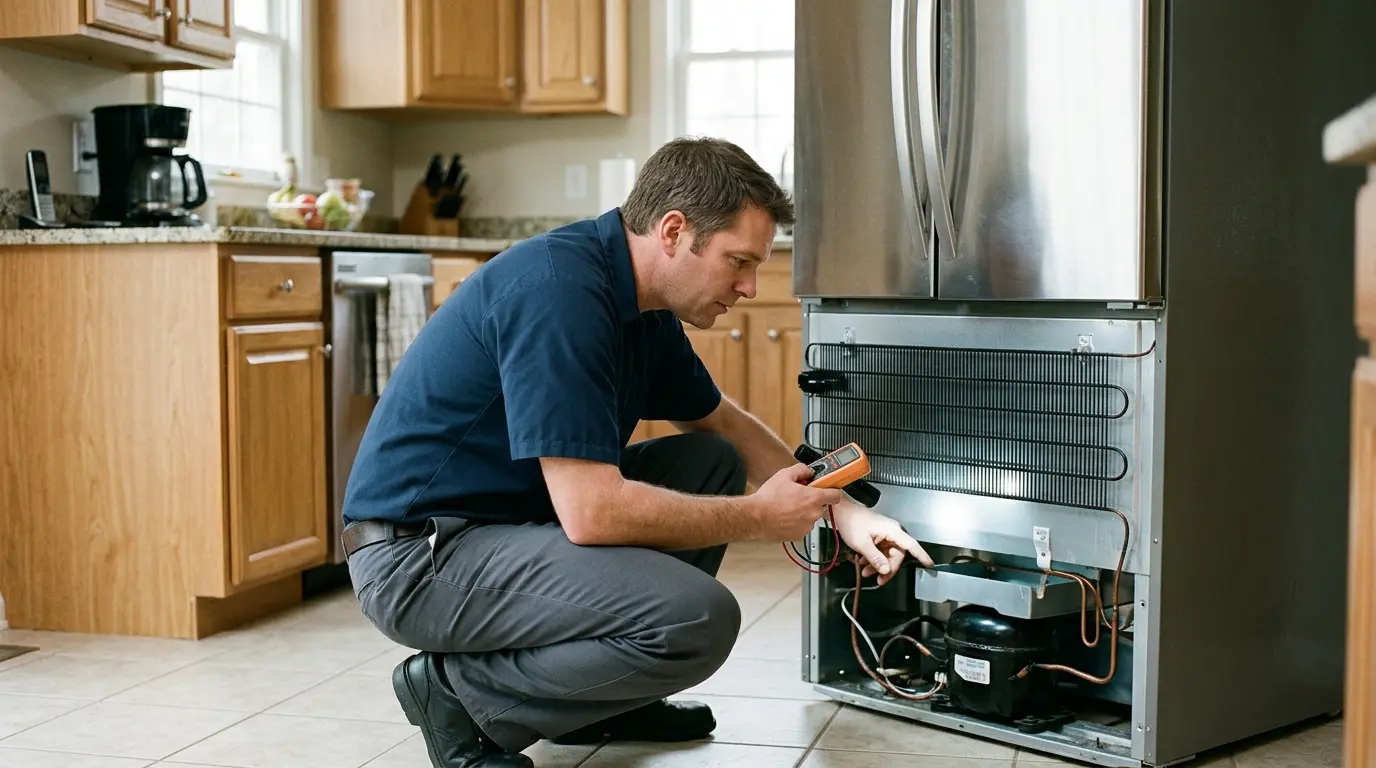
One of the most immediate issues is the refrigerator being inoperative, as the food may go bad. Dirty condenser coils, blocked airflow, failing evaporator fan, thermostat problems, broken door seals, and compressor issues are among the possibilities.
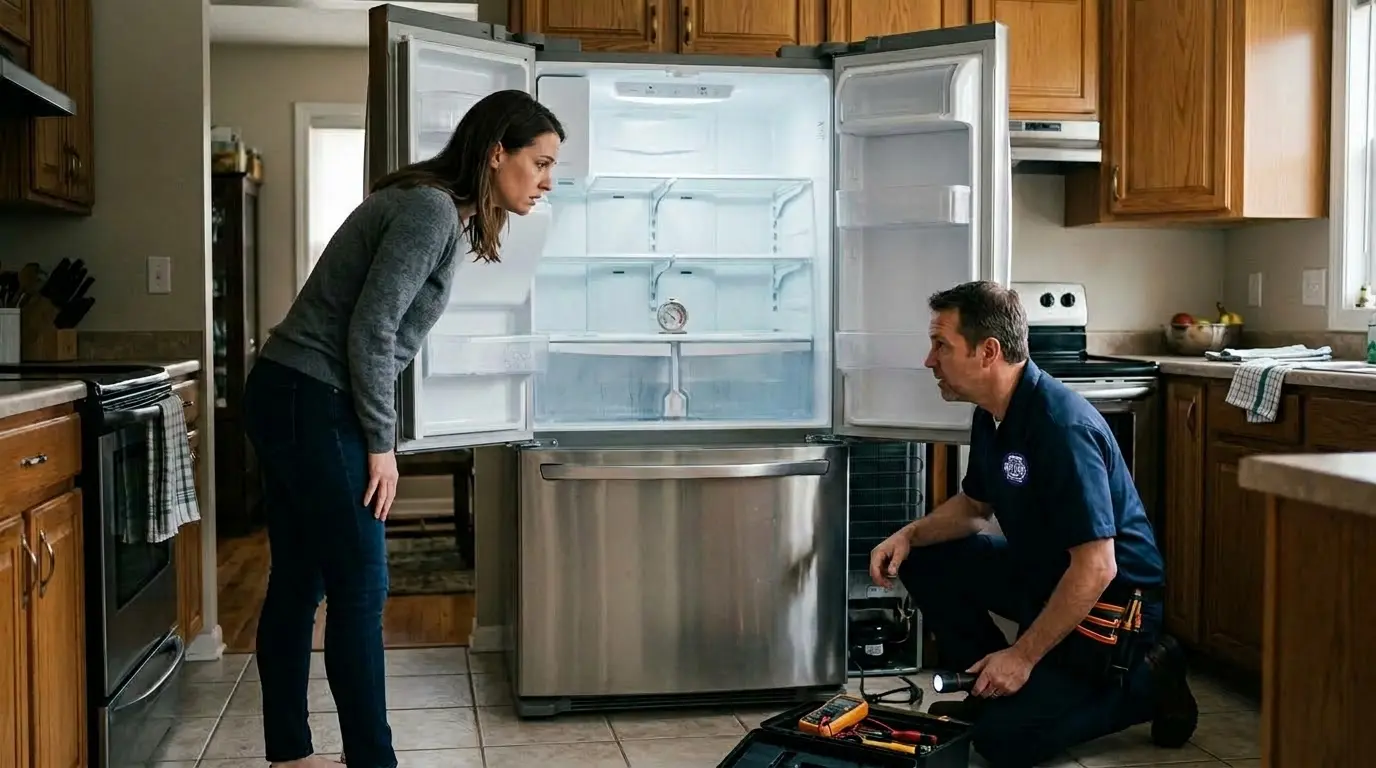
If you think the compressor has broken down, make sure the temperature setting is set properly and that food isn’t obstructing the vents inside the refrigerator. A diagnostic inspection will determine the actual problem if the refrigerator is still running but has not come up to a safe temperature.
Fridge Leaking Water
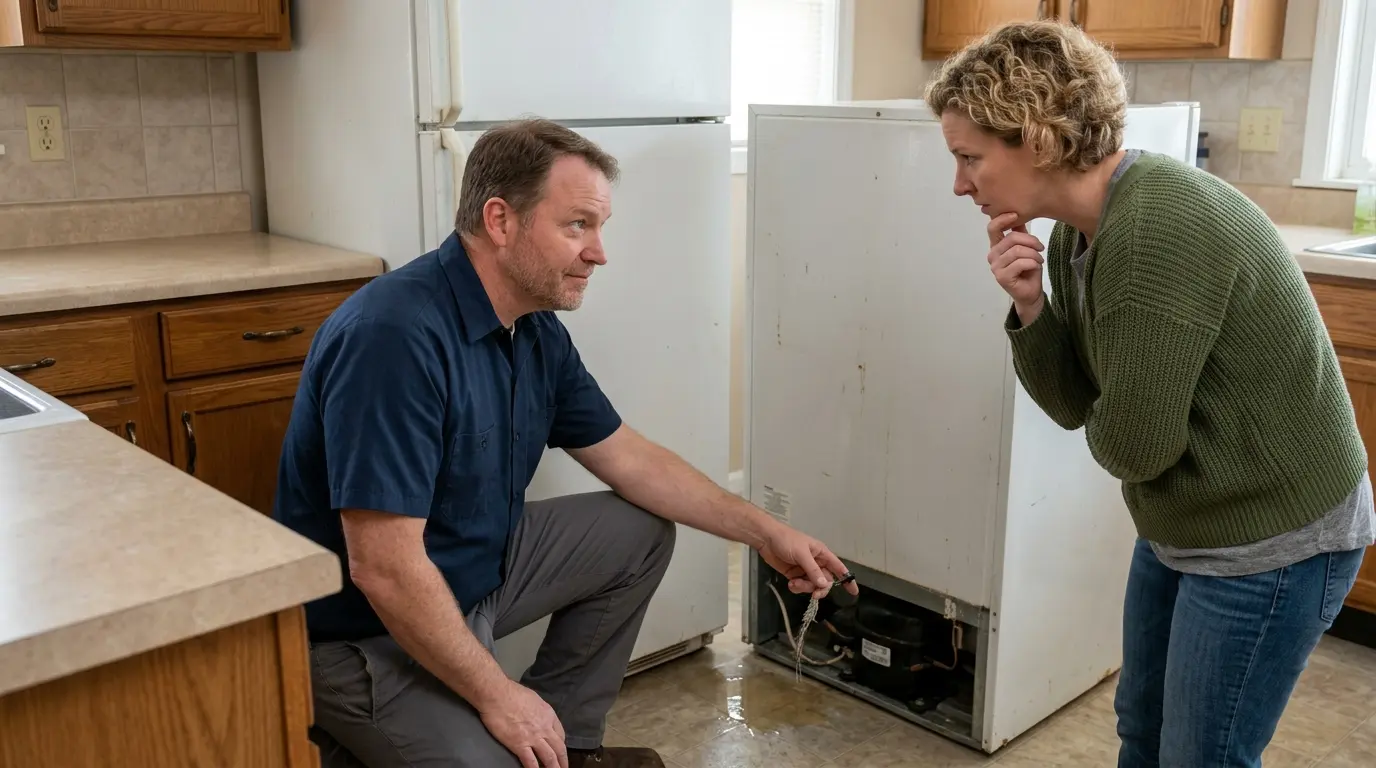
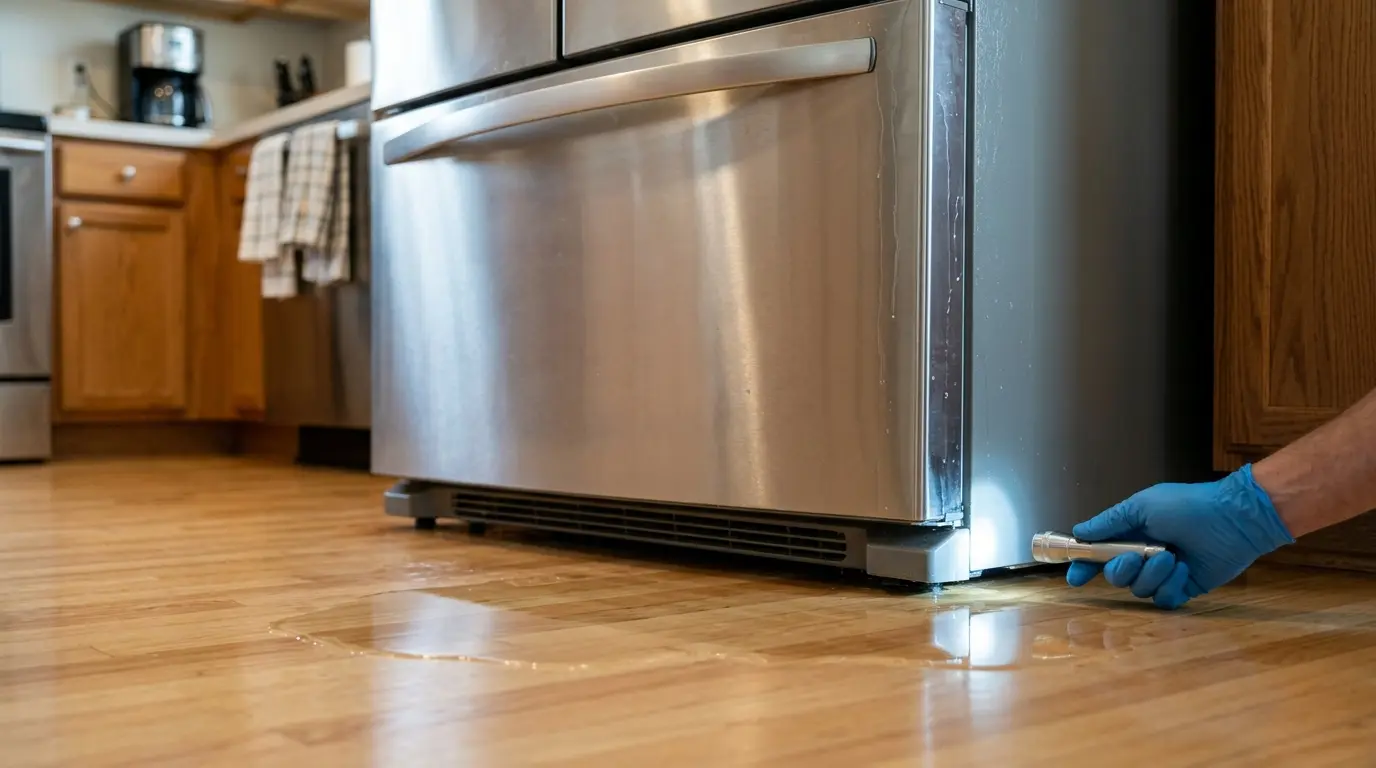
If water is under or inside the refrigerator, the defrost drain may be clogged or frozen, the water line may be damaged, the drain pan may be damaged, or the connection to the ice maker may be leaking.
It is normal to have a little condensation; recurring puddles are another story. If the water leaks continue, they can cause damage to the floor and cabinets, so it is important to identify the water source instead of constantly cleaning up the water.
Refrigerator Making Unusual Noises
Refrigerators naturally make sounds as compressors, fans, ice makers, and defrost systems operate. A sudden change in sound can indicate a mechanical issue. If grinding, rattling, buzzing, or repeated clicking noises are heard, they should be taken seriously, particularly in conjunction with cooling issues. An appliance technician can identify the sound source as a fan, compressor, condenser, or another element.
Ice Maker Problems
Ice makers can cease to make ice due to frozen water lines, inlet valve complications, temperature concerns, malfunctioning sensors, or mechanical failures. A clogged filter may also cause a decrease in water flow on models equipped with filtered water. The freezing may be fine, but the ice maker isn’t working, which could mean it’s just an ice maker problem and not a refrigerator problem.
Why Orlando’s Climate Makes Refrigerator Maintenance Important
Appliance maintenance can be worthwhile because of Orlando’s climate conditions. This 2025 population estimate of 333,888 includes 131,179 households recorded for the 2020-2024 time frame; refrigerators are therefore vital appliances in what is a large and expanding residential market
Warm weather can also cause a refrigerator to take more effort to keep the inside temperature in check. This doesn’t mean that Orlando refrigerators break down more frequently, but they will run efficiently when the airflow is clear and the refrigerator is well-maintained.
ENERGY STAR suggests installing a refrigerator at 35° to 38°F, leaving air space behind the refrigerator, inspecting the door seals, and cleaning condenser coils on older refrigerators. appliance, checking door seals, and keeping condenser coils clean on older models.
How Much Does Refrigerator Repair Cost in 2026?
The price of the refrigerator in Orlando varies depending on the brand, model, part that failed, labor, availability of parts, and the complexity of the repair.
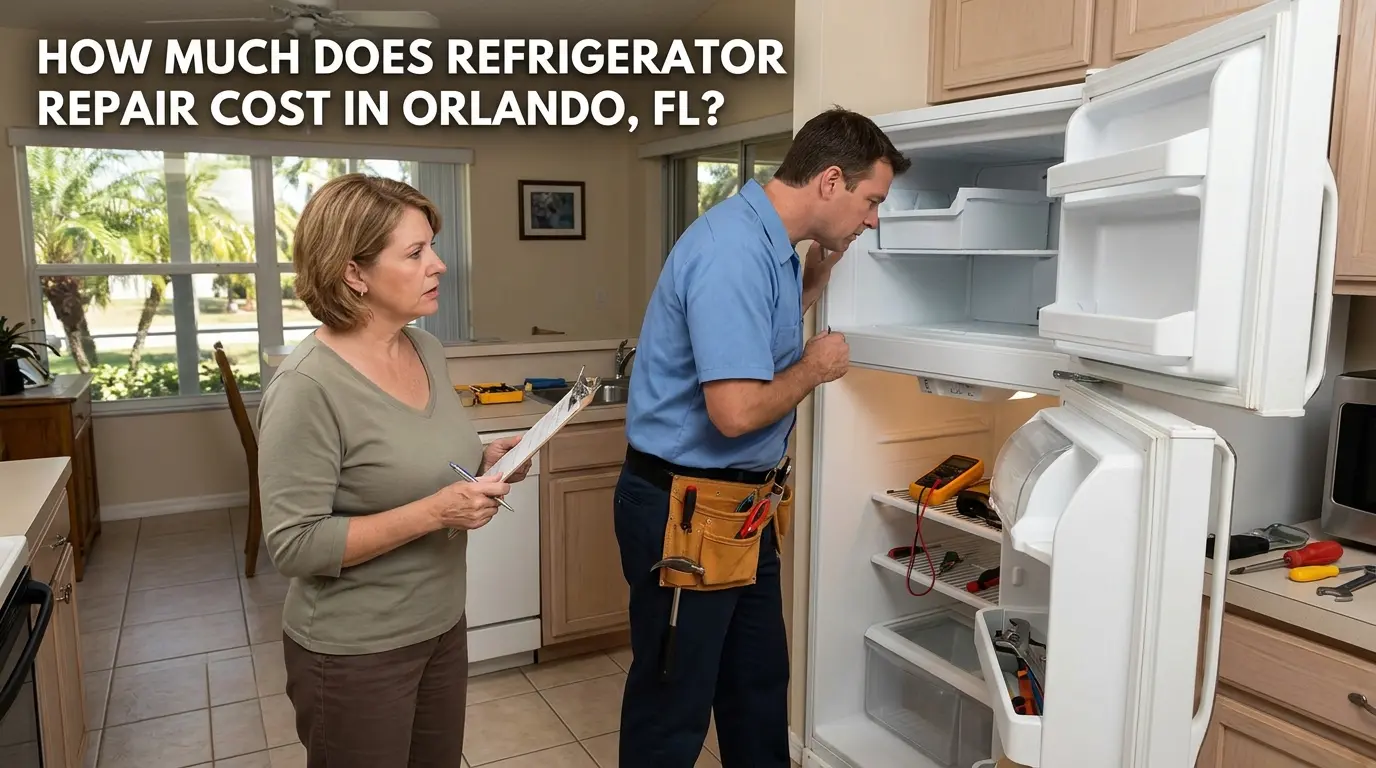
Refrigerator repairs can cost anywhere from approximately $150 to $400, according to Angi, which is a current national cost benchmark. It also mentions that some of the repairs for the water line, a component of the refrigerant line, and coil cleaning can cost about $150 to $300, depending on the situation.
For an Orlando homeowner, the most useful approach is to treat these figures as a general benchmark rather than a guaranteed local price. A refrigerator technician should inspect the appliance and provide a repair estimate based on the actual problem.
What Can Increase the Repair Cost?
There are a number of factors that may influence the final cost:
- Refrigerator brand and model
- Availability and price of replacement parts
- Compressor or sealed-system problems
- Built-in or specialty refrigerator designs
- Labor time and diagnostic requirements
- Ice maker or water dispenser components
- Age and overall condition of the appliance
A straightforward component replacement might be viable, and a substantial repair to the sealed system or compressor can complicate the repair/replace decision.
Repair or Replace: Which Makes More Sense?
The condition and age of the fridge are as important as the repair costs. If the refrigerator is fairly new, has been working well, and only requires a simple repair, then it might be economical to repair it. Replacement should be considered more thoroughly for an older appliance that is having repeated problems, has costly major components, poor efficiency, or significant wear.
Don’t take the initial estimate for repairs as final. Think about how old the appliance is, if it has ever been repaired, how long the appliance is likely to last, how much energy the appliance consumes, and what the cost of a replacement would be.
A professional technician can help you compare those factors instead of automatically recommending either option.
Refrigerator Troubleshooting You Can Safely Try
There are a few simple tests that you can perform to decide if the problem is a simple one or one that needs professional services.
Check the temperature setting. Always check that the refrigerator has not been accidentally turned too high.
Look at the vents. Keep food away from the inside vents, allowing cold air to flow.
Inspect the door seal. The warm air can intrude into the refrigerator through a damaged or loose gasket. Test to see if the door closes evenly and the seal remains consistent.
Listen for unusual sounds. Indicate if the sound is constant or if the sound is only heard when the compressor, fan, or ice maker is in operation.
Check for visible water. If you notice a leak, determine if it is from the water dispenser, ice maker, drainage area, or under the appliance.
The following checks can help narrow down the symptoms, but will not replace a full diagnostic inspection if there has been a failure of an internal component.
Refrigerator Maintenance Checklist
Regular maintenance can help to detect issues before they get too costly.
Keep the Right Temperature
For food safety, the FDA advises a refrigeration temperature of 40°F or below and a freezer temperature of 0°F. It’s helpful to have a separate appliance thermometer for the refrigerator because many controls don’t show the internal temperature.
Keep Airflow Clear
Do not pack food items so tightly that cold air can’t circulate. Also, leave appropriate clearance around the appliance and follow the manufacturer’s installation instructions.
Check the Door Gasket
Check the gasket for cracks, gaps, looseness, or hardened areas. If the seal is broken, cold air can get out and cause the refrigerator to run longer.
Clean Appropriate Components
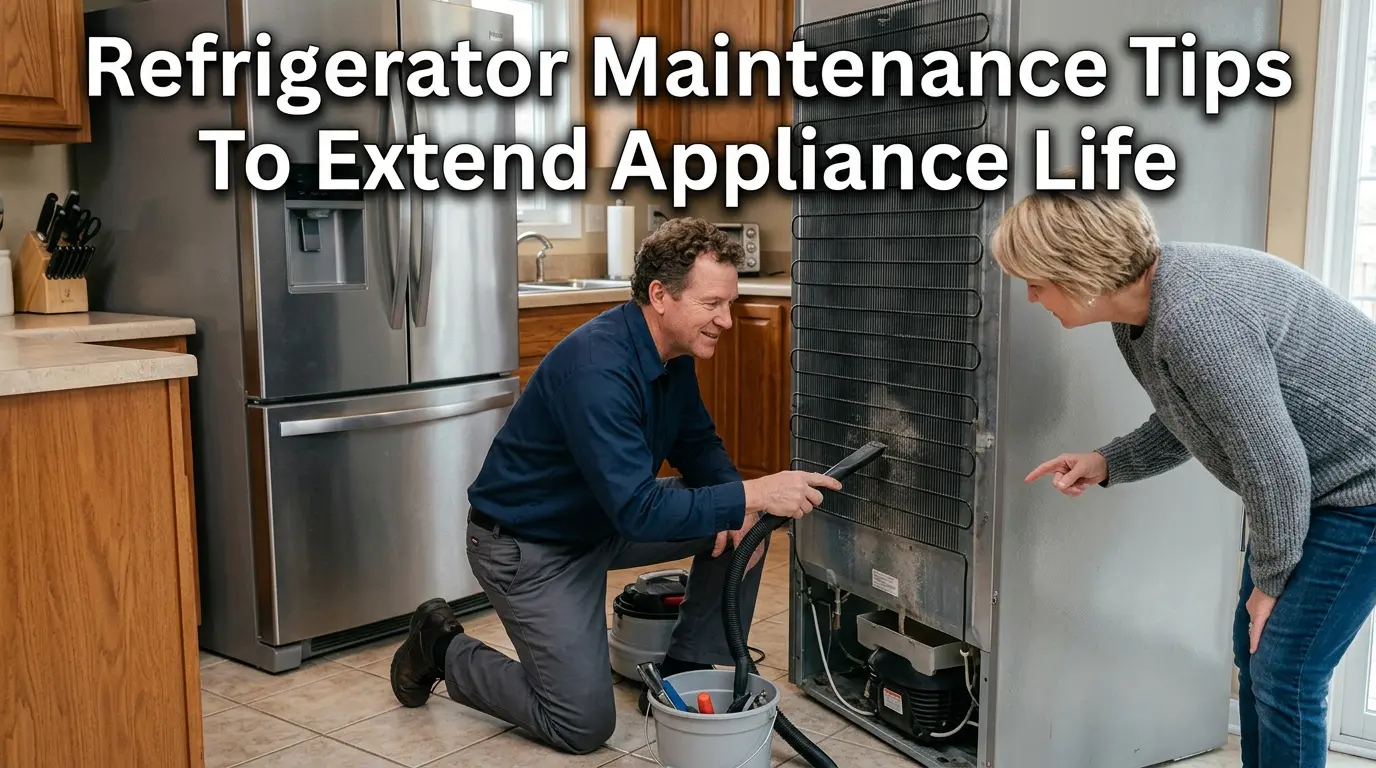
Cleaning the condenser coils may be a good idea for older refrigerator models. Since the location of the coils and the instructions for cleaning them can vary from appliance to appliance, always follow the manufacturer’s guidelines. ENERGY STAR recommends that coils be kept clean on older models.
Watch for Early Warning Signs
Don’t overlook minor changes such as longer run times, temperature changes, unusual noises, frost buildup, or small water leaks. Sometimes a small issue can become a big appliance problem if it isn’t addressed early.
When to Call a Refrigerator Repair Technician
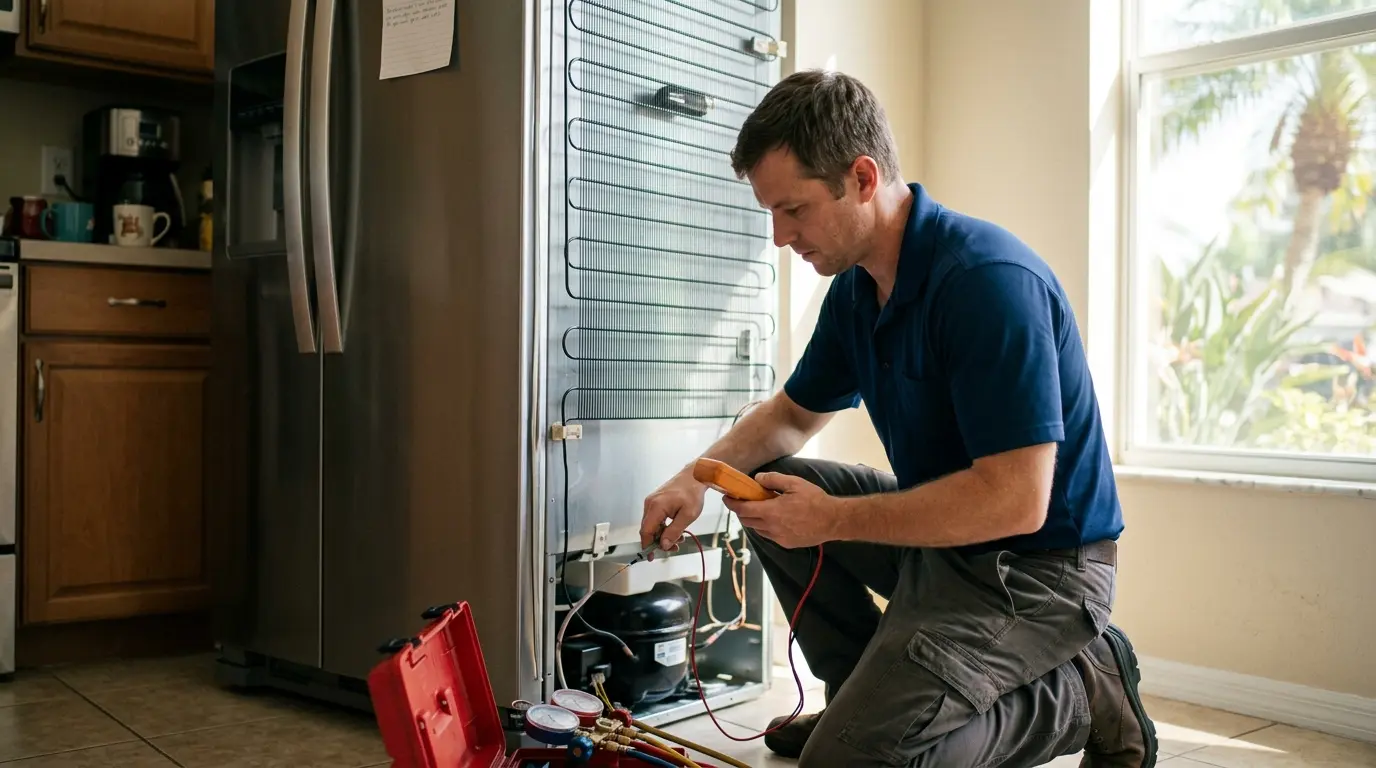
When troubleshooting doesn’t solve the issue, or when a problem relates to any sealed system, electrical or mechanical internal component, calling in a professional refrigerator repair service makes sense.
Call a technician if:
- The refrigerator remains warm after basic checks
- The compressor repeatedly clicks or will not start
- The appliance runs constantly without cooling properly
- Water continues leaking after simple checks
- Frost rapidly builds up in unusual areas
- The evaporator or condenser fan appears faulty
- The ice maker or water system repeatedly fails
- You suspect a refrigerant or sealed-system problem
- A burning smell or an electrical issue appears
A professional refrigerator repair company will be able to identify the issue, rather than replacing parts, before you need to make any extra unnecessary purchases. With modern refrigerators, it is especially important because several parts of the refrigerator can cause similar symptoms.
Do Not Ignore Refrigerator Food-Safety Problems
A refrigerator problem is more than just an appliance problem. It can become a food-safety concern. The FDA suggests storing refrigerated food at 40°F or lower. An unopened refrigerator will keep food cold for approximately 4 hours when the power goes out. Foods that have been above 40°F for 4 hours or more should be thrown out.
In the event of an outage, close doors as much as possible. A full freezer will keep for approximately 48 hours, and a half-filled freezer will keep for about 24 hours, if the freezer door is left closed.
Never check the safety of food by smell or appearance. The more reliable measurement is temperature.
How to Choose a Refrigerator Repair Company in Orlando
Don’t pick the first refrigeration repair service you find when searching for refrigerator repair near me. Inquire of the technician if they specialize in your appliance brand and if they have a transparent diagnostic process before making significant repairs.
It is also useful to ask about:
- Diagnostic or service-call charges
- Parts and labor coverage
- Estimated repair timeframe
- Availability of replacement parts
- Experience with your appliance brand
- Whether the repair comes with any applicable warranty
- Whether the company serves your Orlando area
A competent technician will inform you what went wrong, what should be replaced, and why it is a good repair. For Orlando homeowners, Discount Appliance Repair of Central Florida provides another local option to consider when a refrigerator needs professional attention.
Final Thoughts: Keep Your Orlando Refrigerator Reliable
A refrigerator issue may begin as a minor one, but the consequences of not paying attention to cooling problems, leaks, odd noises, or ice maker failures can be a loss of food and increased repair costs. Regular temperature checks, clean airflow, proper door seals, and timely service can help protect both the appliance and your groceries.
When troubleshooting does not solve the problem, Discount Appliance Repair of Central Florida can be considered when you need professional refrigerator service in the Orlando area.
Frequently Asked Questions
How much does refrigerator repair cost in Orlando?
According to current 2026 national statistics, the average repair cost for a refrigerator is between $150 and $400, but the cost for repairs may differ depending on the appliance brand, parts, labor, and the type of failure in Orlando. Sealed system or compressor repairs can be much more expensive. Get a diagnostic inspection and written estimate before approving expensive work.
How long should a refrigerator last?
The useful life of a refrigerator can depend on the type of refrigerator, frequency of usage, maintenance, and repair history. When assessing the need for repair or replacement, take into account repeated breakdowns, repair costs, energy performance, and the condition of major components, not just age.
Why is my refrigerator running but not cooling?
This can be caused by air blockage, dirty condenser coils, evaporator fan problems, damaged door seals, thermostat issues, or compressor problems. Make sure to verify the temperature setting and vents first. If it continues not to get to a safe temperature, it is advisable to call a professional for diagnosis.
How often should I check my refrigerator temperature?
The FDA recommends monitoring refrigerator and freezer temperatures with appliance thermometers. Keep the refrigerator at 40°F or below and the freezer at 0°F. Checking regularly helps identify cooling problems before food is exposed to unsafe temperatures.
Is refrigerator repair worth it?
If the appliance seems to be in good shape and the part that is broken is inexpensive, repair might be a good option. An older refrigerator that continues to have problems or is on the verge of a costly repair is a better candidate for replacement.