

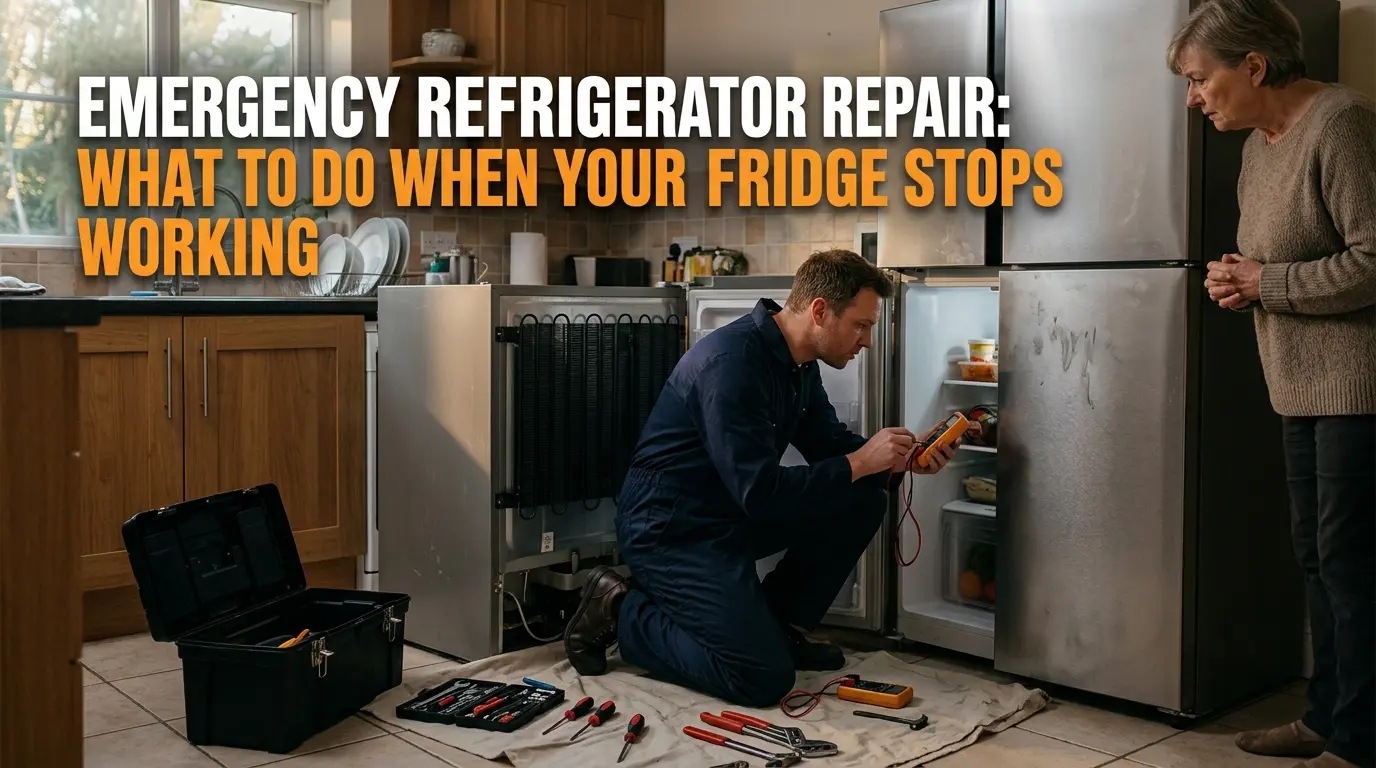
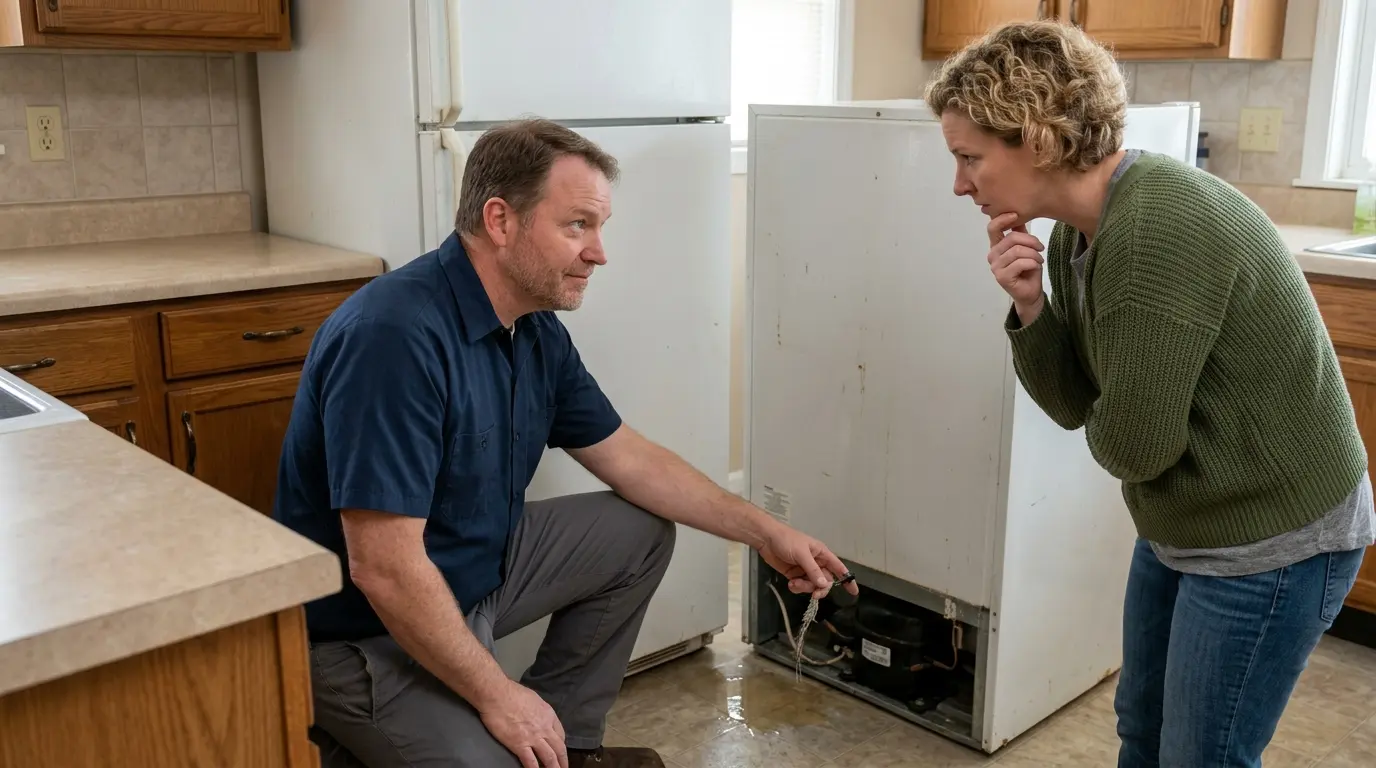


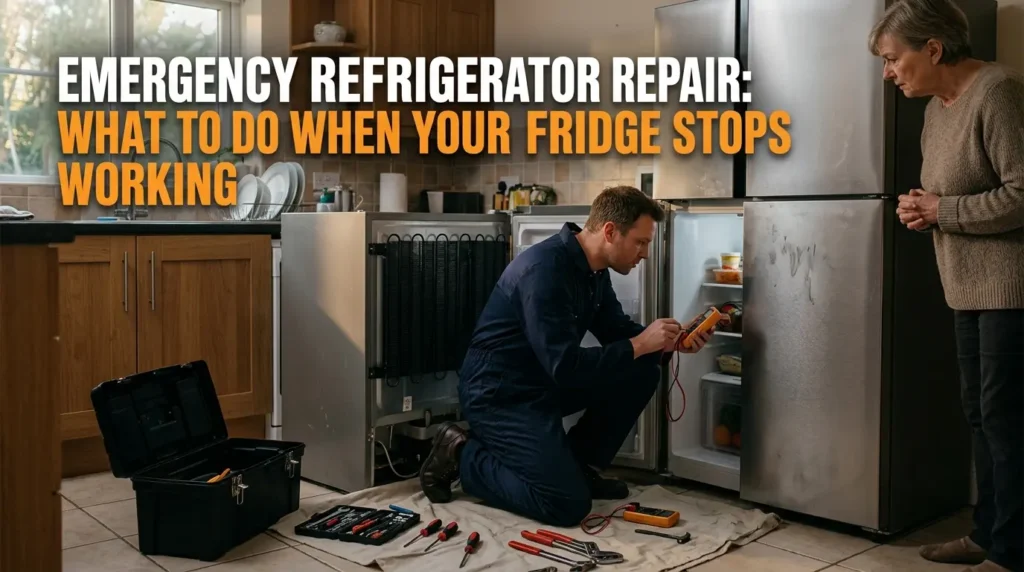
A refrigerator that breaks down can be a major problem much faster, particularly if you have meat, milk, leftovers, and other perishable foods in the refrigerator. When a refrigerator suddenly stops cooling, it’s important to know what to do first to minimize food spoilage and damage to the refrigerator.
In Orlando and Central Florida, quick response is a key element. When the refrigerator is already working hard to maintain the required temperature, warm conditions can make it more difficult to keep the food at the proper temperature. Make sure to review these tips prior to booking emergency refrigerator repair.
Start With These Checks Before Calling for Help
Don’t jump to the conclusion that the fridge has a serious issue. A simple look can help determine if the problem is power supply, temperature controls, restricted airflow, or a faulty component.
Use this quick checklist:
- Check whether the refrigerator has power.
- Check that the circuit breaker hasn’t tripped.
- Confirm that the temperature setting was not changed accidentally.
- Check whether the doors are closing completely.
- Pay attention to any strange clicks, hums, or grinding noises.
- Look for heavy frost blocking vents inside the freezer.
- Check whether the interior lights are working.
If the fridge has power but stays warm, avoid unplugging it over and over to restart it. A refrigerator that continues running without reaching a safe temperature may need an urgent fridge repair diagnosis.
Protect Your Food While the Refrigerator Is Warm
Make food preservation a priority, and then find out what is wrong. The FDA recommends a refrigerator temperature of 40°F or lower and a freezer temperature of 0°F. A best indicator of the actual refrigerator temperature is a refrigerator thermometer.
Keep the fridge and freezer doors shut as much as you can. Repeatedly opening them can let cold air out and warm up faster.
If the refrigerator has not been properly cooled for some time, take precautions before storing perishable food. In some emergency situations, the FDA recommends discarding perishable foods that have been above 40°F for two hours or more. If the timing or temperature is not known, do not use appearance or smell alone to determine.
A Simple Emergency Food Plan
If your refrigerator cannot maintain a safe temperature:
- Move vulnerable foods to another working refrigerator or cooler.
- Use ice or frozen gel packs to maintain cold temperatures.
- Keep food at 40°F or below.
- Avoid opening the cooler unnecessarily.
- Separate questionable food instead of mixing it with food you know is safe.
This temporary step can give you time to arrange same-day refrigerator repair without leaving everything inside a warming appliance.
Why a Refrigerator Can Stop Cooling
If a refrigerator doesn’t cool, it does not necessarily have a compressor failure. There are a number of factors that may influence the performance of the cooling system.
Blocked Airflow
Cool air has to move freely between the freezer and fridge sections. When shelves are too full, vents are blocked, or frost builds up, airflow can slow down and leave one area warmer than it should be.
Fan or Defrost Problems
The evaporator fan is a fan that pumps the cold air in the refrigerator. If the fan fails, temperatures may not be even, there may be strange sounds, or it may not cool properly. Another defrost issue may cause ice to accumulate around critical airflow locations.
Compressor or Sealed-System Failure
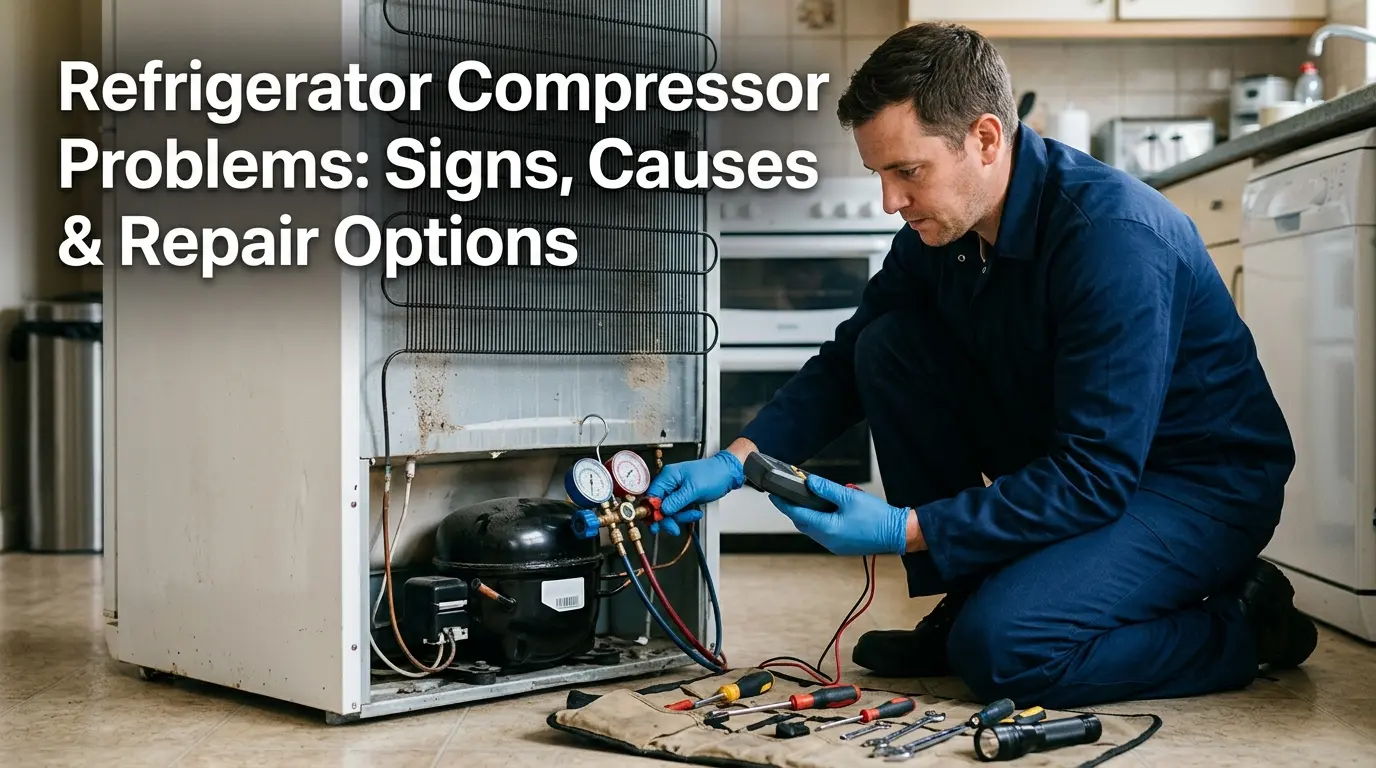
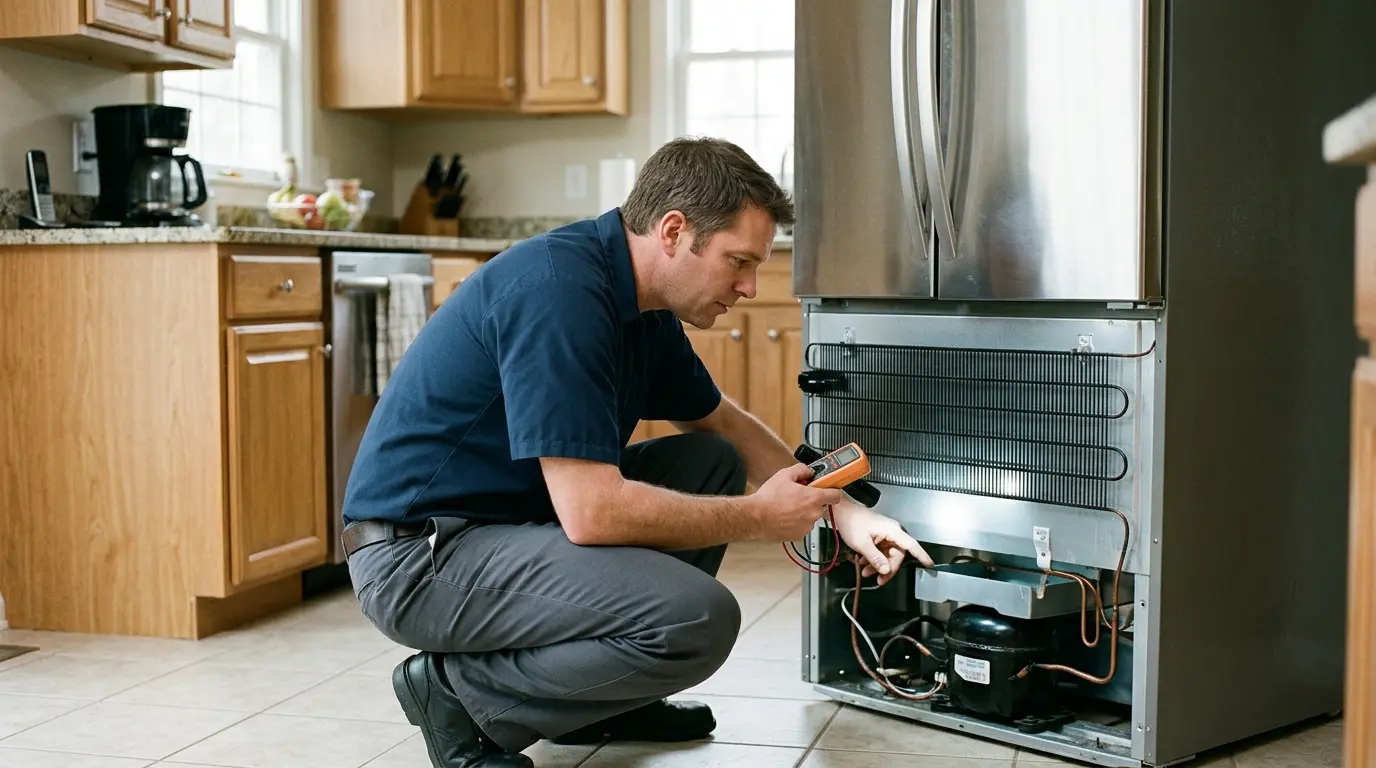
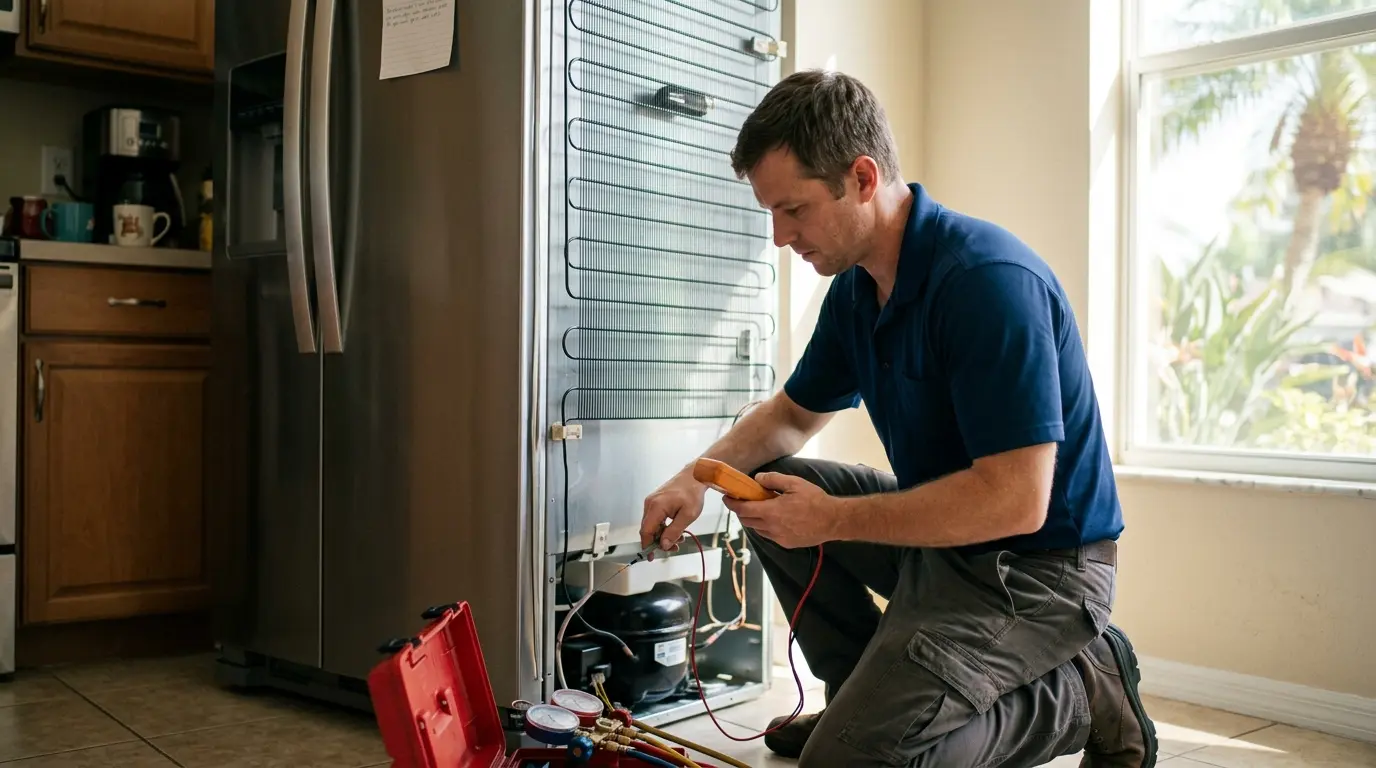
The compressor is an important component in the cooling process of the fridge. Any compressor, refrigerant, or sealed-system issues are typically not handled by the homeowner and will instead need to be professionally tested.
Some other possible reasons could be that the temperature controls, sensors, relays, control boards, door seals, or condenser parts are broken.
When DIY Troubleshooting Stops Making Sense
Basic checks are fine, but if the refrigerator involves electrical components, refrigerant, compressors, or sealed systems, then the repair is more complicated. Never remove panels and never make refrigerant-related repairs without the necessary knowledge and equipment. Wrong work may cause damage to the appliance or electrical and mechanical hazards.
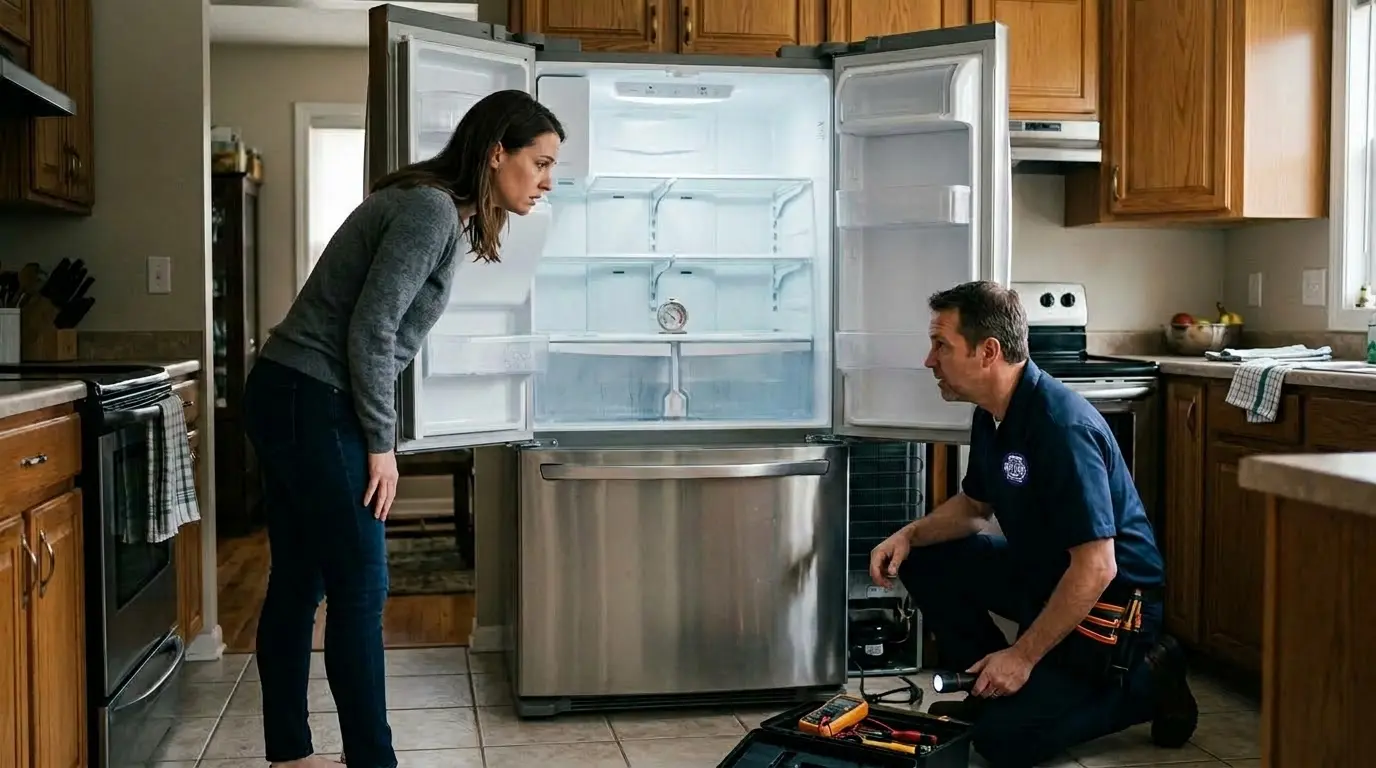
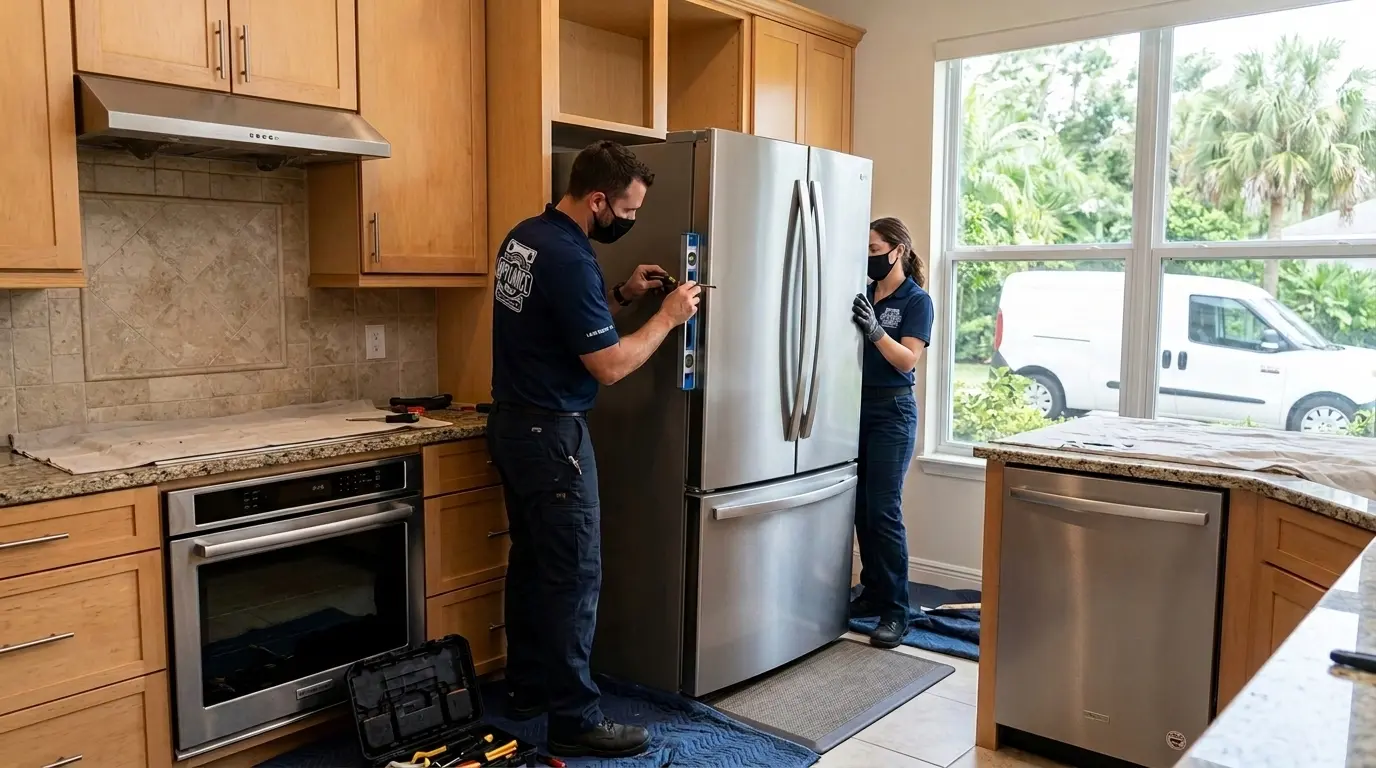
A same-day appliance repair can decide whether or not to repair the refrigerator. If there is a problem with the unit, they can check it out, identify the damaged component, and tell you what is best done to make it work.
This is particularly useful with refrigerators from major brands such as Samsung, LG, Whirlpool, Maytag, and Frigidaire, because the exact component and repair approach can vary by model.
When Should You Request Emergency Service?
You should consider refrigerator service near you when the appliance is not maintaining a safe temperature, especially if food is already at risk.
A rapid service call makes sense when:
- The refrigerator is completely warm.
- The freezer is also losing temperature.
- The compressor keeps clicking but fails to turn on.
- The appliance makes unusual mechanical sounds.
- Heavy frost returns after temporary removal.
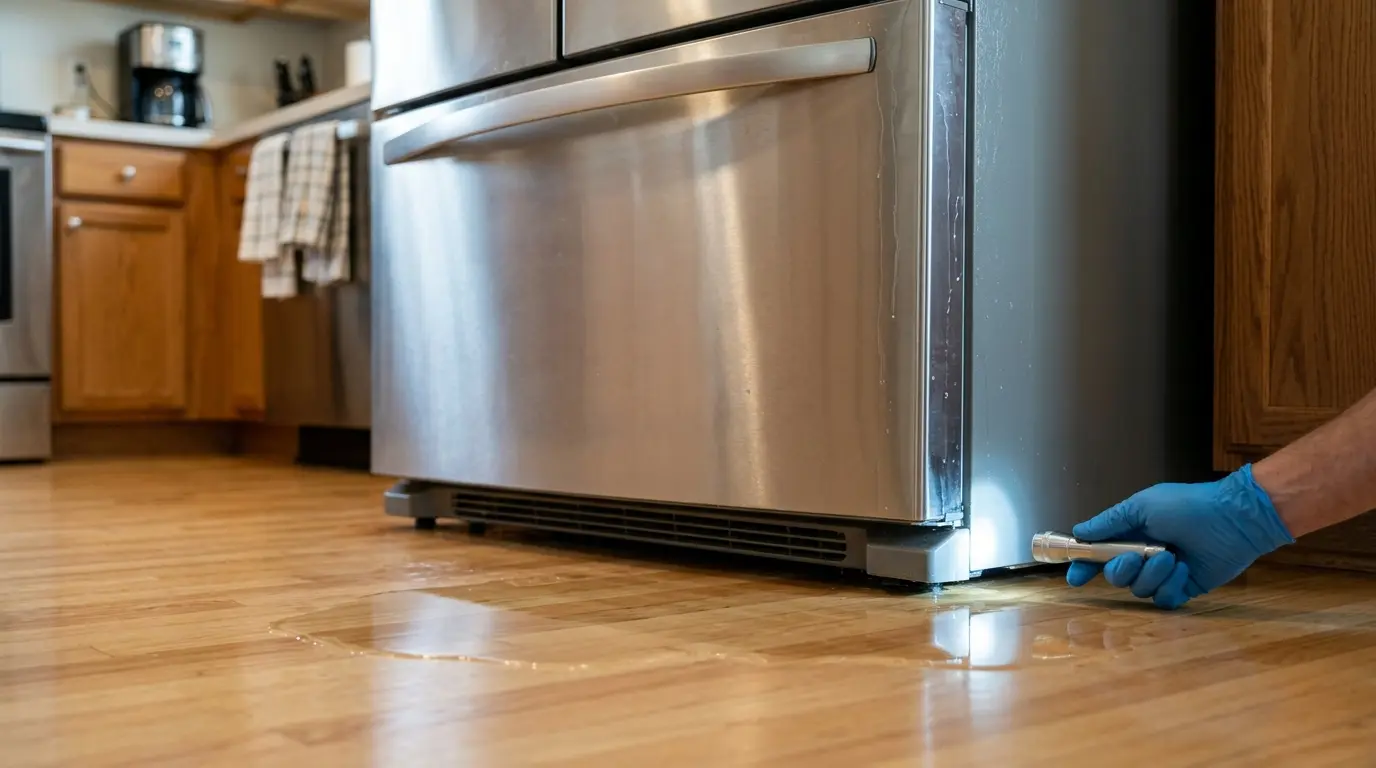
- Water is leaking from an internal component.
- The refrigerator repeatedly shuts off.
- Food is warming despite normal temperature settings.
A repair person can diagnose the refrigerator right away, instead of relying on symptoms alone. This will help determine if the failure is due to a minor component or a larger refrigeration-system issue.
Repair or Replace? Consider the Appliance’s Condition
Not all refrigerator failures are caused by its failure. The cost of the appliance, the severity of the failure, its energy consumption, and its age and condition should be taken into account.
If the refrigerator is a newer model and the sensor, fan, relay, or control unit has failed, it may be worthwhile to repair. If your appliance is much older, has an expensive compressor or sealed system issue, it may be worth a closer examination of the cost.
The key is to find out what actually failed before deciding to replace the refrigerator. A technician’s assessment can help you make the decision with more confidence. For Central Florida homeowners, Discount Appliance Repair of Central Florida can provide a practical starting point when a refrigerator suddenly loses cooling and immediate assistance is needed.
Ways to Help Prevent Another Refrigerator Breakdown
After the refrigerator is up and running, there are a number of maintenance habits that will aid in reliable operation.
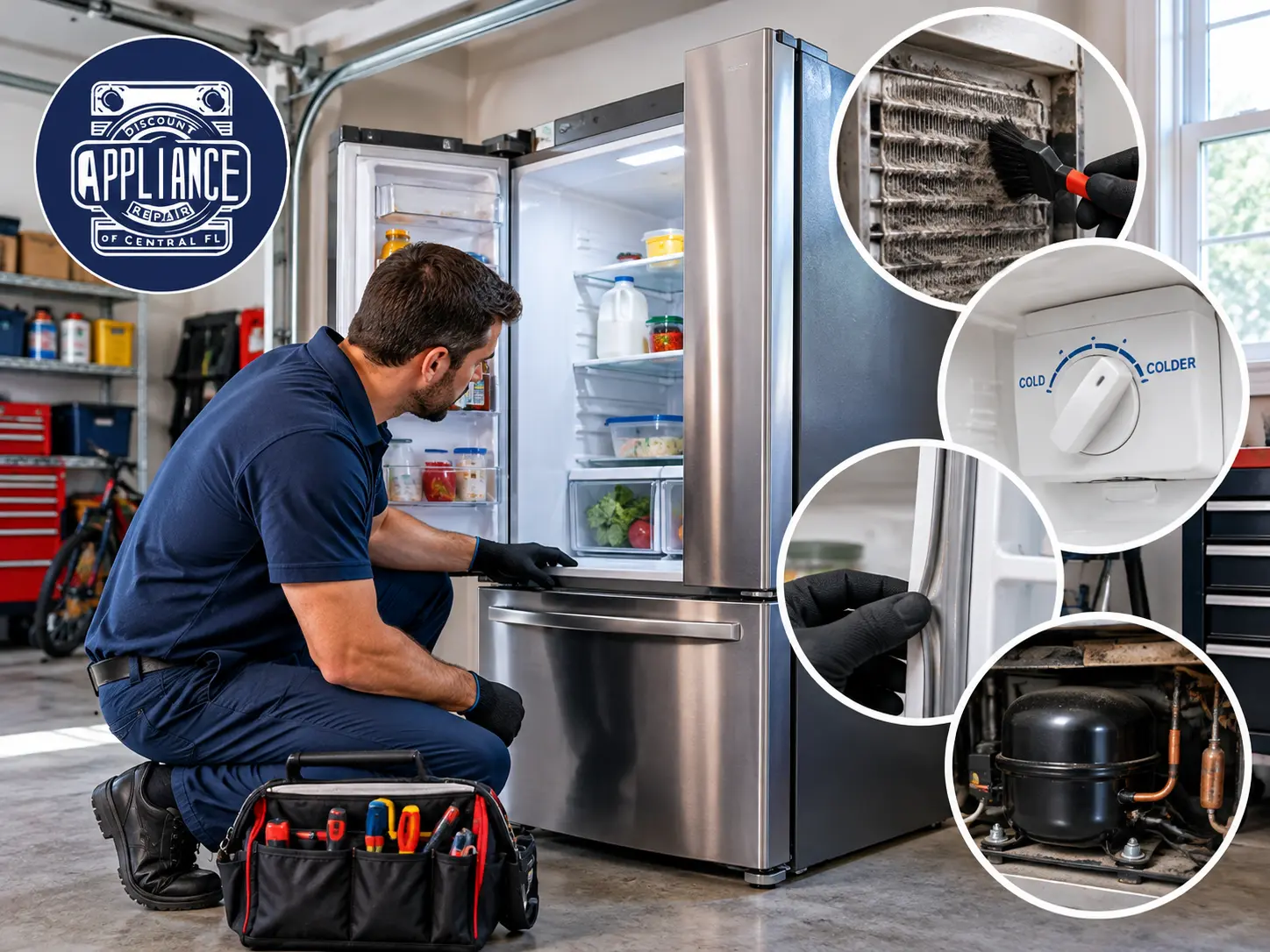
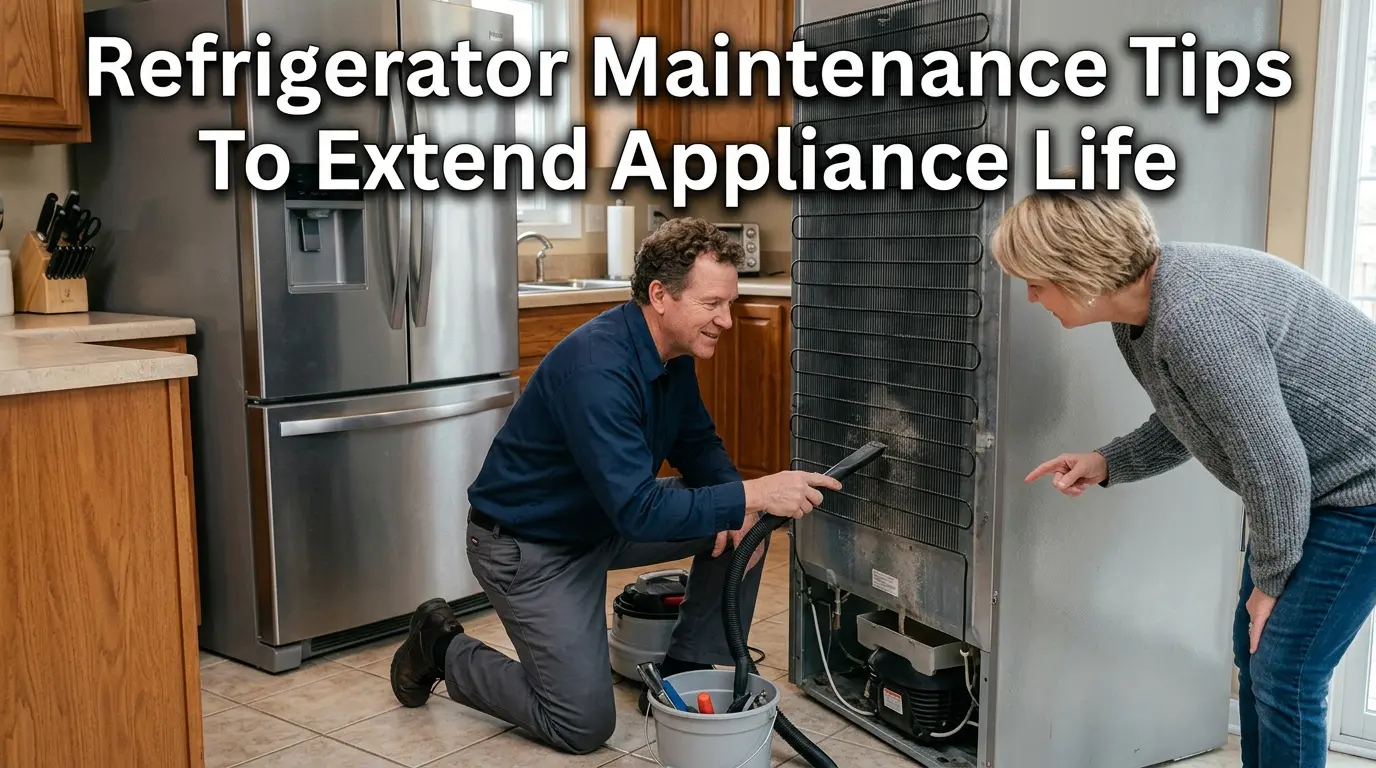
- Keep the condenser area clean by following the manufacturer’s guidance.
- Avoid packing shelves too tightly or covering the inside vents.
- Check that door seals close firmly.
- Keep the refrigerator at a safe temperature.
- Pay attention to new noises or temperature changes.
- Address small cooling problems before they become complete failures.
By paying attention, you may be able to identify potential issues before they become an emergency.
Frequently Asked Questions
How quickly can same-day refrigerator repair be arranged?
Availability depends on the service provider, technician schedules, location, and the nature of the refrigerator problem. When requesting service in Orlando, explain that the appliance is not cooling and provide the brand and model if available. This gives the technician useful information before arrival.
How should you protect food before the technician arrives?
Keep the fridge and freezer closed as much as possible. If you can’t keep everything cold enough, move perishables to another refrigerator or stick them in a cooler with ice. The FDA says you want to keep refrigerated food at or below 40°F.
Why is the freezer still cold but the fridge warming up?
This may happen when chilled air cannot move properly from the freezer into the refrigerator section. Frost build-up, blocked vents, or a problem with the evaporator fan—or anything that messes with airflow can be the cause. An appliance technician can dig in and figure out what’s happening after checking it over.
Is a refrigerator worth repairing?
That comes down to how old your fridge is, its shape, what broke, and what it’ll cost to fix. If it’s a small part, the repair usually makes sense. If it’s a big problem, like the compressor or sealed system in an older fridge, you might want to compare repair costs versus buying new.
Final Thoughts: Act Quickly When Your Refrigerator Stops Cooling
A refrigerator that suddenly stops cooling should not be ignored. Protect your food first, check the basic power and temperature conditions, and arrange professional service when the appliance cannot maintain safe cooling.
Discount Appliance Repair of Central Florida can help homeowners move from emergency diagnosis to a practical repair decision without guessing what caused the refrigerator to stop working.