

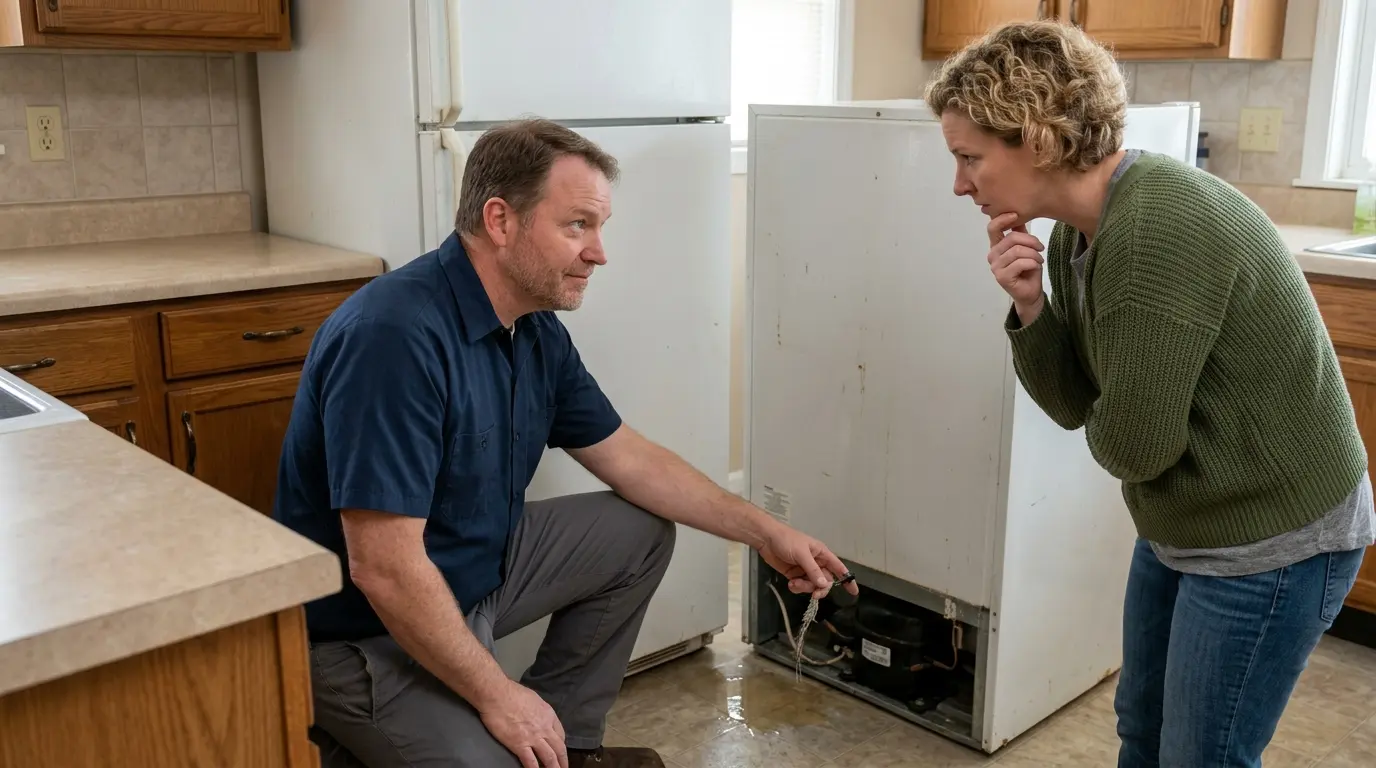

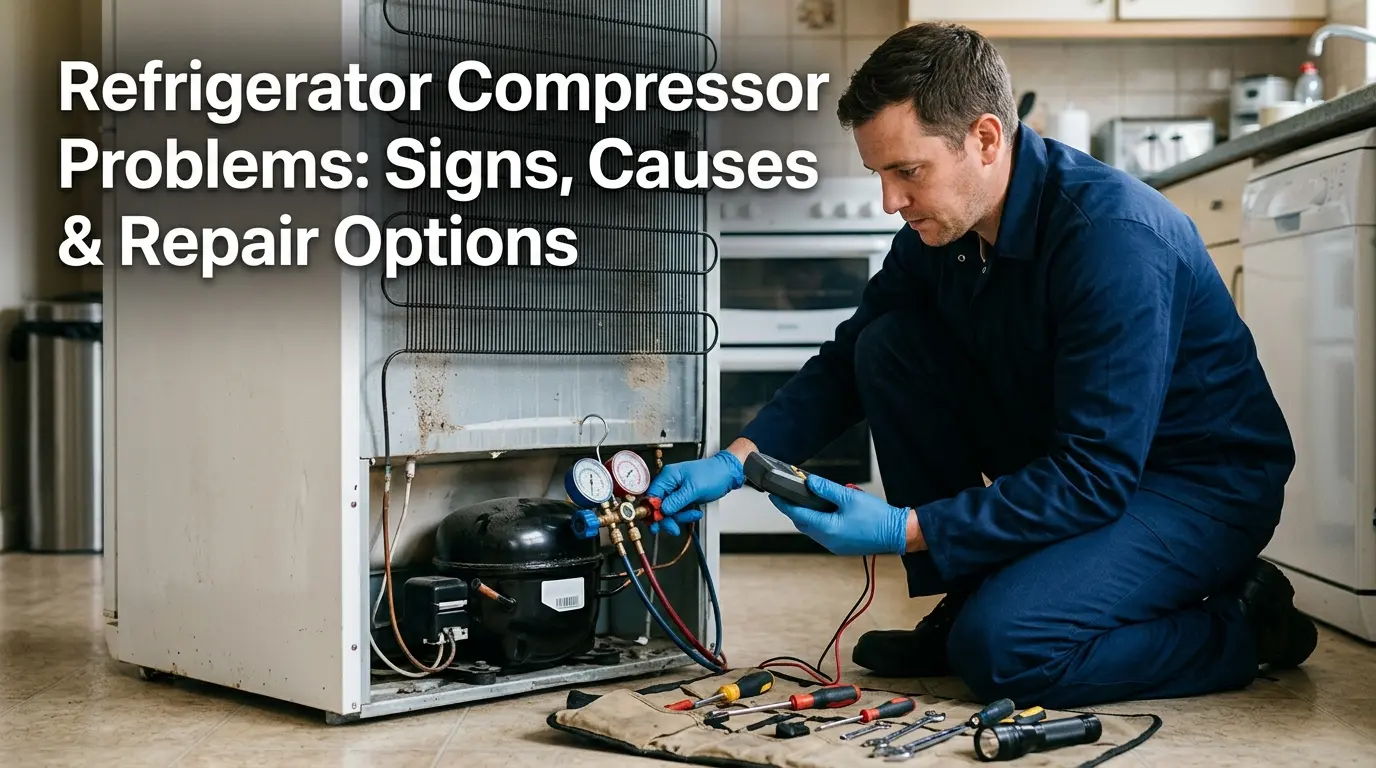


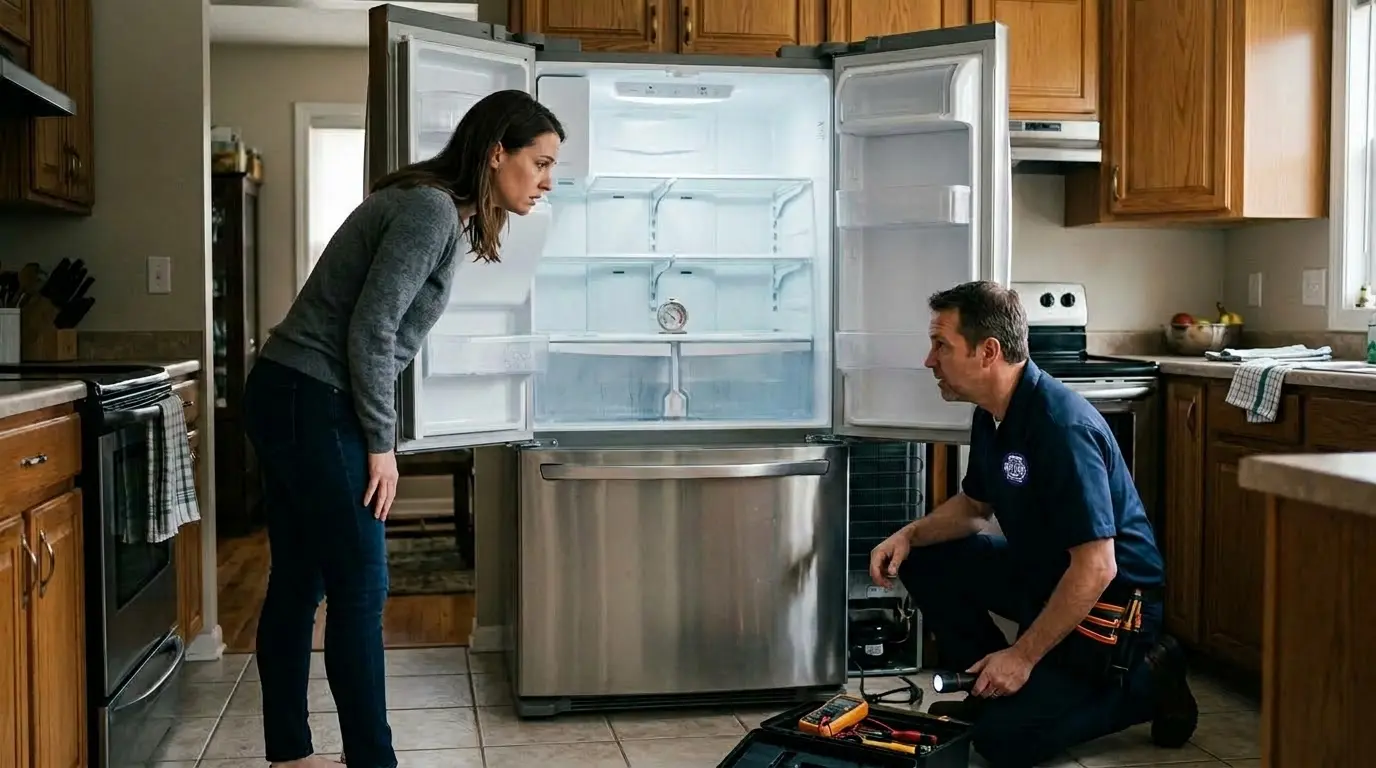
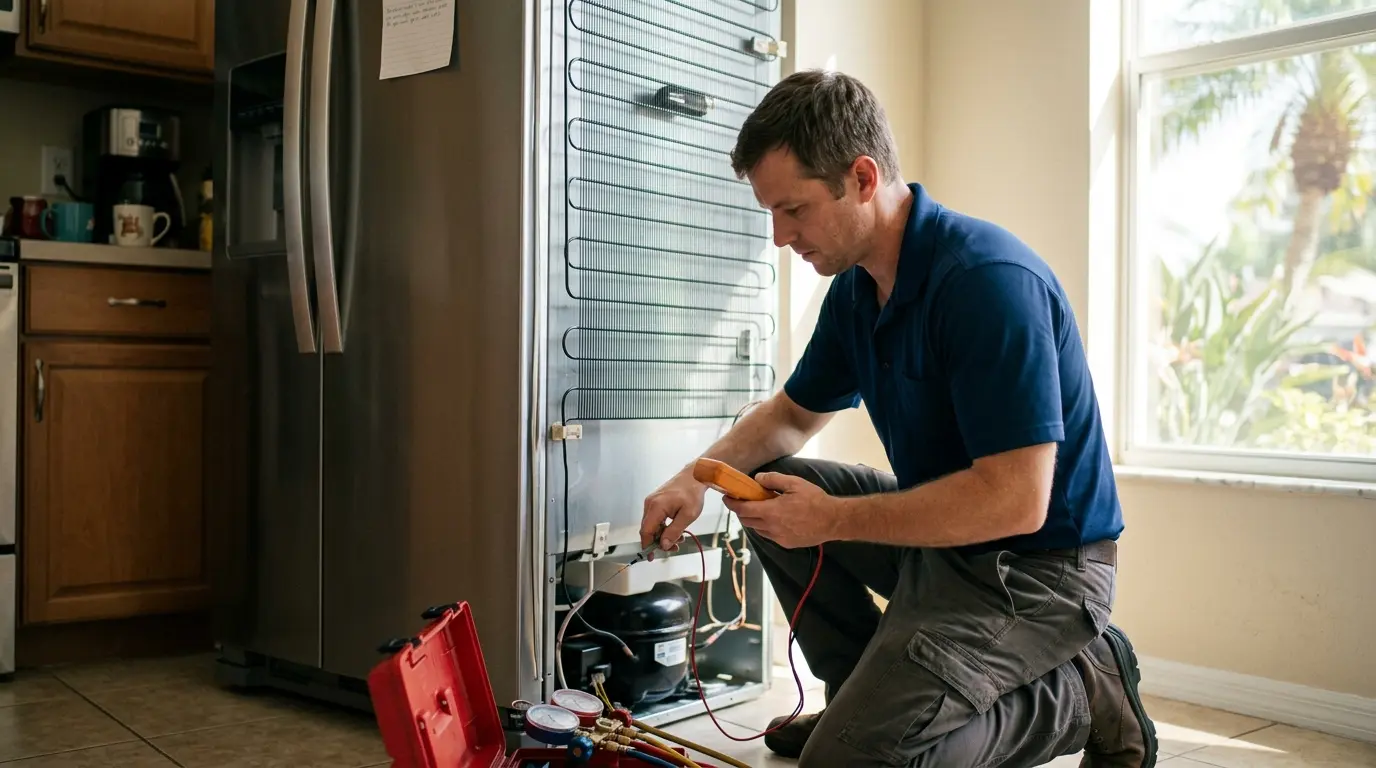








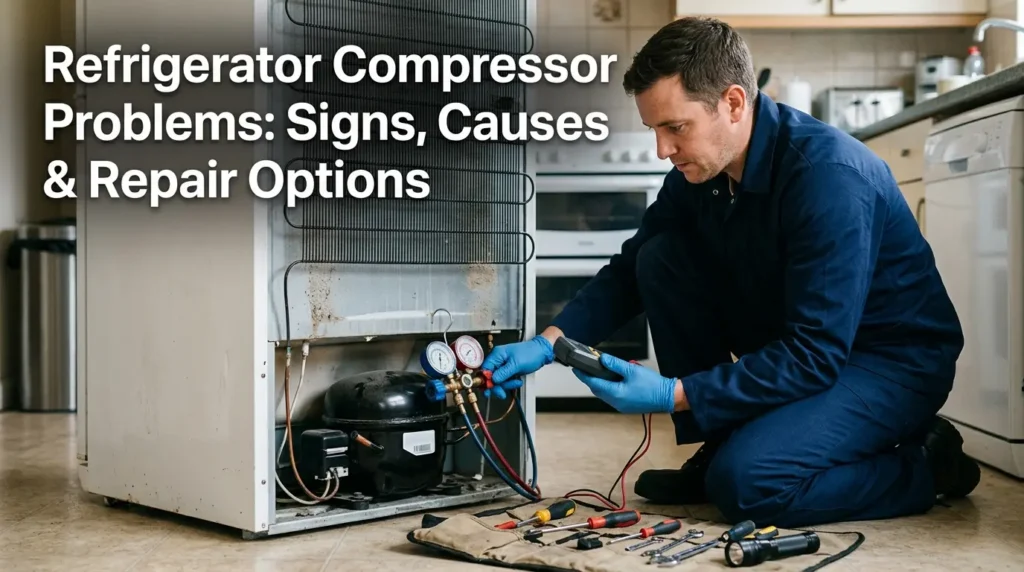
The compressor is an important part of the cooling system of a refrigerator. It pumps refrigerant around the enclosed system to draw the heat out of the inside of the system. If the compressor begins to malfunction, the refrigerator may run all the time, emit strange noises, or not maintain refrigerator temperatures.
Compressor repair for a refrigerator isn’t always the right solution to a cooling problem. Similar symptoms may be caused by problems with the evaporator fan, condenser fan, thermostat, defrost system, start relay, or control board. A professional diagnosis helps to determine the true failure prior to replacing a costly component.
What Does a Refrigerator Compressor Do?
The compressor is used to move the refrigerant around the refrigeration system and compress it. While the refrigerant circulates through the condenser and evaporator coils, heat is removed from inside the refrigerator compartment.
Without proper compressor functioning, the cooling system efficiency decreases. The refrigerator can still be on, but the contents of the fridge can progressively warm up.
Cooling issues may be more prominent in Orlando due to the warm conditions there. Orlando International Airport recorded an average maximum temperature of 93.7°F in June 2026, compared with a 1991–2020 normal of 90.8°F. Hot conditions can also make a refrigerator work harder to maintain its internal temperature.
Signs of a Bad Refrigerator Compressor
A bad refrigerator compressor does not always fail suddenly. Watch for these warning signs.
1. The Refrigerator Runs Constantly
If the refrigerator appears to run continuously without stopping, it may be having trouble maintaining the set temperature. This can be caused by a failing compressor, but a dirty condenser coil, a broken door gasket, issues with the refrigerator’s refrigerant, or other cooling-system problems may also cause this symptom. The appliance may consume more electricity when it is in constant use as well.
2. Strange Compressor Noises
Some humming is normal during a cooling cycle, but unusual fridge compressor noise deserves attention.
Repeated clicking can indicate a problem with the compressor’s start relay or overload protector. Any sounds of buzzing, knocking, grinding, or abnormal vibration may indicate a mechanical issue or compressor wear. Clicking and buzzing are other signs that Orlando appliance repair companies recognize that may not necessarily need to be replaced by a compressor replacement.
3. The Refrigerator Is Not Cooling Properly
The temperature settings of a refrigerator can be met, but the refrigerator may still run continuously without maintaining a safe temperature, which could indicate a problem with the compressor. But this is among the most frequently experienced signs of other breakdowns. To find out what is causing the problem, a professional needs to inspect the evaporator fan, condenser fan, defrost system, thermostat, airflow, refrigerant charge, and compressor.
4. Higher Energy Bills
The longer the refrigerator is on, the more electrical power it will use. If a compressor is struggling, it can not hold the temperature and can result in increased cooling cycles. While excessive energy consumption doesn’t necessarily indicate a compressor breakdown, it can be a red flag if it’s accompanied by issues such as cooling down slowly, compressor overheating, or odd noises.
5. The Compressor Gets Extremely Hot
The compressor normally becomes warm during operation. If the air conditioning unit is running more than it needs to, or if there is excessive heat, it may be a sign that it is making more effort than necessary. Excessive compressor workload may be caused by restricted airflow, dirty condenser coils, electrical problems, or sealed system problems.
6. The Compressor Clicks but Does Not Start
A repeated click followed by a brief hum and another click can indicate that the compressor is attempting to start but cannot remain running. A mechanically or electrically failed compressor can exhibit similar behavior, or the compressor relay or overload protector may be faulty. It is essential to perform testing prior to the choice of replacement.
7. The Circuit Breaker Trips
If your refrigerator keeps tripping the circuit breaker, it isn’t something to be taken lightly. Electrical faults involving the compressor, wiring, or starting components can cause excessive current draw. Avoid switching the power on and off repeatedly to get the refrigerator running. When suspecting an electrical problem, it is safer to unplug and get the appliance professionally diagnosed.
8. The Freezer Develops Unusual Ice or Frost
Lots of ice do not warrant compressor failure. This is usually caused by a faulty defrost system, evaporator fan, door gasket, or airflow issue. When there is heavy frost in the freezer and trouble cooling in the refrigerator, it may be necessary to check the entire cooling system, but not necessarily replace the compressor because of the symptoms.
What Causes Compressor Problems?
There are a number of things that can make a compressor fail.
Electrical problems can damage starting components or compressor windings. When power is lost, voltage drops, or repeated start-ups fail, it can cause extra stress on the system.
Poor airflow can also increase operating strain. Dust and debris around condenser coils reduce heat transfer, and the refrigeration system must work harder to transfer heat.
Refrigerant leaks are another concern. An insufficient refrigerant charge will not allow the unit to cool properly and could result in longer compressor run times.
Other factors, such as age and normal mechanical wear, are also important. After many years of use, a compressor can have internal electrical or mechanical issues.
Refrigerator Compressor Repair vs. Replacement
Begin refrigerator compressor repair by obtaining a professional diagnosis. A tech can test the compressor, start components, electrical connections, and the sealed system to see if the compressor has failed. If the issue is a relay, protector, fan, thermostat, or control board, fixing the part may prevent the need to replace the compressor for the cooling to resume.
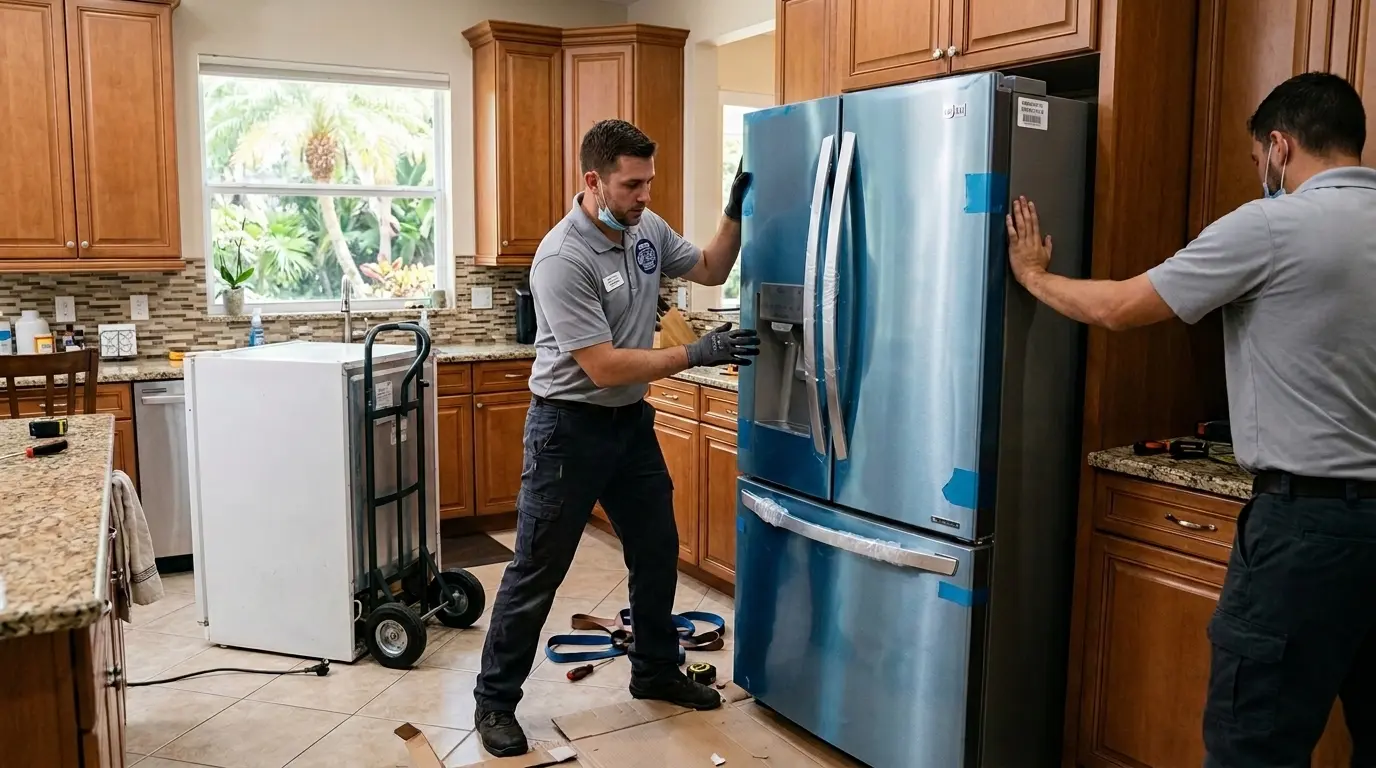
If testing confirms compressor failure, refrigerator compressor replacement may be possible. Current Orlando pricing published by a local appliance repair provider lists compressor replacement at about $680.50 after its diagnostic credit, although actual prices vary by model, compressor, refrigerant system, and labor requirements.
The choice of replacement is more significant if the refrigerator is an older model. Before approving significant work, make sure to compare the compressor repair estimate with the price of a new compressor.
How Professionals Diagnose Compressor Issues
Professionals don’t just look at the surface symptoms. They dig deeper. The technician checks the electrical supply, looks at how the compressor actually runs, tests both the start relay and the overload protector, keeps an eye on temperature performance, examines condenser and evaporator parts, and assesses the whole sealed system.
If the issue involves system pressure or refrigerant, you need special equipment and know-how. That’s why DIY repairs aren’t really a good idea. Messing with a sealed system or replacing a compressor is a lot more involved than just swapping out a simple appliance part.
Discount Appliance Repair of Central Florida can evaluate refrigerator cooling problems and determine whether the issue is actually the compressor or another component producing similar symptoms.
How to Reduce Compressor Stress
Regular maintenance goes a long way. It keeps the cooling system from unnecessary stress.
- Keep condenser areas clean and unobstructed.
- Check door gaskets for gaps or damage.
- Do not block interior air vents with food.
- Keep refrigerator and freezer temperatures at appropriate settings.
- Address unusual sounds or temperature changes early.
- Avoid repeatedly resetting a tripped circuit breaker.
- Arrange professional service when cooling performance changes.
Following these steps helps your refrigerator run more smoothly and keeps the compressor from working too hard.
Final Thoughts: Do Not Ignore Compressor Warning Signs
Compressor trouble can eventually leave your fridge unable to keep food safe. But poor cooling, clicking, or constant running don’t always mean the compressor is dead.
Getting things checked out early can sometimes catch a smaller problem before your cooling system takes a big hit. Discount Appliance Repair of Central Florida can help determine the actual cause so you can make a more informed repair-or-replacement decision.
Frequently Asked Questions
How do I know if my refrigerator compressor is bad?
Watch for signs like weak cooling, nonstop running, constant clicking, weird mechanical noises, overheating, or a compressor that keeps trying but never starts. These symptoms can also come from other components, so professional testing is needed for confirmation.
Can a refrigerator compressor be repaired?
You don’t always have to consider a complete compressor replacement. Sometimes it’s just a bad start relay, the overload protector, wires, or another control component. But if the compressor motor itself fails inside, then replacement is usually the right move.
How much does a refrigerator compressor replacement cost?
Current Orlando pricing examples show compressor replacement around $680.50 after a diagnostic credit from one local provider. Real costs can change depending on your refrigerator model, the compressor used, parts, labor, and sealed-system requirements.
Why does my refrigerator make a clicking noise?
When repeated clicking occurs, it is usually the compressor’s starting relay attempting to start the system and the overload protector immediately shutting it down. Sometimes it’s the relay, but compressor failure or another electrical issue can also cause those sounds.
Should I replace my refrigerator if the compressor fails?
Not always. Take a look at your fridge’s age, its overall shape, the repair quote, the price of new units, energy efficiency, and whether other failures seem likely. For a newer fridge, compressor repair can make sense; for an older one with several issues, replacement may be smarter.