










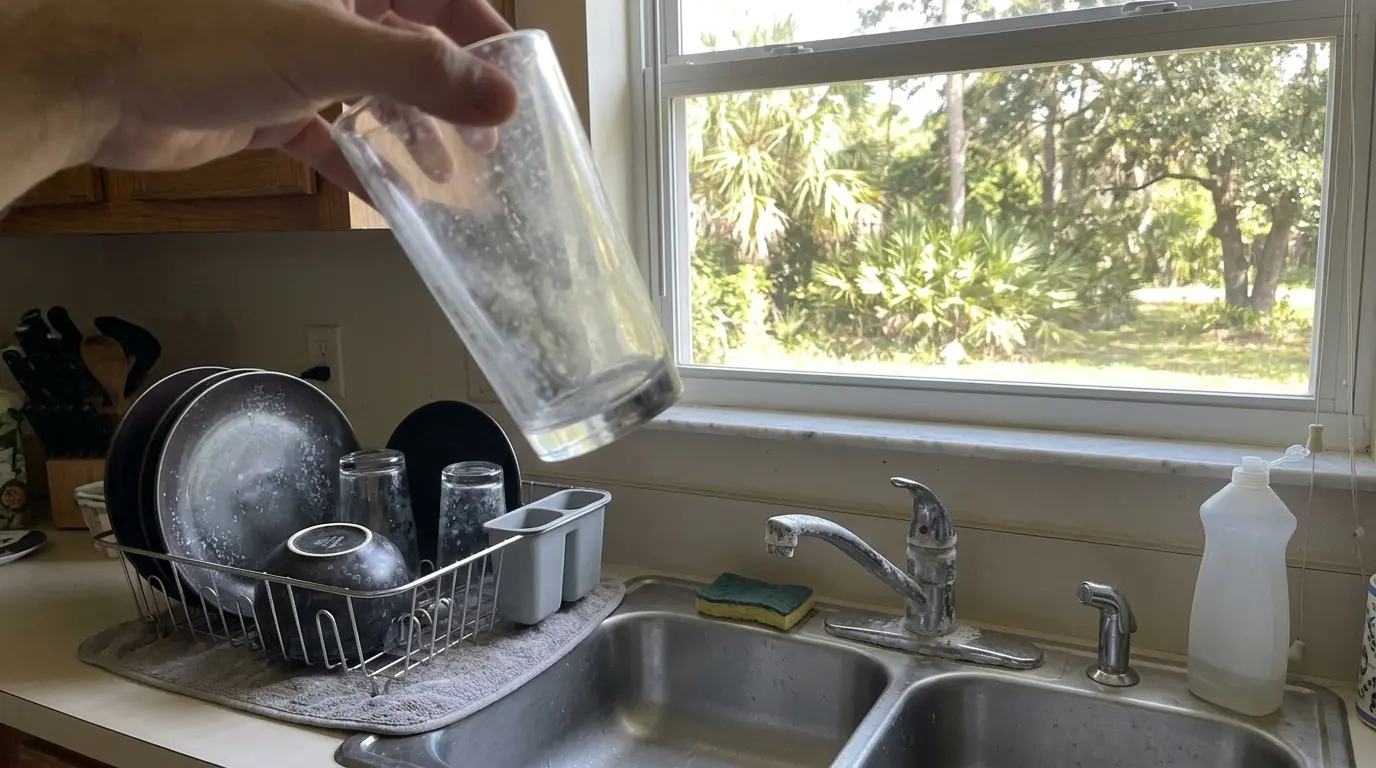









A dishwasher can finish its cycle, clean the load, and still leave cups, plates, and containers covered in water. Sometimes this is normal, especially with plastic items or cycles designed to save energy. In other cases, low rinse aid, loading problems, or a failed drying component may be responsible.
Look at which items remain wet and whether the interior feels warm. Dry glasses with damp plastics suggest a different issue than an entire cold, dripping load.
Why Does a Dishwasher Leave Dishes Wet?
Dishwashers use different drying systems, so results depend partly on the model. Traditional heated-dry systems use a heating element to warm the air and surfaces inside the tub. Many newer models use condensation drying: a hot final rinse warms dishes, moisture moves toward the cooler stainless-steel walls, condenses, and drains away.
Condensation drying saves energy but does not dry every material equally. Plastic holds less heat than glass or ceramic, so droplets may remain. Some moisture on plastic lids or cup bottoms can be normal.
Common Reasons Dishes Stay Wet
Everyday conditions can reduce drying without indicating a breakdown.
- Rinse aid is low or not releasing properly: It helps water drain smoothly from dish surfaces, reducing the droplets left behind after washing.
- The selected cycle limits drying: Eco, quick, or air-dry settings may use less heat or provide a shorter drying period.
- Items are loaded too closely: Nested bowls, crowded cutlery, and overlapping plates trap water and restrict airflow.
- Dish shapes hold water: Deep mug bases, cup rims, and container lids can collect puddles that a drying cycle cannot remove.
- Plastic items stay cool: Plastic containers and nonstick cookware naturally retain more droplets than heated glass or ceramic.
Check rinse aid even if detergent tablets advertise an all-in-one formula. The dispenser releases it during the final rinse. Follow the manual for dosage instead of pouring extra product into the tub.
How Orlando’s Climate Can Affect Drying
Orlando’s humidity can slow final evaporation in a naturally ventilated kitchen, but it rarely explains an entire load staying wet. The Florida Climate Center lists average morning relative humidity at about 87% in Orlando, compared with about 55% in the afternoon. Indoor air-conditioning changes conditions, so these figures are context, not a diagnosis.
A humid kitchen may slow final evaporation in models that vent room air. It will not explain cold dishes after a heated cycle or a fan that never runs.
Checks to Try Before Scheduling Dishwasher Repair
Check settings and loading before suspecting a failed component.
- Confirm the drying option. Select Heated Dry, Extra Dry, or the model’s strongest available drying option. Check the manual because cycle names and features vary.
- Refill the rinse aid dispenser. Set the dosage according to the manufacturer’s instructions and assess the next few loads.
- Load for drainage. Angle cups and bowls downward, leave space between dishes, and avoid nesting containers. Place plastics where the manual recommends, often on the upper rack.
- Wait before unloading. Some manufacturers recommend leaving the door closed for around 30 minutes after the cycle so residual heat can finish the process. Follow your model’s guidance.
- Compare materials. If glass and ceramic items are dry but plastics are not, the system may be working as designed.
Unload the lower rack first when practical. Water that collects on the underside of upper-rack cups or bowls can spill onto dishes below when the top rack is pulled out.
When Do Wet Dishes Point to a Component Failure?
If nearly every item is wet after a heated cycle, especially when the dishes and tub feel cool, the drying system may not be heating or circulating air properly. Depending on the model, possible causes include:
| Component | What a problem may look like |
| Heating element | Dishes remain cold after a heating cycle |
| Drying fan or vent | Moist air does not move out as designed |
| Thermistor | Temperature readings may be inaccurate |
| Control board or wiring | Heating or fan functions may not receive the correct signal |
| Rinse aid dispenser | Rinse aid is not released during the final rinse |
Not every model has a separate fan or exposed heating element. Some condensation-dry dishwashers do not use a bottom element for drying. Diagnosis must match the appliance design; a technician can test the relevant circuit, fan, sensor, dispenser, and controls.
A technician from Discount Appliance Repair of Central Florida can test these systems safely. Do not remove panels or test live electrical parts. If the dishwasher trips a breaker, smells like burning, displays an error, or repeatedly fails to heat, stop using it and arrange an inspection.
Frequently Asked Questions
Is it normal for plastic dishes to come out wet?
Yes. Plastic cools quickly and retains less heat than glass or ceramic. Condensation systems may leave droplets even when the rest of the load dries. Angle containers to drain and use Extra Dry if available.
Does rinse aid really help dishes dry?
Yes. Rinse aid helps water run off surfaces instead of gathering into droplets. Keep the dispenser filled and follow the dosage in your owner’s manual.
Why are my dishes wet even with Heated Dry selected?
Check rinse aid, loading, and cycle options first. If the entire load remains cold or dripping, the heating element, sensor, fan, or controls may need testing.
Is It Better to Open the Dishwasher Door Right After a Cycle?
Some manufacturers recommend waiting about 30 minutes so residual heat can support drying. Other models open the door automatically. Follow your appliance instructions.
When should I call an appliance repair technician?
Arrange service if dishes remain wet across several correctly loaded heated cycles, the interior does not warm when it should, or the dishwasher displays an error or trips the breaker. Share the model number, selected cycle, and symptoms to help narrow the diagnosis.
Final Thoughts: Get to the Bottom of Dishwasher Drying Problems
A dishwasher not drying dishes may have a simple settings or rinse-aid issue, or it may have a failed heating or ventilation component. Plastic moisture alone is not proof of a breakdown. If basic checks do not improve results, Discount Appliance Repair of Central Florida can help identify the cause and determine whether a repair is needed. Matching the diagnosis to the dishwasher’s drying design helps avoid unnecessary part replacements.