












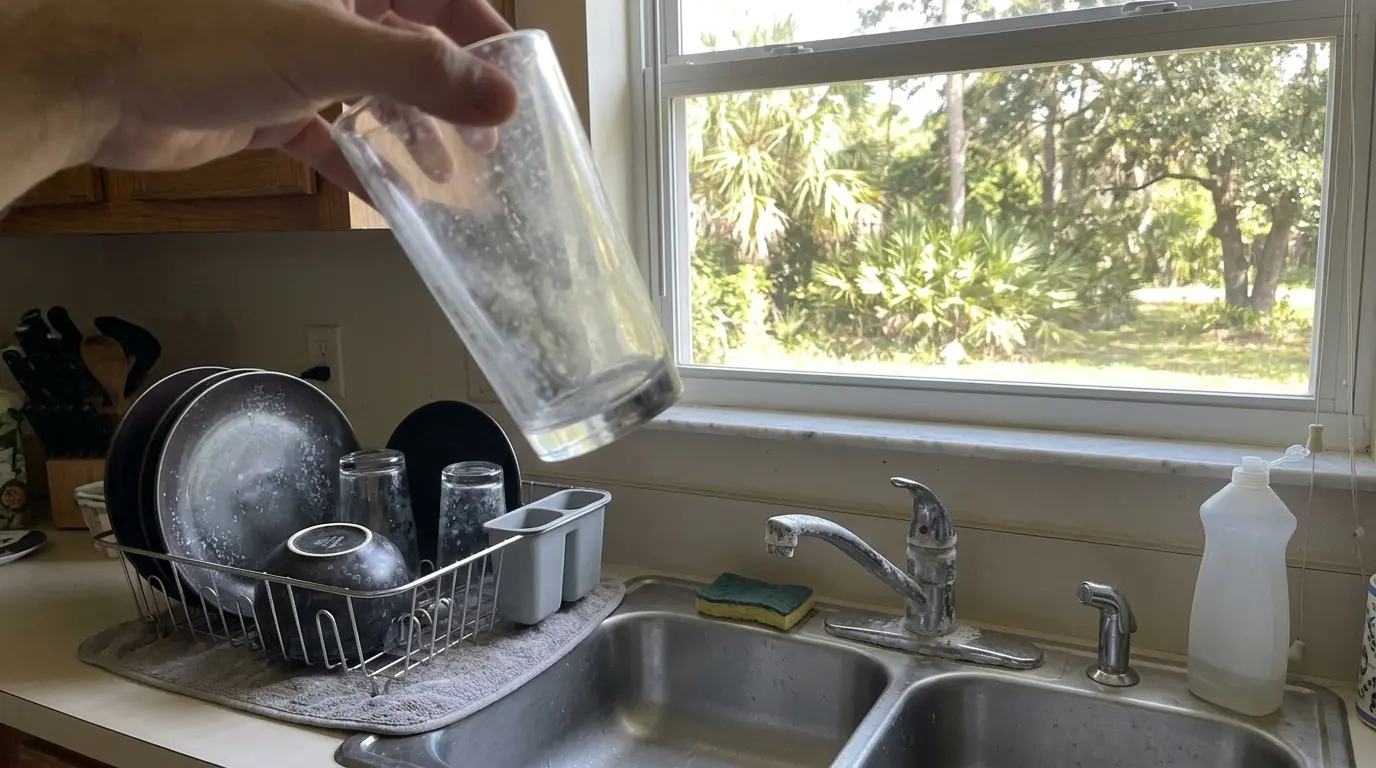




You start a wash cycle, leave the kitchen, and return to find water spreading across the floor in front of the dishwasher. The puddle seems to come from the lower edge of the door, but that does not automatically mean the door gasket has failed. Several problems can send wash water over the tub’s front lip.
The timing, location, and appearance of the leak provide useful clues. A steady trickle, a sudden splash, and a trail of foamy water point toward different causes. Identifying those clues before replacing parts can prevent an unnecessary repair and help protect nearby flooring and cabinets.
Start With the Leak Pattern
If it is safe to observe, note when the water first appears. Do not touch the appliance, pooled water, or electrical connections while it is running. Stop the cycle if the leak is active or spreading.
| What you observe | Possible cause to investigate |
| Water seeps evenly along the lower door edge | Lower door seal, gasket, or door fit |
| Water escapes from one corner during washing | Spray arm directing water toward the door, or uneven sealing |
| Bubbles or foam push through the door gap | Wrong detergent or excessive suds |
| Door closes unevenly or needs extra pressure to latch | Obstructed rack, latch, hinge, or alignment issue |
| Water appears beneath the appliance, not at the door | Hose, pump, tub, or water inlet component |
Use the table to narrow the inspection, not as a final diagnosis. Water can travel before it becomes visible.
Four Door-Leak Causes Worth Checking
1. Worn, dirty, or displaced door gasket
The gasket is the flexible seal around the tub opening. Look for a tear, flattened section, hardened rubber, twisting, or a portion pulled out of its channel. Food particles and detergent residue can also prevent a clean seal. With the dishwasher off, wipe accessible gasket surfaces using a soft, damp cloth and follow the care instructions in the manual.
Some models use a separate lower door seal, so an intact side gasket does not rule out a sealing problem.
2. Spray arm damage or obstruction
A spray arm distributes pressurized water through small openings as it rotates. A crack, split seam, blocked nozzle, or restricted rotation can change the spray pattern. Water may strike the door directly and force its way past a seal that would normally hold.
With the appliance off, check for tall dishes blocking the arm and rotate it gently by hand. Look for visible cracks; do not run the machine to test a damaged arm.
3. Excessive suds from the wrong detergent
Automatic dishwashers require detergent formulated for machine washing. Hand dish soap, laundry detergent, or too much dishwasher detergent can create excess foam. Suds can rise above the normal water level and escape around the door.
| What you see | What it suggests |
| Thick foam inside the tub | Sudsing problem |
| Foam collecting at the lower door edge | Suds may be escaping through the seal |
| Leak began after changing detergent | Product type or amount may be responsible |
Stop the cycle if heavy suds appear and follow the manufacturer’s cleanup instructions. Do not add more soap or run repeated cycles to clear the foam.
4. Door alignment, latch, or leveling problems
A door can click shut without pressing evenly against the seal. A worn latch, bent hinge, loose mounting, obstructed rack, or dishwasher that tilts forward can leave a gap or allow water to collect near the front. Look for uneven gaps, rubbing against cabinetry, or a rack that prevents the door from closing fully.
Do not force the latch or bend hinges. Have a technician handle leveling or mounting adjustments that require moving the built-in unit.
Follow This Safe Check Before Booking a Repair
Use this sequence to collect useful information without dismantling the appliance:
- Stop the cycle: If water is actively leaking, cancel the wash. If water is near electrical components, do not touch the appliance or wet area.
- Record the timing: Note whether the leak starts during filling, washing, rinsing, or draining.
- Inspect the load: Once the machine is off, check for dishes or utensils blocking the spray arm or door.
- Look at the seal: Check accessible gasket areas for tears, dirt, flattening, or displacement.
- Check for suds: Note whether foam is present and which detergent was used.
- Document the evidence: Photograph the water trail and record the dishwasher model number.
If the leak continues, switch off power at the breaker only from a dry, safe location. Shut off the water supply if accessible. Do not pull out a built-in unit or reach underneath it.
When Is It a Door Repair, and When Is It Something Else?
Not every puddle near the door comes from the door assembly.
| Finding | Repair direction |
| Torn or permanently flattened gasket | Replace the correct model-specific seal |
| Damaged or obstructed spray arm | Clear an allowed obstruction or replace the damaged arm |
| Excess suds with no visible component damage | Correct detergent use and follow manufacturer cleanup guidance |
| Door does not sit squarely | Inspect latch, hinges, mounting, and leveling |
| Water originates underneath the tub | Diagnose hoses, pump, inlet valve, or tub components |
A technician from Discount Appliance Repair of Central Florida should confirm the source before parts are ordered. Replacing a gasket will not solve a leak caused by a split spray arm or a loose internal hose.
A Sanford Kitchen Example
A homeowner notices water halfway through the wash cycle. The gasket looks intact, but a large baking sheet is restricting the lower spray arm. The technician checks the arm and seal rather than automatically replacing the gasket. Timing and load position narrow the investigation.
Frequently Asked Questions
Can I keep running my dishwasher if it leaks from the bottom of the door?
No. Stop using it until the cause is identified. Continued leakage can damage flooring and cabinets, and water near electrical parts creates a safety risk.
How can I tell whether the door gasket is damaged?
Look for tears, hardened or flattened rubber, loose sections, and debris that prevents proper contact. A visual check may not reveal a hidden lower seal problem, so persistent leaks need inspection.
Could a Faulty Spray Arm Cause Water to Escape Through the Dishwasher Door?
Yes. A cracked, blocked, or obstructed spray arm can direct water toward the door instead of distributing it normally. That unusual spray may push water past the seal.
Why does my dishwasher leak only during the wash cycle?
The wash phase uses active spray pressure. A faulty spray arm, poor door seal, excess suds, or alignment issue may allow water out during that stage even if filling and draining appear normal.
Final Thoughts: Find the Source Before Replacing Parts
A dishwasher leaking from the bottom of the door may have a damaged gasket, disrupted spray pattern, excess suds, or a door alignment problem. The leak’s timing and location help narrow the possibilities, but a puddle at the front does not always identify the failed part.
Discount Appliance Repair of Central Florida can inspect the door seal, spray system, latch, and related components to identify the source. Prompt diagnosis helps limit water damage.